


The Law Society of Kenya (LSK) has directed all advocates across the country to down their tools and withdraw from court proceedings indefinitely, escalating a confrontation with the state over the disappearance of a fellow lawyer who has been missing for more than a week.
The boycott, announced Tuesday, November 10, 2026, comes as the High Court prepares to examine evidence in habeas corpus proceedings seeking to compel security agencies to produce Advocate Abshir Ahmedsadak Abdi, who was reportedly abducted in Nairobi on November 2.
In a statement issued Tuesday, the LSK said its members would seek adjournments in courts nationwide until Abdi is produced before a judge.
The society also organised a peaceful march from Milimani Law Courts to Jogoo House, the headquarters of the Inspector-General of Police, demanding accountability from security agencies.
Describing the period since Abdi’s disappearance, the LSK said its members had been left without answers or confirmation of his whereabouts.
“Ten days of silence. Ten days without answers. Ten days without production before any court,” the LSK said in its statement.
Explaining its decision to suspend court participation, the society said the action was a protest against continued enforced disappearances in the country.
“In protest against the continued enforced disappearances in this country, the legal fraternity has resolved to down tools and seek adjournments in courts across the country, until our abducted colleague is produced,” the society announced.
LSK President Charles Kanjama has described Abdi’s disappearance as an attack on the entire legal profession, warning that the safety of individual advocates was a concern for the whole fraternity.
“The safety of one Advocate is the safety of the entire legal profession. An attack on one of us is an attack on all of us,” he said in a statement over the weekend.
Reaffirming the society’s commitment to securing Abdi’s return, Kanjama said the legal fraternity would continue pressing for answers.
“We shall not relent until Advocate Abshir Ahmedsadak Abdi is safely returned. Danger to one advocate is danger to all,” Kanjama added.
Abdi’s disappearance was reported after his vehicle was found abandoned in a ditch along Muchai Road, off Ngong Road, in Nairobi.
According to court filings and witness accounts presented by his family, armed individuals in tactical uniforms were seen pursuing the advocate before removing him from his vehicle and transferring him into another car.
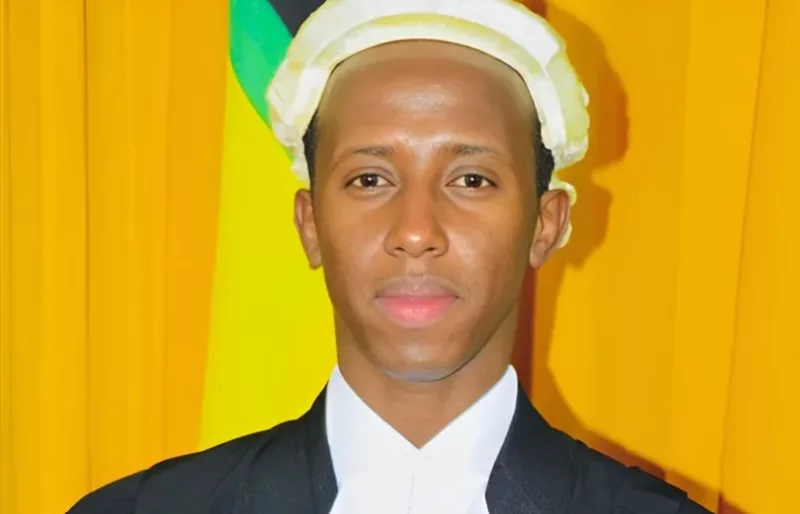
The LSK has suggested that Abdi’s disappearance may be connected to his role as a complainant and key witness in a criminal case before the Makadara Law Courts.







The society disclosed that it had previously received correspondence alleging threats and intimidation linked to those proceedings.
Security agencies have denied holding Abdi. Representatives of the police have maintained in court that he is not in their custody.
The High Court has been conducting habeas corpus proceedings to establish whether Abdi is in the physical or constructive custody of state agencies. On Tuesday, Justice Alexander Muteti allowed Abdi’s brother, Zakaria Abshir, to testify in the proceedings.
During the proceedings, Justice Muteti observed that evidence presented by state witnesses had established that Abdi was a person of interest to authorities and had been under investigation over an alleged abduction involving a non-government individual.
However, the judge questioned what happened after attempts to obtain custodial orders against the lawyer were unsuccessful, raising concerns about the possibility of action outside the judicial process.
“The question that lingers in the mind of this court is whether it could be possible that out of frustration the respondents may have chosen to pursue the subject extra-judicially,” Justice Muteti observed.
The judge said the allegations raised by Abdi’s family were serious and warranted closer scrutiny of the conduct of state agencies, though he noted that further evidence was needed before a determination could be made.
The nationwide court boycott is not the LSK’s first confrontation with state institutions this year. In July 2026, the society staged a one-day nationwide court boycott over concerns about judicial accountability, delays in case determinations, and alleged misconduct by some judicial officers.
That action was followed by an indefinite targeted boycott of specific judges and judicial officers accused of using court orders to shield themselves from oversight by the Judicial Service Commission, the Ethics and Anti-Corruption Commission, and the Directorate of Criminal Investigations.
The targeted boycott has faced legal challenge. In September, High Court Justice David Mburu dismissed an LSK preliminary objection seeking to strike out a petition challenging the boycott’s legality, allowing the constitutional challenge to proceed to a full determination.
The Judiciary has previously insisted that court operations remain uninterrupted during boycotts, with judicial officers and staff continuing to discharge their constitutional mandate.
The LSK has also called on the Independent Policing Oversight Authority to investigate allegations that individuals posing as police officers were involved in Abdi’s abduction and establish whether serving officers or other state agents participated in or facilitated the incident.
The society has further demanded a substantive response from Inspector-General of Police Douglas Kanja to a memorandum delivered during a “Purple Ribbon” protest march on November 6.
