

Tanzania expects the private sector to contribute Tsh62.3 trillion towards financing its Tsh89.3 trillion National Development Plan for the 2027/2028 financial year, placing businesses and investors at the centre of the country’s economic transformation agenda.
The government plans to contribute Tsh20.7 trillion through the national budget, while commercially operated public corporations are expected to invest Tsh6.3 trillion.
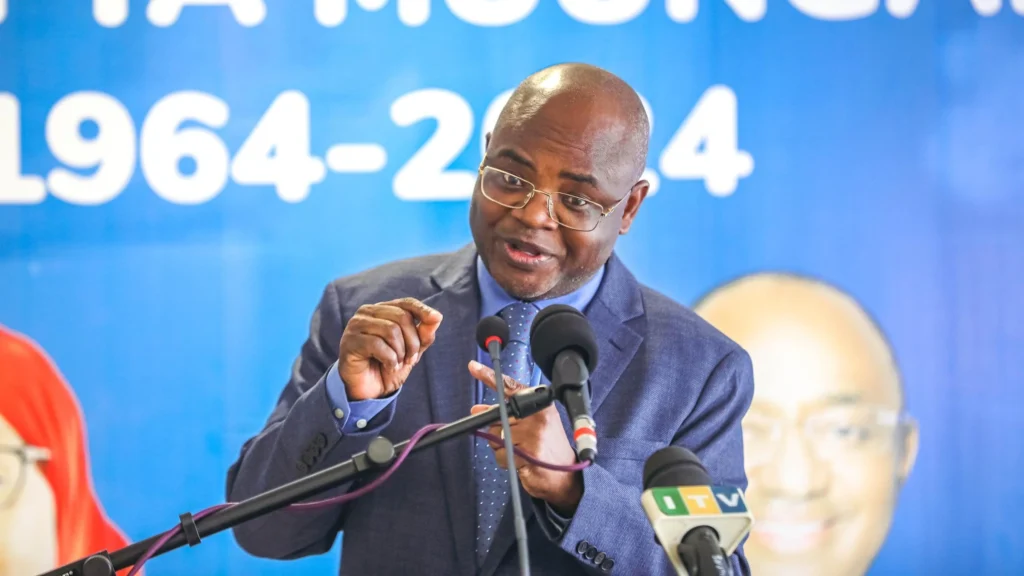
Presenting the proposed plan in Parliament on Thursday, October 29, 2026, the Minister of State in the President’s Office for Planning and Investment, Prof Kitila Mkumbo, said private investment would be critical to achieving the country’s long-term ambitions under Dira 2050.
“The private sector is recognised as the engine of economic transformation,” he told MPs during the Fifth Meeting of the 13th Parliament.
The financing model follows the 70:30 arrangement under the Fourth National Five-Year Development Plan (FYDP IV), which aims to expand private sector participation and reduce reliance on public funding.
The plan targets economic growth of 6.6 per cent in 2027, up from 6.0 per cent in 2026, alongside the creation of 1.7 million new jobs, in addition to the 981,000 jobs created in 2025.
Prof Mkumbo said 934 investment projects worth $12.5 billion were registered in 2025/26, with the potential to create 307,743 jobs. A further 243 projects worth $3.44 billion were registered in the first quarter of 2026/27, with manufacturing accounting for 57.2 per cent of the new investments.
The government has also identified 131 projects for implementation through public-private partnerships (PPPs), with 10 already underway. The projects include the Karakoo Commercial Centre, the Bus Rapid Transit system and the Tanzania-Zambia Railway Authority (Tazara).
To attract more investors, the government plans to reduce investment risks, improve access to information and speed up decisions affecting businesses.
It will also implement the second Blueprint for Regulatory Reforms to improve the business environment and investment climate, known by its Kiswahili acronym as MKUMBI II.
Agriculture, manufacturing and mining are expected to drive production, exports and employment under the development plan.
Priority areas include mineral processing, horticulture, aquaculture, edible oils, textiles and garments, alongside increased production and value addition in cashew nuts, sugar and wheat.
On infrastructure, Tanzania plans to increase installed electricity generation capacity to 4,804 megawatts by June 2028, from 4,606.14MW in September 2026. The government also targets increasing cargo throughput through the Central Railway to one million tonnes in 2027/28, up from 810,000 tonnes in 2026/27.

In education, the country plans to move towards universal secondary education from 2028.
Health insurance coverage is also expected to increase to 32.38 per cent of the population in 2027/28, from an estimated 25 per cent in 2026/27. The development plan will be implemented through seven flagship programmes, 38 anchor projects and 54 value-chain areas.









Government institutions have been directed to align their strategic plans with Dira 2050 by June 2027.
Prof Mkumbo said the government would use the e-Delivery electronic planning and project management system to monitor implementation, spending and results.
“The success of Dira 2050 will not be determined by the quality of the document alone. It will be determined by the decisions we make, the resources we mobilise, the institutions we strengthen and the results we achieve over time,” he said.
Despite the ambitious targets, Parliament’s Budget Committee warned that government arrears, delayed projects and weaknesses in public spending could undermine the development agenda.
Committee chairperson Mashimba Ndaki said outstanding payments to suppliers, contractors and service providers had more than doubled to Sh6.38 trillion in June 2025, from Sh3.223 trillion in June 2022.
Payments owed to road contractors reached Sh1.299 trillion by 2025, with delays forcing some contractors to abandon construction sites, slowing projects and increasing costs. “We urge the government to settle contractors’ debts, compensate people affected by infrastructure projects on time and improve road construction quality,” Mr Ndaki said.
The committee also raised concerns over delays in strategic projects, including the 358-megawatt Ruhudji and 222-megawatt Rumakali hydropower projects, the Liganga iron ore and Mchuchuma coal projects, and the Engaruka soda ash project.
It said prolonged feasibility studies and negotiations were increasing project costs and delaying the realisation of their economic benefits.
The committee further noted that industry’s contribution to gross domestic product declined from 6.8 per cent in 2024 to 5.9 per cent in 2025, despite a 1.7 per cent increase in employment generated by the sector.
Manufacturers continue to face expensive and unreliable electricity, limited access to long-term financing, outdated technology and overlapping regulatory authorities.
To address the challenges, the committee recommended improving electricity supply, expanding long-term credit and supporting industries that process locally available raw materials.
It also called for increased investment in irrigation, timely fertiliser deliveries and improved livestock and fish-processing infrastructure.
On public finances, the committee said the government collected Sh5.55 trillion in 2025/26 against a target of Sh6.49 trillion, while expenditure reached Sh56.6 trillion.
It urged the government to reduce non-essential spending and strengthen oversight of borrowed funds to ensure resources are directed towards priority development projects.
