

Podcasting in Kenya has transformed from a marginal, experimental format into one of the country’s most dynamic creative industries.
What began as a space for digitally curious early adopters has evolved into a mainstream cultural force that rivals traditional media in engagement and influence, particularly among young urban audiences.
This evolution has been shaped by shifting media landscapes, technological adoption, and a deep-rooted Kenyan tradition of storytelling, yet it remains haunted by a fundamental challenge: the money has not followed the attention.
The seeds of a new listening culture
The groundwork for podcasting in Kenya was laid by the media liberalization of the 1990s, which broke the state’s monopoly on radio and created new spaces for commercial FM stations and diverse listening publics. Podcasts entered this terrain as newcomers, initially exploring what digital technology could offer beyond the constraints of broadcast schedules.
Early scholarly attention focused on the early years of Kenyan podcasting, examining how the format addressed new publics and reflected emerging cultures of class, gender, sexuality, and ethnicity.
The pandemic period proved catalytic. With COVID-19 disruptions accelerating digital adoption, podcast production in Kenya “exploded” during this time, according to Melissa Mbugua, co-director of Africa PodFest, a Nairobi-based company specializing in podcast research and production.
The low barrier to entry – a computer and a microphone – made the format accessible even to students, while its freedom from traditional broadcasting regulations created a space for conversations often deemed taboo in mainstream media.

Infrastructure and platforms take shape
A critical marker of the industry’s maturation was the emergence of dedicated infrastructure. In September 2020, Dan Aceda founded SemaBOX, Kenya’s first specialist podcasting studio, which has since grown into the country’s largest podcast producer by volume and hours of content.
On the platform side, Afripods was founded in Nairobi in 2017 by Molly Jensen with a pan-African vision. Jensen told the Daily Nation she “felt embarrassed as an African that I relied on western media,” and wanted to build a platform where African history could be recorded by Africans.
By 2022, a Baraza Media Lab report identified Afripods as the most-used homegrown podcasting platform in Africa, and by 2023 it hosted content in 50 languages from 30 countries. Significantly, Afripods was the first podcasting platform to pay creators directly in Africa without requiring them to hold American or European bank accounts.
The video pivot and the attention economy
The most consequential shift in recent years has been the rise of video podcasting, which has fundamentally altered the economics and reach of the format. According to Odipo Dev, a Nairobi-based data analytics firm, the average podcast video racks up over seven times the views of a mainstream media upload and fourteen times more engagement in likes, shares, and comments.
The firm’s 2025 report, “The Podcasters Are Coming,” found that podcaster Abel Mutua, with just 96 uploads in 2024, outperformed Nation Media Group, which posted 3,749 videos in the same period.
The numbers are striking. Kenya has one of the highest podcast listener rates in the world – over 75% of the population, in the same bracket as Morocco and Nigeria.
Spotify data from 2025 showed that Nairobi accounted for over 93% of all podcast streams in Kenya, with nearly half the audience from Gen Z (18-24) and a strikingly even gender balance of 50% women and 49% men. The most popular genre, Society & Culture, speaks to a hunger for authentic storytelling about love, friendship, identity, and everyday struggles told in familiar voices.
However, audience research reveals a more complicated picture regarding who actually listens. Odipo Dev’s analysis found that podcasting in Kenya has captured an overwhelmingly young, male audience – males comprise 71% of listeners for the top 10 podcasts, with the largest share in the 25-34 age bracket.


Short-form video on TikTok and Instagram Reels has become the primary gateway for discovery, with many users encountering podcasts through bite-sized clips before committing to full episodes.
The monetization paradox
Despite impressive audience figures, the financial structure of Kenyan podcasting remains precarious. Mantalk.ke, which launched in 2019 and has produced over 250 episodes with 170,000 subscribers, was entirely self-funded until late 2025, when it finally secured its first real sponsors: Spotify and Johnnie Walker.
Co-host Eli Mwenda described the financial reality with blunt humor: “There’s a lot of money going into production and equipment. It’s a massive financial cost. We always joke, me and Oscar, that if we wanted to be rich, we wouldn’t podcast, we would be farmers”.
The core problem, as industry analyst Brian Esalimba has articulated, is the absence of standardized audience measurement. Citizen TV commands 56% audience share with prime-time episodes pulling 6 to 12.5 million viewers, measured quarterly by the Media Council of Kenya and GeoPoll.
Advertisers trust that number because it is independently and consistently measured. Podcasts have no equivalent – no trusted rate card that makes podcast audiences as bankable as television ratings.
Kenya does not even track podcast advertising revenue as a separate line item, unlike South Africa, where the podcast ad market was worth $170.9 million in 2024 and is growing toward $400 million by 2030. As Esalimba put it: “That absence of a number is the real story”.
Voices of liberation and the limits of freedom
Beyond economics, podcasting in Kenya has created space for voices marginalized in traditional media. Much of the early creative energy came from women and queer creators who found in the format a kind of liberating tool.
The Spread, launched in 2017 by Karen Kaz, sought to decolonize how Africans talk about sexuality and gender identity, and was previously targeted by the film classification board, which deemed it “offensive”. Kevin Mwachiro, an openly queer podcaster, told Internazionale that “the podcast allows us to be free and transgressive,” even as homosexual relationships remain criminalized in Kenya.
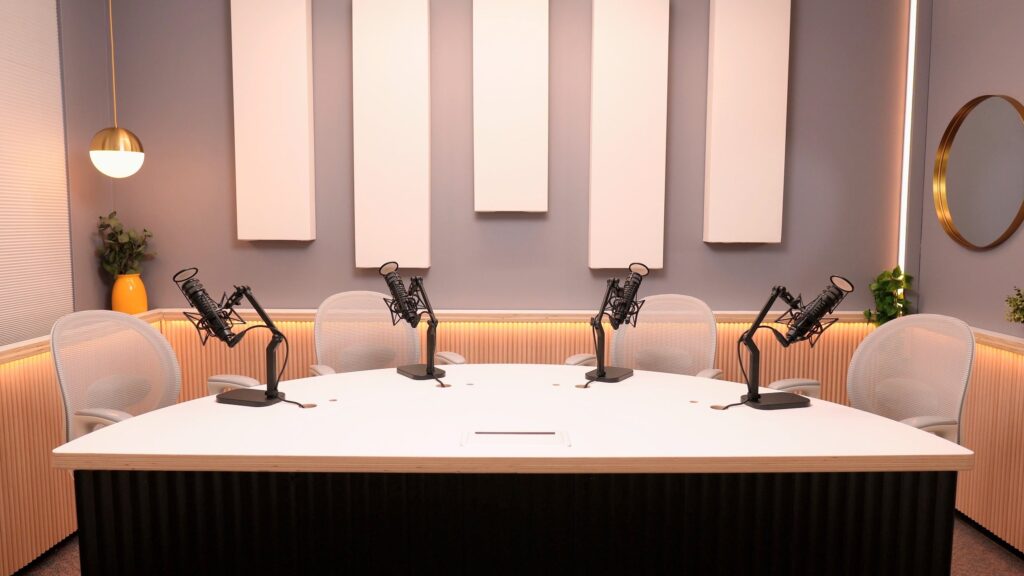
Yet the industry faces a creative challenge as it matures. Livingstone Mumelo, writing on LinkedIn, observed that many Kenyan podcasts are “starting to sound the same. Same studio aesthetic. Same guest rotation. Same interview flow. Same predictable questions.”
He recounted a guest who was tired of telling the same story across multiple shows: “The issue isn’t a lack of interesting people in Kenya. The issue is a lack of depth in preparation and creativity in execution”.

What comes next
The trajectory of Kenyan podcasting suggests several possible futures. The video-first, YouTube-native model has proven commercially viable for top creators and has forced traditional media to take notice.
Live events represent another frontier: in September 2025, Spotify powered “Podcast Live Sessions: Nairobi,” featuring TMI Podcast, The Sandwich Podcast, and So This Is Love, demonstrating that podcast audiences can be mobilized beyond the screen. The event reflected what many listeners seek: “a sense of community and authenticity rarely found in mainstream media”.
The industry’s most pressing task, however, is building the measurement infrastructure that would allow brands to invest with confidence. Until podcast audiences are counted with the same rigor as television ratings, the format’s remarkable reach will remain, in commercial terms, a promise rather than a proven proposition.
