

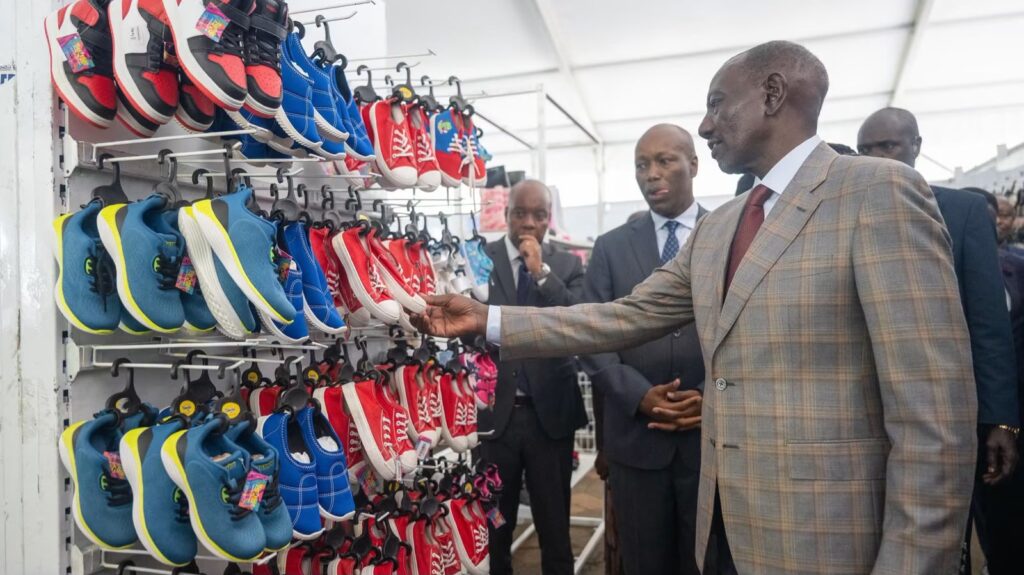
President William Ruto has announced plans to establish a modern leather manufacturing facility in partnership with a South Korean investor, targeting the production of one million pairs of shoes as Kenya seeks to expand local footwear manufacturing and reduce reliance on imports.
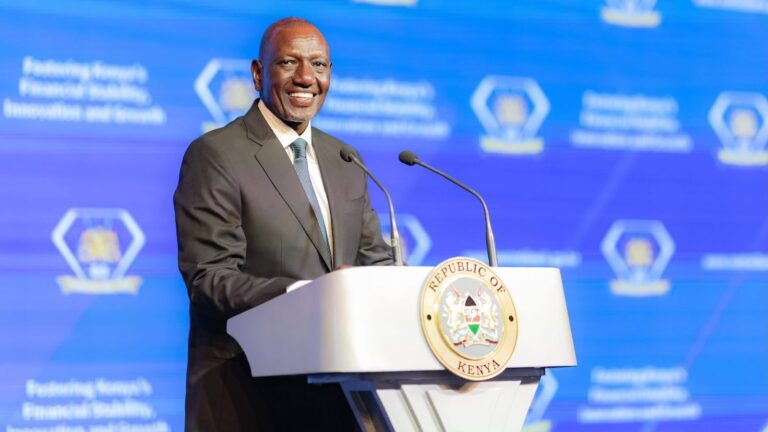
Speaking on Wednesday, November 4, 2026, Ruto said the proposed investment would complement the government’s Ksh5.8 billion investment in the development of the Kenya Leather Industrial Park in Kenanie, Machakos County.
The President said the industrial park would provide modern facilities for leather processing and manufacturing, while the government’s Buy Kenya, Build Kenya strategy would create markets for locally manufactured footwear.
“In the leather sector, our KSh5.8 billion investment is supporting the development of the Kenya Leather Industrial Park in Kenanie, Machakos County, with modern, ready-to-use facilities for processing and manufacturing. Through our Buy Kenya, Build Kenya strategy, we are expanding markets for locally manufactured footwear, including supplies to the National Police Service and other security agencies. We are also engaging a Korean investor to establish a modern leather manufacturing facility with the ambition of producing one million pairs of shoes, creating new opportunities for value addition, investment, and jobs,” Ruto stated.
The proposed facility is expected to produce one million pairs of shoes, although the President did not identify the South Korean investor, disclose the exact location of the factory or provide a timeline for its construction and commencement of operations.
Ruto said government institutions, including the National Police Service and other security agencies, were among the markets being targeted for locally manufactured footwear.
The procurement strategy is intended to expand opportunities for domestic manufacturers by increasing demand for products made using locally available raw materials.
The announcement formed part of the administration’s wider plan to increase the contribution of manufacturing to 20 per cent of Gross Domestic Product (GDP) and create one million jobs by 2030.
The President said Kenya needed to move beyond exporting raw materials and increase the production of finished goods that could compete in international markets.
“Our ambition is not simply to supply raw materials to the world. It is to supply finished products, technology, innovation, and Kenyan brands. A factory must have a market, and the larger the market, the greater the opportunity to invest, expand and create jobs,” he said.
He added that industrialisation and trade expansion needed to progress together to enable local manufacturers to access markets across Africa and beyond.
“That is why our industrialisation and trade agendas must move together. We must make more in Kenya, for Africa and the world,” Ruto stated.
The President also highlighted the importance of developing technical skills and strengthening partnerships between industries, universities and training institutions to prepare young Kenyans for employment in modern manufacturing.
He said the government was positioning the country to attract investment in advanced manufacturing and other emerging industries while creating opportunities for skilled workers.
Ruto maintained that expanding local production would enable farmers, artisans and manufacturers to participate in larger industrial supply chains.

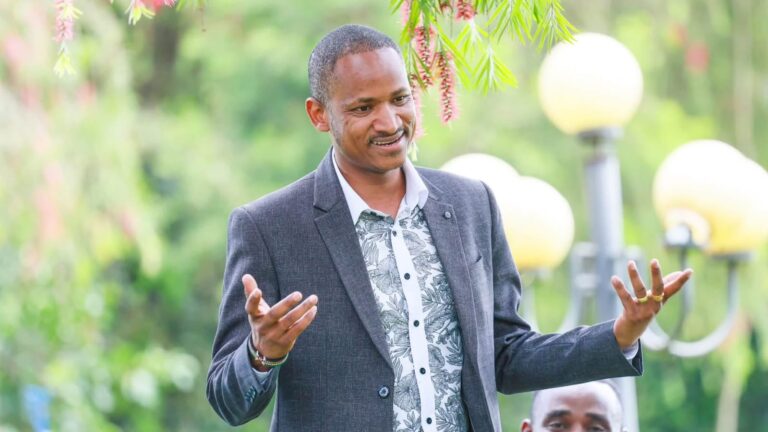
“We are building a Kenya where farmers earn more through local processing, artisans supply major industries, young people find skilled employment, and Kenyan products compete across Africa and the world,” he said.
He further pledged continued government support through infrastructure development, a competitive business environment and improved access to markets.
“Government will continue to provide economic stability, enabling infrastructure, a competitive business environment and access to markets. To our captains of industry, I say: invest in Kenya. Expand your factories. Modernise production. Train our young people. Source locally. Build Kenyan brands that compete with the best in the world,” the President stated.
The proposed Korean-backed shoe manufacturing facility also comes amid the government’s efforts to develop the Kenya Leather Industrial Park into a centre for leather processing, footwear production and other leather-related industries.
The 500-acre facility in Kenanie is intended to accommodate businesses involved in leather processing, shoe manufacturing and the production of leather goods.
In September 2026, Realeather Limited became the first company to receive a commissioned warehouse at the industrial park after announcing plans for a US$4 million investment in leather manufacturing.
The company planned to manufacture suede leather, shoes, leather gloves and accessories, with an initial employment projection of 200 workers expected to rise to more than 500 as operations expanded.
The government had also commissioned a Ksh375 million water supply project to support industrial activities at the park. The infrastructure included two boreholes, a 25-kilometre transmission pipeline and an internal distribution network designed to supply approximately 1.3 million litres of water daily.
The water system was intended to support up to 36 leather manufacturing firms.
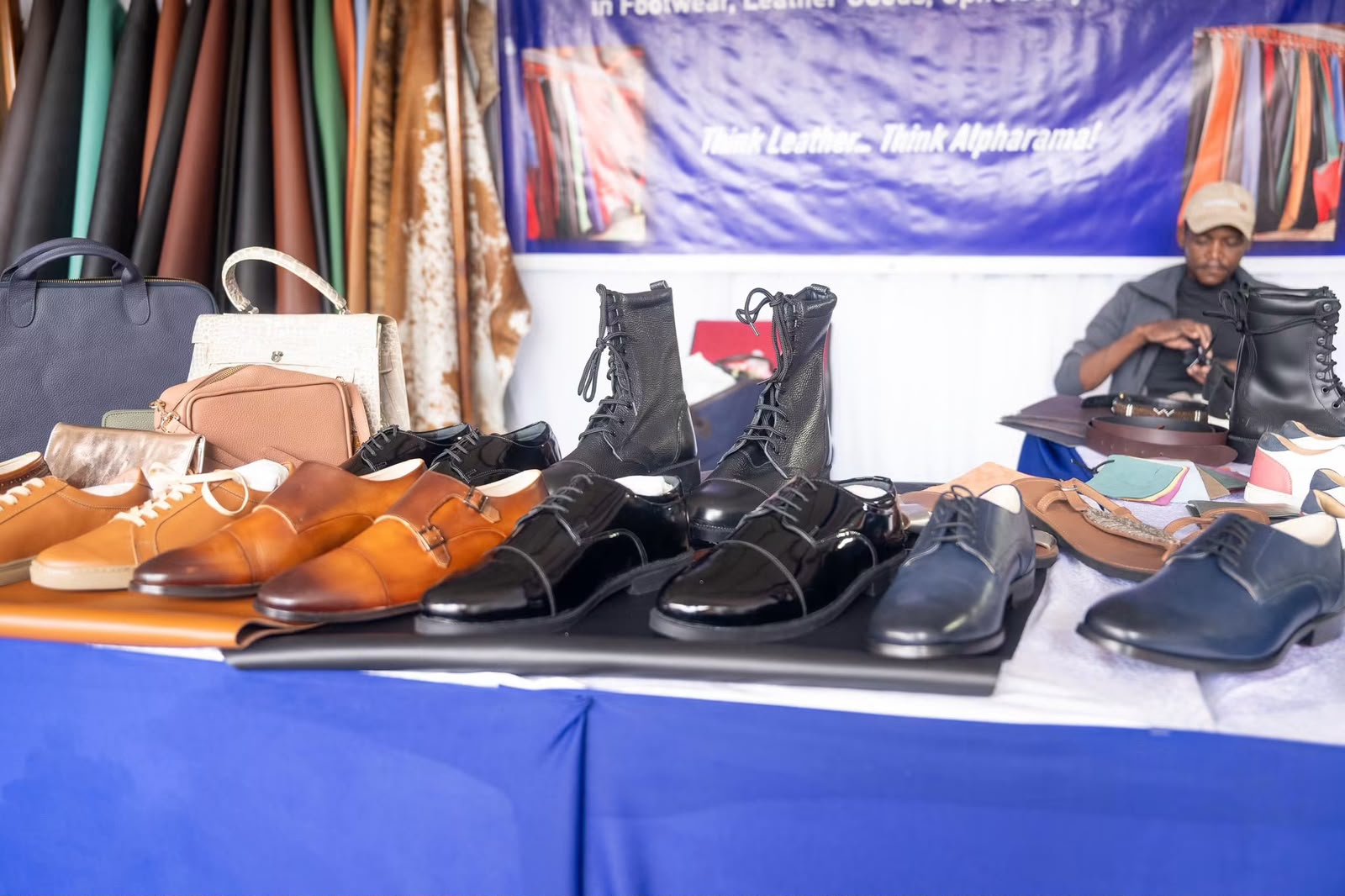
Ruto had previously indicated that his administration wanted Kenya to stop importing shoes within two to three years as local manufacturing expanded.
Speaking on October 8, 2026, he said the country intended to produce shoes and other leather products locally while urging manufacturers to improve the quality of their products.
He also disclosed that eight companies were already using Kenyan leather to manufacture products locally.
The latest announcement adds a proposed one-million-pair production target to the government’s footwear manufacturing plans, although the identity of the Korean investor and the implementation timeline for the new facility were not disclosed.
