

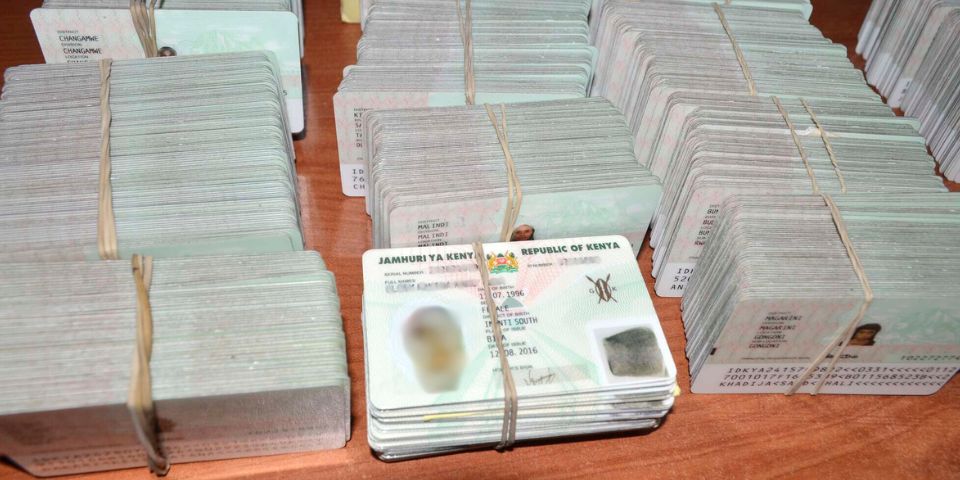
Huduma Kenya has issued guidance confirming that street persons aged 18 and above are eligible for national identification cards, outlining a special administrative route that bypasses the standard documentary requirements most Kenyans must meet.
The clarification came in response to a public inquiry regarding an abandoned street woman who had survived on the streets since childhood and was seeking an ID but lacked any parental documentation or birth certificate.
In a direct response to the concerned citizen, Huduma Kenya advised that the woman should first visit her local area chief’s office, where she would be guided on the process and issued a letter confirming her request. She would then present that letter to apply at the National Registration Bureau office located within the same compound.
“Hello, kindly ask her to visit the Chief’s office for a letter, then apply at the NRB office within the same compound,” Huduma Kenya stated in its response.
The chief’s letter effectively substitutes for the documents ordinarily required – a birth certificate, a photocopy of a parent’s ID, or a death certificate if the parents are deceased – which street persons typically cannot produce.
The guidance stipulates, however, that the application must be made at the NRB office within the same jurisdiction as the chief who issued the letter.

The clarification addresses a population that official statistics show is far from negligible. A 2025 report by the Kenya National Bureau of Statistics indicated that 18,049 families are living on the streets across Kenya.
Nairobi has the highest concentration with 4,690 individuals, followed by Nakuru at 1,546, Mombasa at 1,428, and Kiambu at 1,370.






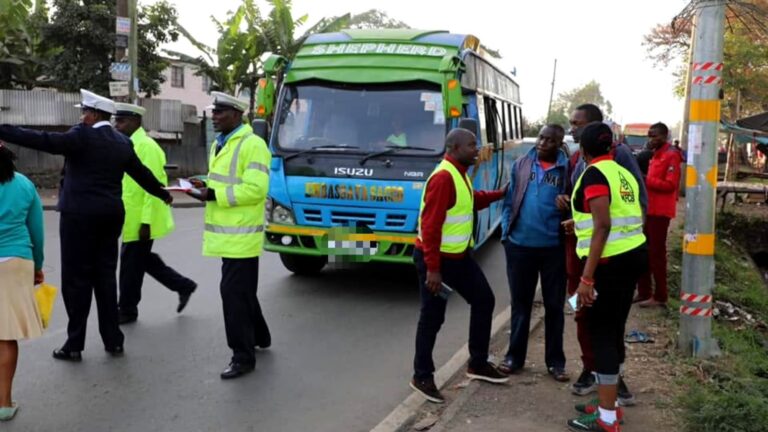





For these individuals, an ID is not merely a formality. It is the gateway to formal employment, voter registration, mobile money accounts, and access to government services including the Social Health Authority.
Without it, street persons remain locked out of the very systems designed to facilitate reintegration and social protection.
The guidance coincides with a wider government effort to expand ID access through mobile registration drives. The “Usajili Mashinani” campaign, launched by the Ministry of Interior and National Administration in October 2025, deploys biometric kits to underserved communities, with a particular focus on marginalised and hard-to-reach areas.
Separately, Huduma Mashinani outreaches routinely take National Registration Bureau services to local chief’s offices and community venues across counties.
Interior Cabinet Secretary Kipchumba Murkomen has previously stated that the government has abolished extra vetting requirements for ID registration in border counties and scrapped all charges for first-time applicants.
The removal of fees has already triggered a surge in applications at centres like Mombasa, where officials reported a 250 per cent increase.
For street persons, however, the barrier has never been primarily financial. The absence of any documentary trail – no birth record, no parental identification, no fixed address – has historically left them in administrative limbo.
