

President William Ruto has revealed that Kenya earned Ksh52.1 billion from exports of unroasted coffee in 2025, nearly double the Ksh26.1 billion recorded in 2021, as his administration seeks to expand local processing and increase the value of Kenyan coffee in international markets.
Speaking on Wednesday, November 4, 2026, Ruto disclosed that the government had also advanced Ksh15.07 billion to nearly 684,000 coffee farmers through the Coffee Cherry Advance Revolving Fund.
The President said the financing programme was part of broader efforts to improve farmers’ earnings while strengthening the country’s agricultural sector through reforms and investment in local processing.
“In coffee, the Coffee Cherry Advance Revolving Fund has advanced KSh15.07 billion to nearly 684,000 farmers. Unroasted coffee exports earned KSh52.1 billion in 2025, compared with KSh26.1 billion in 2021,” Ruto stated.
The figures represented an increase of approximately 99.6 per cent in export earnings over the four-year period, highlighting the growth in revenue generated from Kenya’s unroasted coffee exports.
However, the President said the country needed to move beyond exporting raw coffee beans and invest in processing activities that would enable Kenyan businesses to capture more value from the commodity.
He questioned why Kenya continued to export coffee for processing and branding elsewhere despite producing some of the finest varieties globally.
“But why should Kenya grow some of the finest coffee in the world, only for much of its roasting, grinding, packaging, and branding to take place elsewhere? We must invest in those activities here and build Kenyan brands that command a premium abroad,” he said.
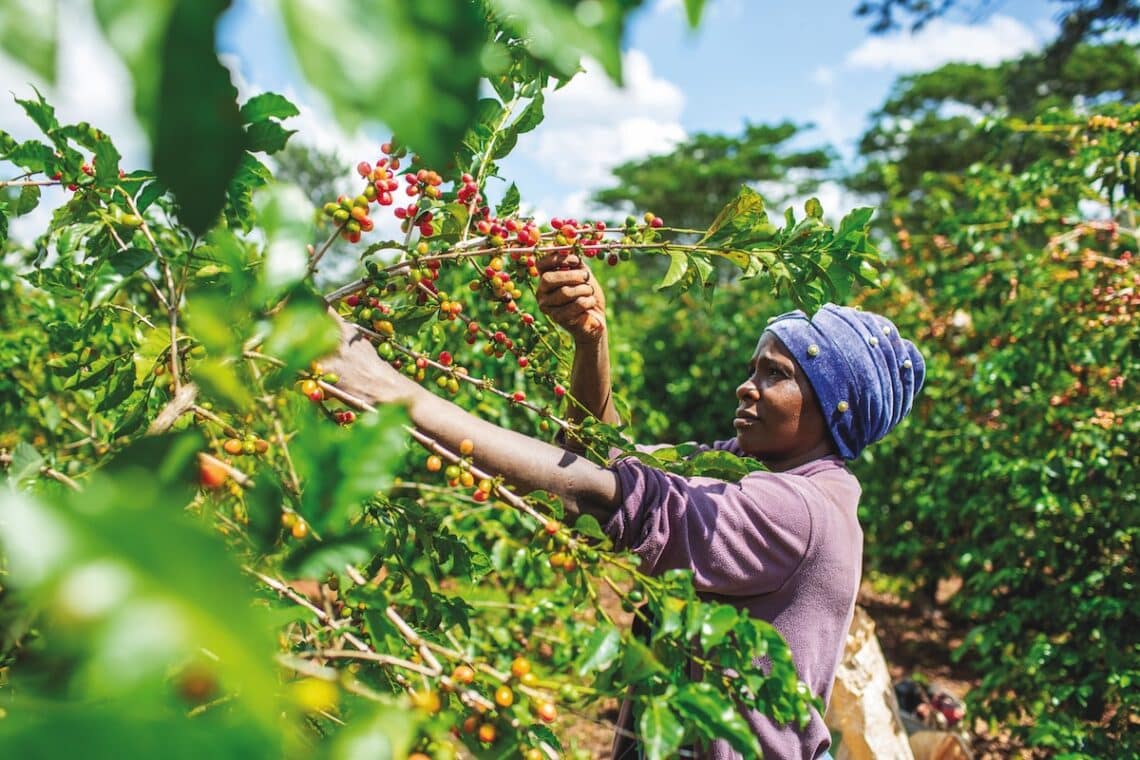
Ruto maintained that expanding local processing would help retain more agricultural earnings within the country, improve farmers’ incomes and create employment opportunities.
“Beyond producing more of what we consume, we are determined to capture greater value from what our farmers grow. Through reforms and investment in local processing, we are keeping more of that value in Kenya, increasing farmers’ earnings, and creating jobs,” he stated.
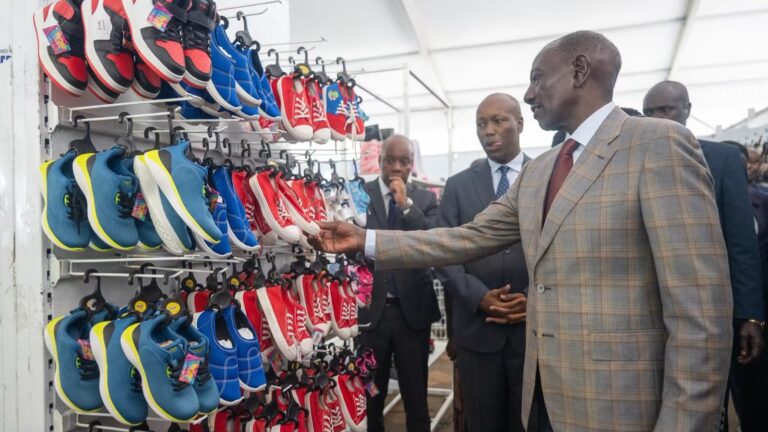
The President also highlighted the government’s plan to establish County Aggregation and Industrial Parks to bring processing facilities closer to farmers and support the development of value-added agricultural products.
“We are developing County Aggregation and Industrial Parks in 34 counties, with 15 already complete, to bring processing closer to farmers,” he said.
Ruto said the government wanted Kenya to increase exports of finished products rather than remain dependent on supplying raw agricultural materials to international markets.
“Our ambition is not simply to supply raw materials to the world. It is to supply finished products, technology, innovation, and Kenyan brands. A factory must have a market, and the larger the market, the greater the opportunity to invest, expand and create jobs,” he stated.
He added that the country’s industrialisation and trade strategies needed to complement each other to create opportunities for local producers and manufacturers.
“That is why our industrialisation and trade agendas must move together. We must make more in Kenya, for Africa and the world,” the President said.
Ruto further noted that the government had expanded access to international markets through strategic trade agreements, which he said would provide opportunities for Kenyan farmers, manufacturers and exporters.
“These are not merely trade agreements. They are opportunities for Kenyan farmers, manufacturers and exporters to reach more customers, expand production and create jobs,” he stated.
