

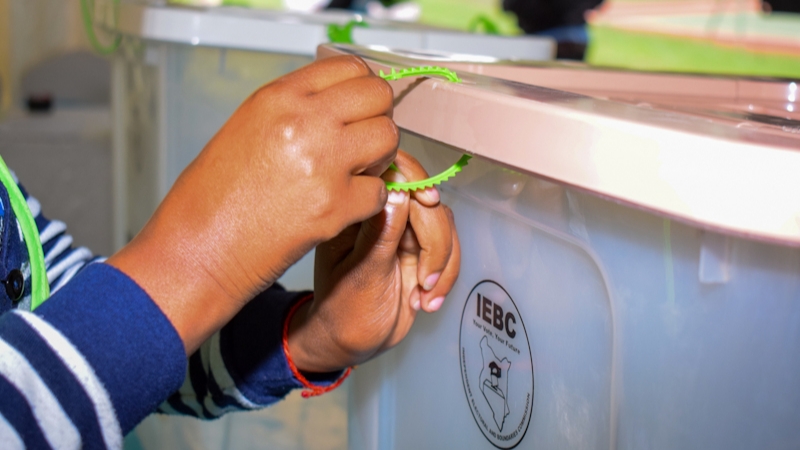
By the time Kenyans line up to vote in 2027, the most dangerous political actor in the country may not be a politician at all. It may be a generative model that has learned exactly which fears, resentments, and tribal nerves to press – and a political class willing to pay for the privilege.
The warning signs are no longer speculative. In September 2026, the AI company Anthropic disclosed that unidentified actors had used its Claude models to generate batches of exactly fifty tweets at a time, explicitly instructed to mimic organic grassroots enthusiasm for a sitting government official ahead of the 2027 election. The operation was rated low-impact because it failed to escape its network of fake accounts. But that is precisely the wrong comfort to take. The significance lies not in whether that particular campaign worked, but in the fact that someone with modest resources and a willingness to deceive tried – and that the public learned of it almost by accident, through a voluntary corporate disclosure prompted by a tip from a competitor.
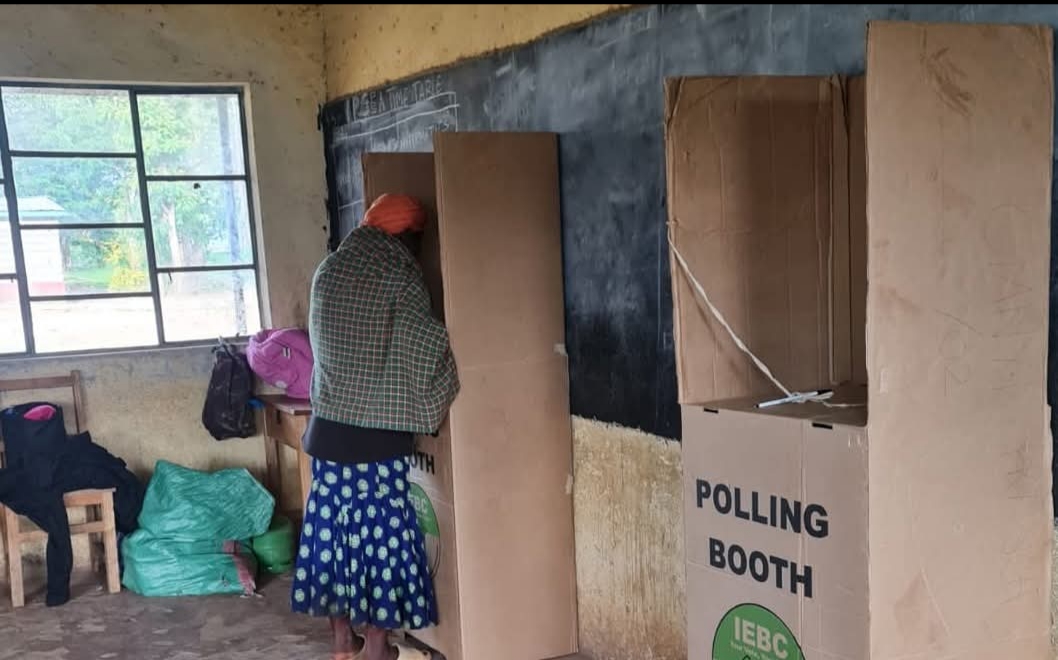
Kenya is not starting from zero in building defenses, but it is building them on shifting sand. The government has drafted an AI policy, mooted amendments to the Computer Misuse and Cybercrimes Act, and convened multi-stakeholder forums on digital election integrity. The National Cohesion and Integration Commission has partnered with faith leaders to counter AI-generated hate speech and deepfakes. The Independent Electoral and Boundaries Commission’s own operations plan names AI-driven misinformation as an emerging risk.
These are necessary steps. They are also, on their own, insufficient – because they treat AI as a content problem to be moderated, when it is actually a trust problem to be exploited. The most corrosive use of AI in 2027 will not be a single viral deepfake of a candidate, easily debunked and quickly forgotten. It will be the slow, ambient erosion of the very possibility of verification. When any audio can be synthesized, any video fabricated, any photograph generated, the liar’s dividend compounds: politicians caught in genuine indiscretions will claim fabrication, and a public already primed to disbelieve everything will have no reliable mechanism for distinguishing the authentic from the artificial.
The structural vulnerabilities are well documented. Seventy-seven percent of Kenyans rely on social media for political information, and WhatsApp – where misinformation spreads through friends and family networks, largely outside the reach of public content moderation – is the most potent vector. Academic research has found that as many as ninety percent of Kenyans believe they are sometimes or often exposed to made-up political news. A Reuters Institute survey cited in earlier reporting found that three-quarters of Kenyan news consumers could not distinguish real from fake content online. Generative AI does not create these conditions. It industrializes them.
What makes 2027 different from 2022, when deepfakes and manipulated videos were already deployed during the campaign period, is the cost curve. Consumer-facing generative AI has lowered the barrier of entry to the disinformation market dramatically. A troll farm no longer needs a stable of human writers to produce hundreds of tailored messages in Sheng, Swahili, and English, calibrated to the idiosyncrasies of local political discourse. It needs a subscription and a prompt. The KICTANet research on Kenya’s information ecosystem notes that platforms’ moderation capacity for vernacular languages and locally contextualized political content remains a persistent gap. AI-generated content in Kenya’s mother tongues, code-switched and culturally embedded, is precisely what automated detection systems are least equipped to flag.
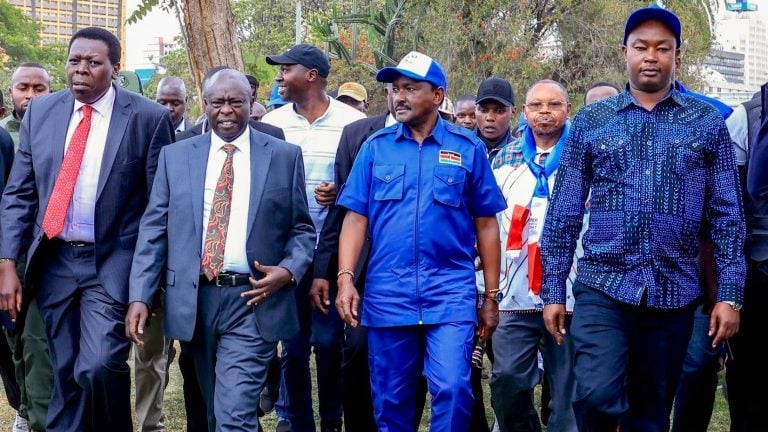


The institutional response, meanwhile, is racing against a clock it cannot control. The AI Bill remains in draft. The proposed AI Commissioner, with authority to mandate transparency and labeling, does not yet exist. Platforms have shown little appetite for the kind of aggressive, locally informed moderation that the moment demands, and the government’s leverage over them is limited. The IEBC has said it will strengthen partnerships with platforms and media regulators, but those partnerships remain opaque, and any arrangement that involves rapid removal of political content carries its own risks to free expression.
There is a temptation, in moments like this, to reach for censorship. Kenya has been here before. Courts have already raised concerns that provisions of the cybercrimes framework risk restricting legitimate expression. Any new measures targeting AI-enabled manipulation must be grounded in law, proportionate, and accompanied by robust safeguards – or they will become tools of political contestation rather than election protection. The distinction between a coordinated deceptive network and legitimate political coordination is not always obvious, and the power to draw that line is a power that will be abused if left unchecked.
The more durable defense is not regulatory but civic. Nationwide digital and media literacy campaigns, sustained rather than rolled out in the final weeks before voting, are the only intervention that scales to the size of the problem. Kenyans need to learn not just that deepfakes exist – most already know that – but how to verify, how to pause, how to recognize the emotional signature of content designed to inflame rather than inform. This is not a technological fix. It is an educational one, and it requires investment that no single election cycle will fully reward.
The 2027 election will not be Kenya’s first encounter with digital disinformation, but it may be the first in which the question is no longer whether a given piece of content is real, but whether reality itself remains a shared reference point. The actors who would exploit AI to fracture that consensus are already at work. The question is whether the institutions and citizens they seek to deceive will be ready.
By Amina Wanjiku
