

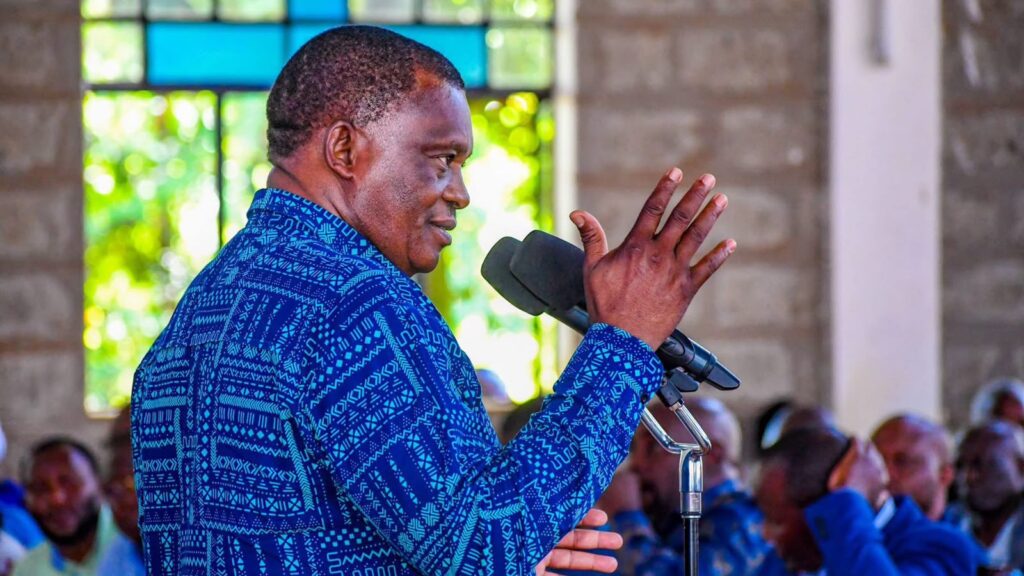
Democratic Party leader Justin Muturi has criticised former Deputy President Rigathi Gachagua over his approach to opposition coalition-building, accusing him of political bullying and risking divisions within the United Opposition ahead of the 2027 General Election.
In a statement issued on Monday, November 2, Muturi questioned Gachagua’s commitment to the opposition’s collective presidential ambition under the Wantam movement, warning that disagreements over political arrangements could weaken efforts to challenge President William Ruto.
Muturi took issue with Gachagua’s push for a tripartite political arrangement, arguing that splitting the opposition into separate political formations could undermine its chances of forming a united national coalition.
“I wish to put the United Opposition on notice: the current political trajectory being pursued by Mr Gachagua raises serious questions about his commitment to the collective presidential ambition of the Wantam movement,” Muturi stated.
The former Attorney General argued that Kenya’s presidential elections cannot be won through the support of one ethnic community or region, insisting that victory requires broader national alliances.
“Mr Gachagua must understand one fundamental truth: No Kenyan President has ever been made by one community alone. The presidency is won through national consensus, strategic alliances and the ability to unite Kenyans across ethnic and regional boundaries,” he said.
Muturi further questioned whether Gachagua’s political strategy was aimed at securing the presidency or positioning individual political formations to negotiate for parliamentary and county government positions after the elections. “Is the objective to win the presidency or to control MPs, legislators and devolved units while sacrificing the bigger national ambition?” he posed.
He maintained that opposition leaders needed to prioritise compromise and strategic thinking rather than pursue arrangements that could create competing political centres.
“A tripartite arrangement is not a magic formula for State House. Fragmenting an opposition that needs unity raises serious questions about the political direction being pursued,” Muturi added.
The Democratic Party leader also warned against what he described as attempts by individual politicians to dominate the opposition coalition. “Let it be clear: No individual owns the United Opposition, and no community has a monopoly on Kenya’s presidency. Political partnerships must be built on mutual respect, not ultimatums, political bullying or supremacy contests,” he stated.
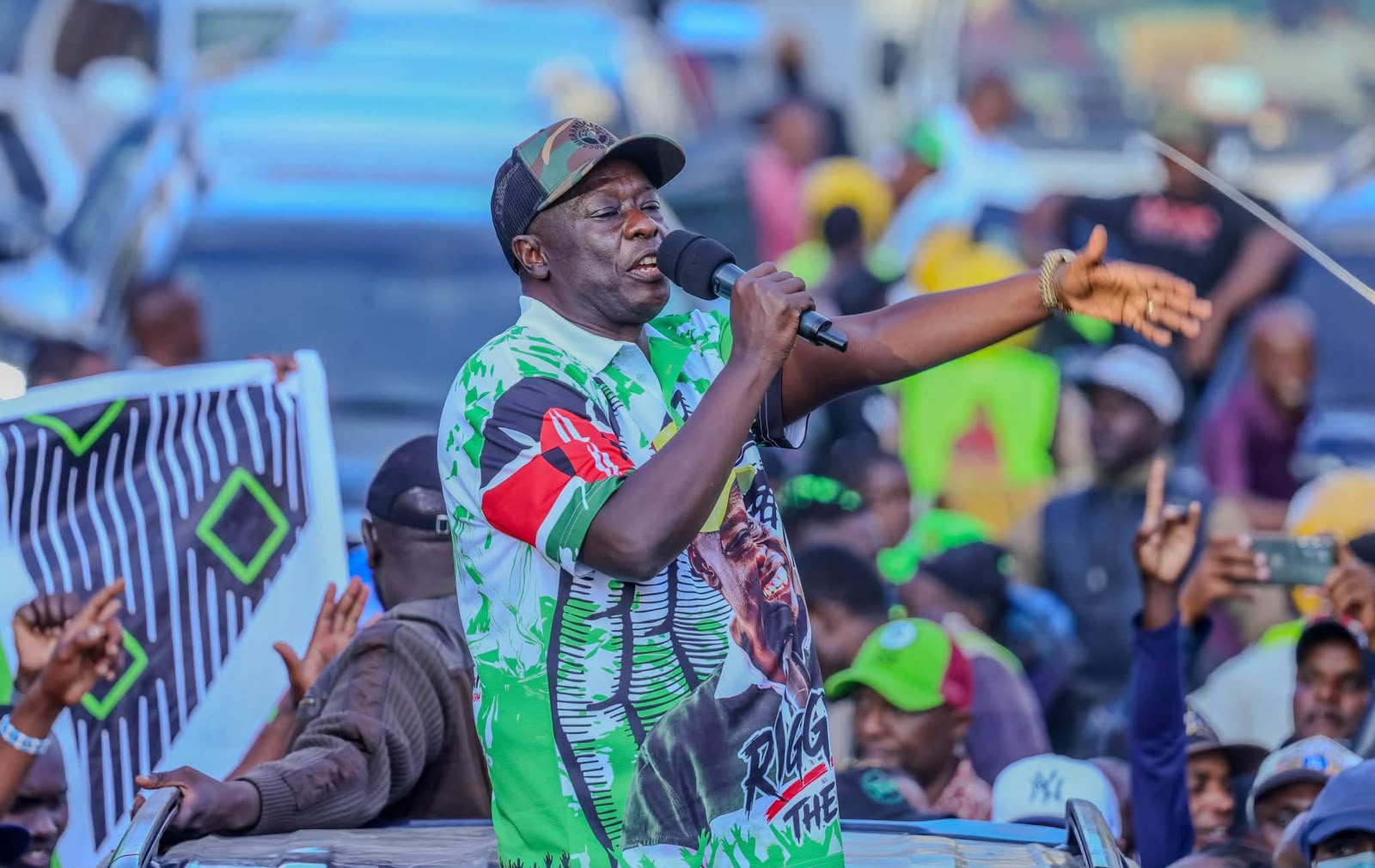
Muturi also invoked the political history of Gachagua’s family, citing the late former Nyeri Governor Nderitu Gachagua’s political alliances as an example of why no single political formation should claim ownership of a community’s support.
He recalled that Nderitu won the Nyeri gubernatorial contest against The National Alliance (TNA), despite the GNU political formation supporting then presidential candidate Uhuru Kenyatta.
According to Muturi, the outcome demonstrated that political alliances were complex and could not be dictated by individual leaders. He further questioned the assumption that three separate political formations could automatically secure victory for the opposition in the 2027 presidential election.

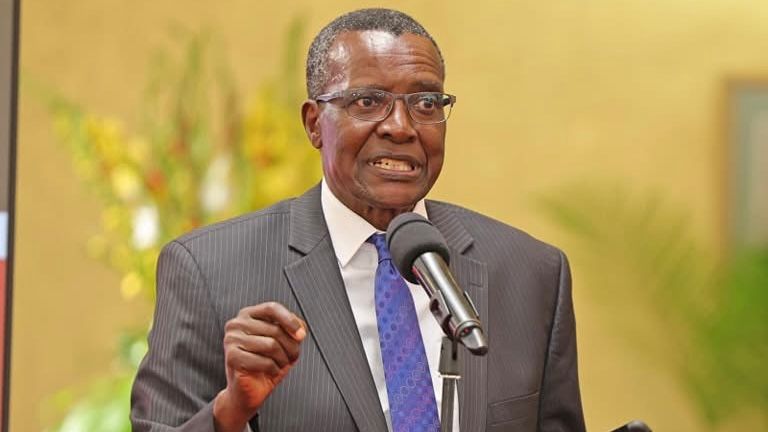
“The assumption that three separate political formations can automatically deliver the Wantam presidency is deeply questionable. Kenya’s presidential politics cannot be reduced to ethnic arithmetic, regional strongholds or individual bargaining power,” he stated.
The Democratic Party leader also defended the Komboa Kenya initiative, insisting that the opposition’s push to remove President Ruto from office required discipline, sacrifice and a shared political objective.
“Komboa Kenya is not child’s play. It is a national undertaking demanding sacrifice, discipline, strategic thinking and genuine commitment to a common objective,” Muturi said.
He warned that individual presidential ambitions should not undermine the opposition’s wider objective. “No individual ambition should be allowed to overshadow the aspirations of millions of Kenyans,” he added.
Despite his criticism of Gachagua, Muturi said the Democratic Party remained open to negotiations with other opposition formations. “As the Democratic Party, we remain ready and willing to engage in dialogue with all those who are genuinely committed to meaningful talks and constructive solutions. However, let it be clear: we will not capitulate to mischief, intimidation, or any attempts to undermine our principles,” he stated.
Muturi’s statement comes amid disagreements among opposition leaders over how to structure their political alliance and select a presidential candidate to challenge Ruto in 2027.
In August 2026, a United Opposition retreat in Kiambu ended without resolving disagreements over the coalition’s leadership, secretariat, decision-making structure and presidential candidate selection.
The leaders, however, signed a unity agreement committing themselves to supporting whoever would emerge as the coalition’s presidential candidate.
Gachagua has separately advocated for political parties to retain their identities while working together through separate arrangements before negotiating a wider opposition coalition.
In August, he proposed a Mount Kenya political alliance bringing together parties supporting the one-term agenda, which he referred to as the Hyena Coalition. The disagreements have continued even as opposition leaders hold consultations to establish a common presidential ticket.
On October 20, Gachagua hosted Nairobi Senator Edwin Sifuna and leaders associated with the Linda Mwananchi movement at his Wamunyoro residence in Nyeri, where the groups discussed cooperation and the possibility of supporting a joint presidential candidate.
