

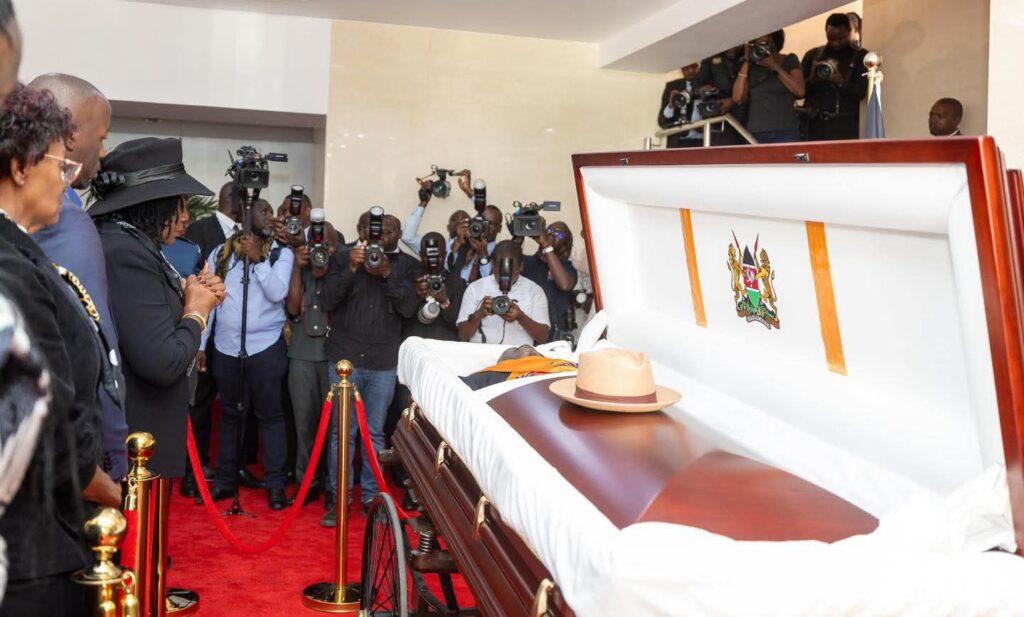
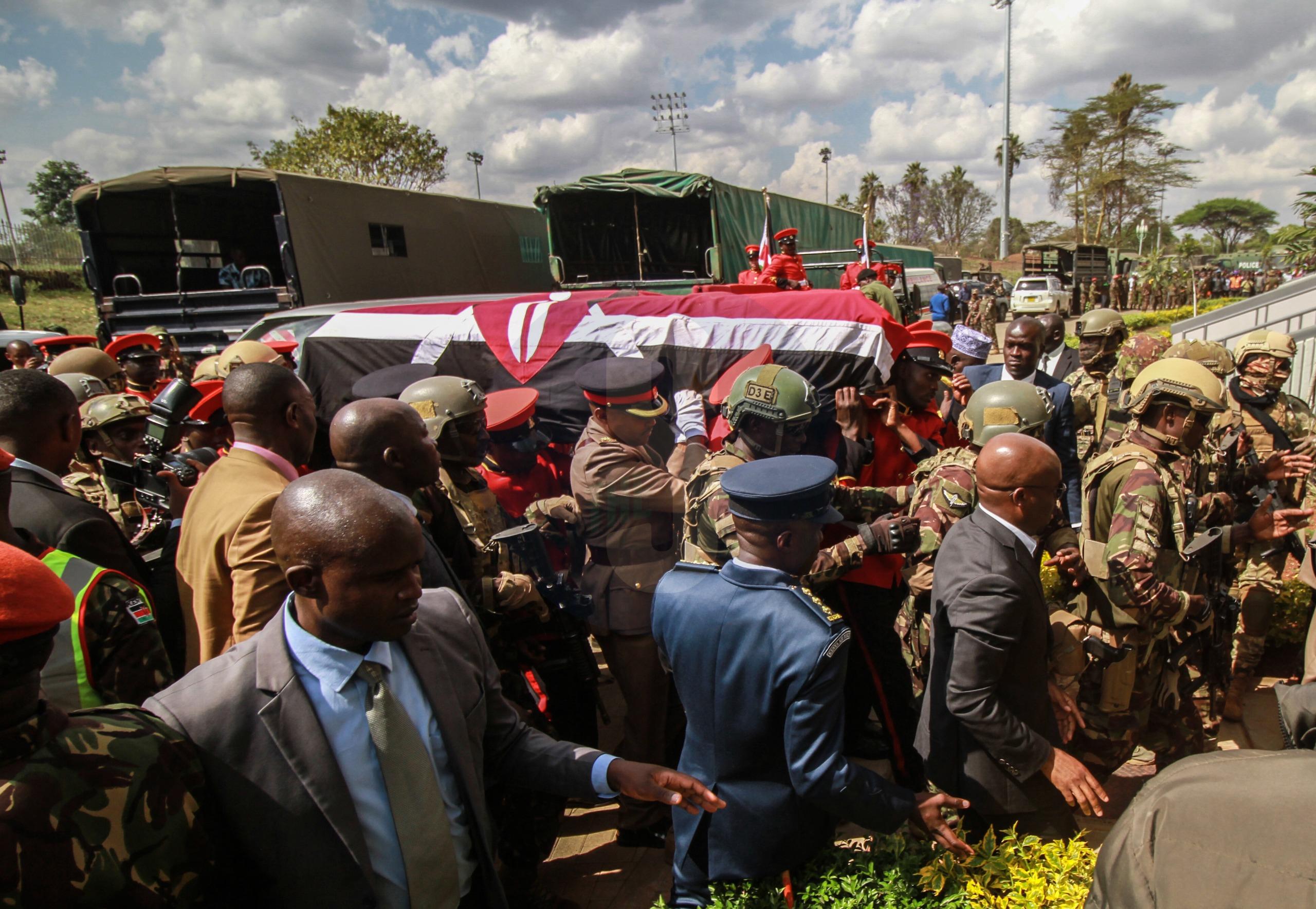
A BBC Africa Eye investigation has found that three mourners killed by police gunfire at the national farewell for former Prime Minister Raila Odinga were far from any violent confrontation, and that an elite police unit responsible for presidential protection may have fired the fatal shots.
The findings, published Friday, challenge the official narrative that the victims were part of a rowdy group attempting to breach security barricades at Nairobi’s Kasarani Stadium on October 16, 2025.
The investigation analyzed more than 1,500 photographs and videos to reconstruct the events of that day, establishing the precise locations of the three men who died.
Evans Kiche, a 40-year-old chef and father of seven, was approximately 60 meters from the confrontation when he was fatally shot in the head. Vincent Ogutu and Jidah Burka were at least 160 meters away, in stands on the opposite side of the stadium, far from the VIP pavilion where scuffles broke out.
Autopsy reports confirmed that Ogutu, 36, died from a gunshot wound to the chest, while Burka, 42, was killed by a shot to the head.
According to the BBC’s reconstruction, the three men were among thousands who had waited for hours in 30°C heat to view Odinga’s coffin, with no public address system to provide updates. A small section of the crowd near the VIP pavilion began throwing objects, including plastic chairs, at officers.
The BBC’s forensic analysis identified at least eight police officers operating together in tactical clothing and military camouflage, carrying assault rifles with no visible insignia and their faces covered. Their uniforms and movements were consistent with a layer of security assigned to President William Ruto and other VIPs before and after the shooting.
At least three officers from this unit appear to have fired their weapons, according to the investigation. The BBC identified one of these officers as part of an elite police unit responsible for presidential protection. However, the investigation could not establish which bullets killed each victim, nor could it rule out other officers firing inside the stadium.
Interior Cabinet Secretary Kipchumba Murkomen told the BBC that police action had been “restrained” after the crowd began throwing stones. However, the BBC’s analysis of footage found no evidence that stones were thrown, though plastic chairs and other objects were visible.
Murkomen acknowledged the operational pressures officers faced, saying they had been under “so much pressure” after working many hours non-stop and being deployed to a new venue at the last minute.
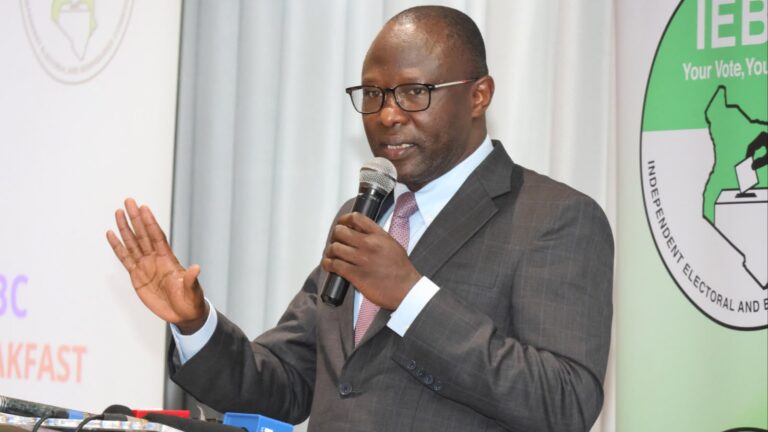
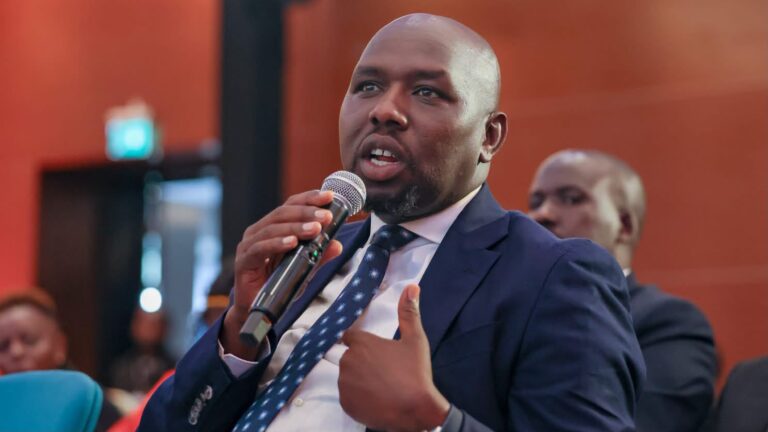
Responding to questions about police conduct, he said: “I don’t think… somebody [was] sitting there and saying: ‘Shoot now’. It is the judgment of the police officer at the spur of the moment”.
The National Police Service told the BBC that “there are huge lessons picked from the day’s events,” which had “formed a fundamental learning curve for a better, more professional application in the future”.
Yvonne Akinyi, whose husband Vincent Ogutu was among those killed, told the BBC: “The people who we look at to protect us, these are the people that cause us this pain. These are the people that make us to become young widows in this country, young orphans in this county”.
Ogutu had not planned to attend the farewell. According to his widow, he was in central Nairobi with friends when they saw crowds heading toward the stadium and decided to join them.
A year after the shootings, Kenya’s police watchdog, the Independent Policing Oversight Authority (IPOA), is still investigating the deaths and police response. No one has been held to account. The IPOA did not respond to the BBC’s request for comment.
Raila Odinga, Kenya’s longest-serving opposition leader and former prime minister, died on October 15, 2025, at age 80 while receiving medical treatment in India. His death prompted a national outpouring of grief.
The public viewing was originally scheduled to take place at parliament, but the scale of the crowds and fears of a security breach forced a last-minute change of venue to Kasarani Stadium. Officials said they had little time to secure the 48,000-capacity venue, and thousands spilled onto the pitch and into the stands unchecked.
The BBC Africa Eye documentary, “Goodbye Raila,” reconstructs the shooting and traces the movements of the specialist VIP protection unit.
