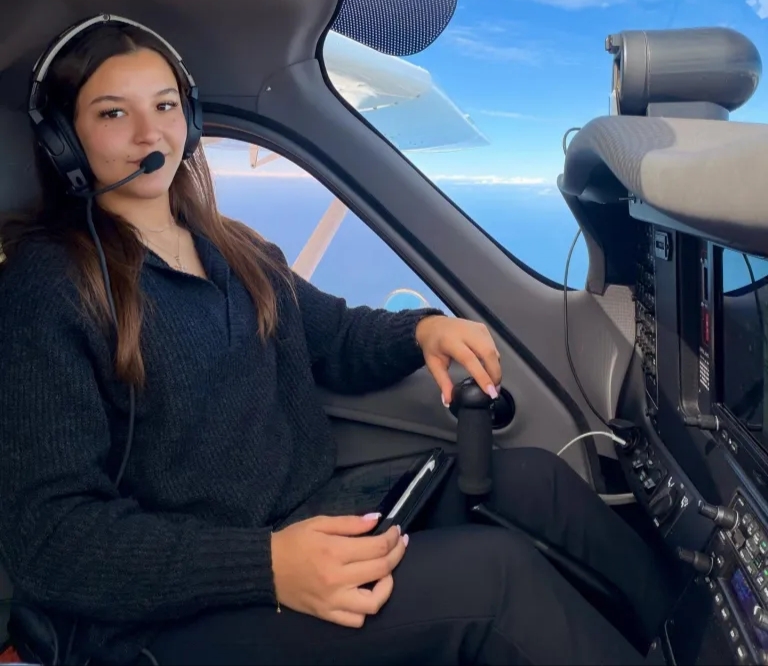
Nathalia Gadelha Filgueiras packed an extraordinary amount of living into twenty years.
By the time of her death, she had earned a pilot’s license before a driver’s license, logged over 1,300 flight hours, and was working as a commercial co-pilot – achievements that made her a standout in the aviation world and, ultimately, a tragic figure in one of Florida’s deadliest recent aviation disasters.
Early life and the roots of a passion
Filgueiras was born in Florida to Brazilian parents, Camila Corteleti and Allan Filgueiras, and grew up in Palm Beach County. She was the middle of three sisters. Her path to the cockpit began not in a formal program, but in the passenger seat beside her father.
Allan Filgueiras took up recreational flying in 2018. Young Nathalia, who enjoyed watching planes take off and land at Boca Raton Airport, was quickly captivated.
Her mother recalled that by the age of twelve, Nathalia had already announced her intention to become a pilot. Her father became her first instructor and her biggest cheerleader, later writing on social media beneath a photo of her in flight that he was “a proud dad of a super pilot”.
A license to fly before a license to drive
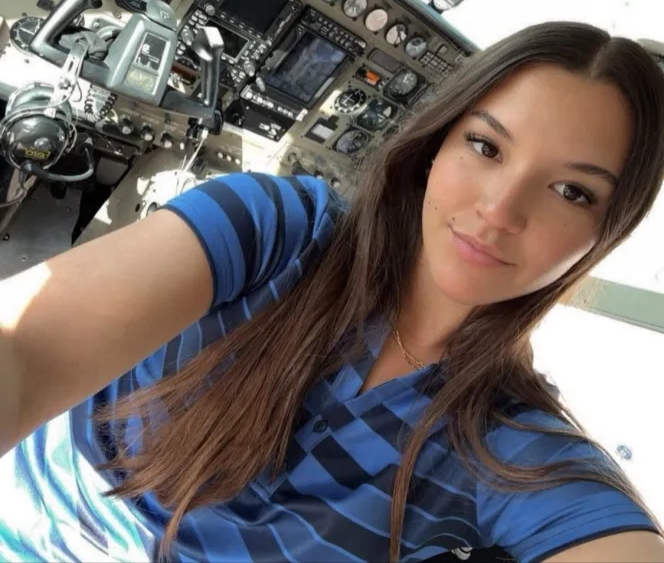
Filgueiras began ground school in 2020 while still a student at West Boca Raton High School. She logged 88 flight hours before earning her private pilot’s license in September 2023, at just seventeen years old – months before she would have been eligible for a standard driver’s license.
The School District of Palm Beach County’s Aviation Academy helped fund her license after introducing the program that year.
Her youth and unusual trajectory made her a local media darling. In an October 2023 interview with CBS12, she leaned into the novelty of her situation with disarming humor.
“I definitely do brag because people say, ‘oh you can’t drive,’ and I’m like, ‘yeah but I can fly.'”
She added, with characteristic self-awareness: “I like being different than everyone, so to me I think it’s cool that like it’s not really an opportunity, I just didn’t do it, and this is how it ended up. But I think it’s cool. Some people think that it’s weird that I can fly planes, but I can’t drive a car, I mean I can but, a lot of people think it’s funny.”
Building a career in the cockpit
After high school, Filgueiras completed her training at American Flyers, a flight school with a branch in Pompano Beach, Florida. She worked briefly as a flight instructor in Fort Lauderdale before securing a position as a commercial pilot for Upper Jets, a private charter firm based in Fort Lauderdale.
By the time of the crash, she had been flying professionally for approximately nine months and had accumulated over 1,300 flight hours – a remarkable figure for someone her age.
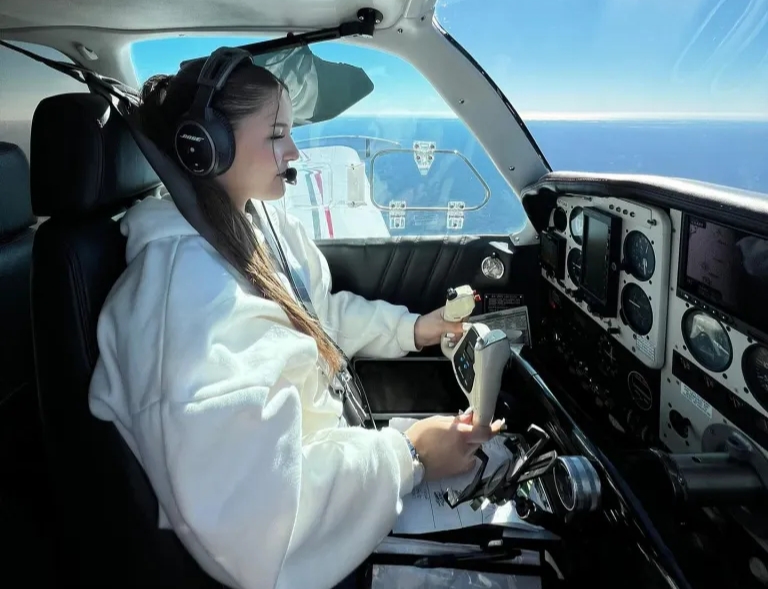
Her social media reflected a young woman fully immersed in the aviation world. She shared photos of herself in cockpits and videos of flights with her boyfriend, Justin, who was also a pilot. In one post, she proudly noted: “How often do you see 2 pilots under 21 with a commercial, multi-engine, instrument, CFI/CFI-I”.
 Who Was Adam Robinson? The Tech Entrepreneur Killed in Florida Learjet Crash
 Texas Tech Entrepreneur, Wife and Two Toddlers Among Nine Killed in Florida Learjet Crash
 Investigators Reveal New Details About Fatal Learjet Crash in Florida
 Nine Killed as Learjet 60 Crashes Into Florida Road in Massive Fireball







The crash
On Sunday, November 1, 2026, Filgueiras was serving as co-pilot aboard a Learjet 60 traveling from Austin-Bergstrom International Airport in Texas to North Eleuthera Airport in the Bahamas.
The aircraft carried nine people. Around 12:40 p.m., roughly ten minutes before the crash, she sent a text message to her boyfriend that her stepfather later described to the New York Post: “I’ve got turbulence, I’ve got ice.”
Air traffic control recordings captured the rapid deterioration of the flight. The pilot – believed by some reports to be Filgueiras, though authorities have not confirmed who was at the controls – reported icing and turbulence before declaring an emergency as the jet entered a catastrophic descent.
The final transmissions were desperate: “We’re descending 8,000, mayday, mayday, we’re descending 10,000 feet per minute,” followed moments later by, “We are in an overspeed condition descending 20,000 feet per minute… We’re gonna crash into the ground.”
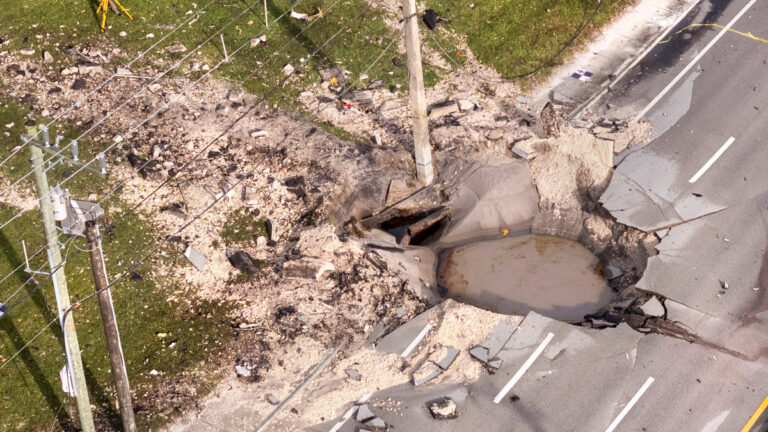
The Learjet plunged at a rate exceeding 32,000 feet per minute according to flight tracking data, banking sharply before slamming into South Military Trail in Greenacres, near West Palm Beach. The impact created a massive crater and a fireball.
All nine aboard were killed. No one on the ground was injured, though approximately 600 residents of a nearby mobile home park were evacuated.
The family’s grief and a mother’s premonition
Camila Corteleti had long carried a quiet dread about her daughter’s chosen path. In interviews following the crash, she gave voice to a grief that was both devastating and profoundly proud.
“I wanted her to live her dream, but I knew that her dream was going to be the thing that would take her away from me. I knew that a plane was gonna take her away from me. I always knew it but I was so proud of her. I know she was living her dream.”
She also reflected on the nature of her daughter’s passion: “She loved the freedom. It was completely different seeing the world from the top.”
Her stepfather, Thiago Corteleti, told the New York Post that despite her youth, Filgueiras had impressed everyone who worked with her: “Everybody was so impressed with her. They hired her because they knew how good she was and how much she loved it”.
And in a sentiment that captured the bittersweet truth of a life lived fully and ended too soon, her mother added: “I know if she could pick a way to go, this would be her way to go, but I didn’t want it to be so soon”.