

The final words from the cockpit of a Learjet 60 were not a routine sign-off, but a scream of impending doom.
On the afternoon of November 1, 2026, a private business jet carrying nine people from Texas to the Bahamas plummeted from the sky over suburban Palm Beach County, exploding into a fireball on a busy roadway just outside the City of Greenacres.
All nine aboard perished, and the investigation has since revealed a terrifying sequence of events: reports of icing and turbulence, a sudden overspeed condition, and evidence that the aircraft began to break apart before it ever hit the ground.
A routine departure turns fatal
The aircraft, a midsize Learjet 60 operated by Aurora Aviation (doing business as Upper Jets), departed Austin-Bergstrom International Airport in Texas at approximately 10:37 a.m. local time on Sunday. It was bound for North Eleuthera Airport in the Bahamas, a popular destination for private aviation.
On board were two flight crew members and seven passengers.
Among the crew was 20-year-old Nathalia Gadelha Filgueiras, serving as co-pilot. Filgueiras was a rising star in the aviation community, having earned her pilot’s license in 2023 at just 17 years old while a senior at West Boca Raton Community High School.
The Palm Beach County School District had funded her training as part of a specialized aviation academy. “Some people think that it’s weird that I can fly planes, but I can’t drive a car,” Filgueiras told a local TV station in 2023. “I think it’s funny.” Her license indicated she was rated to fly the Learjet but not to be in command of the flight.
The emergency unfolds
For the first two hours, the flight appeared normal as it cruised eastward at 35,000 feet. However, at approximately 12:47 p.m. Eastern Time, as the jet entered airspace over Florida, the situation deteriorated rapidly.
The crew contacted air traffic control to report encountering weather. According to archived communications and NTSB officials, the pilot reported “light, clear ice that is manageable and moderate turbulence.”
The turbulence was severe enough to cause altitude deviations of about 700 feet.
The crew requested permission to climb to 37,000 feet to escape the conditions, which air traffic control approved. Less than 30 seconds later, the flight turned catastrophic.
The pilot declared a mayday. The transmissions, captured by LiveATC.net, grew increasingly frantic. “We’re descending 8,000 – mayday, mayday – we’re descending 10,000 feet per minute,” the pilot radioed. Moments later, the situation worsened: “We are in an overspeed condition descending 20,000 feet per minute.”
 Who Was Adam Robinson? The Tech Entrepreneur Killed in Florida Learjet Crash
 Texas Tech Entrepreneur, Wife and Two Toddlers Among Nine Killed in Florida Learjet Crash
 Who Was Nathalia Gadelha Filgueiras? The 20-Year-Old Pilot Killed in Florida Jet Crash
 Investigators Reveal New Details About Fatal Learjet Crash in Florida







In a final, chilling transmission, the pilot screamed, “We’re going to crash into the ground,” followed by “We’re going to die!”
Impact and aftermath on the ground
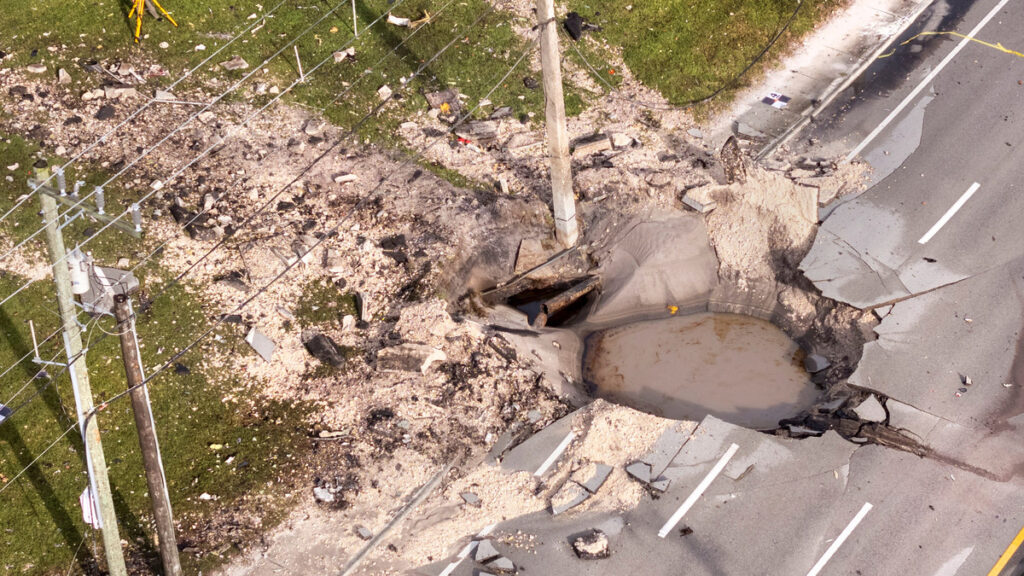
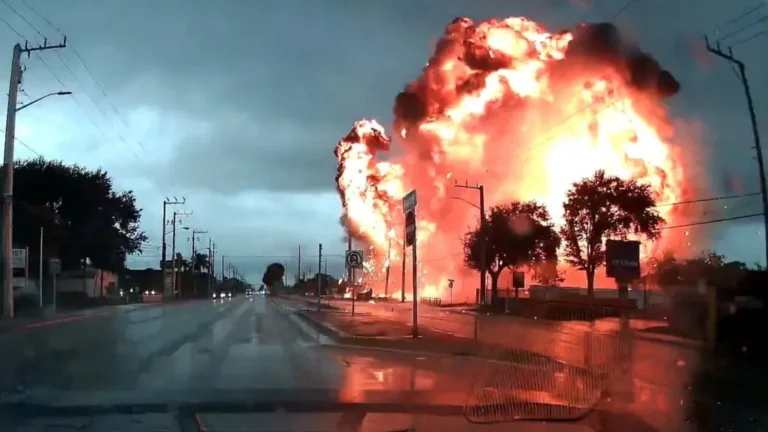
At approximately 12:51 p.m., the Learjet slammed into the ground near South Military Trail and 10th Avenue North, in an unincorporated area of Palm Beach County just outside Greenacres city limits. Video footage from bystanders captured the plane diving nose-first at a steep angle before erupting into a massive fireball.
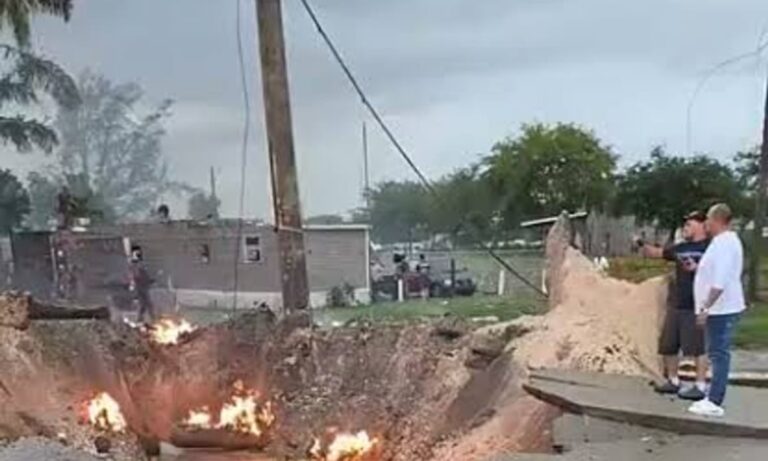
Florida Governor Ron DeSantis described the scene to reporters: “It was a cataclysmic plane crash. It looked like a missile going down and left a big crater on the side of the road.”
The crash site was a scene of devastation. The impact left a large crater in the roadway, with flames and thick black smoke billowing into the sky. Debris was scattered over a wide area, striking nearby homes. “Debris was everywhere. Debris hit my house. Everything was on fire. The road was on fire,” resident Anthony Blackmon told NBC affiliate WTVJ.
Approximately 77 mobile homes in the vicinity were evacuated as a precaution, and one person on the ground sustained a leg injury while fleeing the area.

The investigation: Breakup before impact
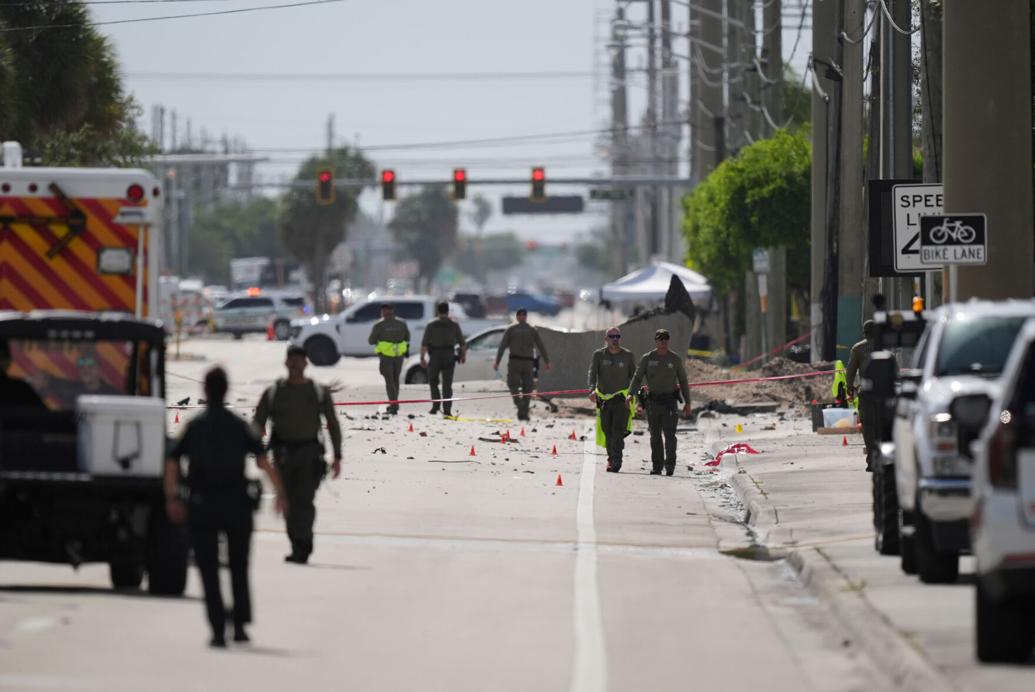
The National Transportation Safety Board (NTSB) immediately launched an investigation, sending a team of about 20 specialists to the scene. By Monday, NTSB board member Tom Chapman revealed a critical finding: the aircraft may have suffered a structural failure before impact.
“We do have some indication that the aircraft was breaking up before impact,” Chapman stated at a press conference. “We may find parts of the aircraft some distance away from the actual impact site.” The debris field was estimated to be roughly half a mile long and four-tenths of a mile wide, spanning ball fields, businesses, and homes.
Investigators are working to determine whether specific components, such as parts of the tail, separated in flight.
The investigation is focusing on several factors. The pilot’s report of “clear ice” is significant; accumulation of ice on the airframe can disrupt airflow and reduce lift, potentially leading to a loss of control.
The turbulence and the jet’s subsequent transition into an “overspeed condition” – where the aircraft exceeds its maximum safe speed – suggest a violent and sudden aerodynamic event. Chapman noted that the weather conditions at the plane’s altitude still need to be determined, and it is too early to speculate on the cause.
Investigators are also examining the cockpit voice recorder (CVR). Maintenance records indicate one was installed, but officials are uncertain whether it survived the impact and subsequent fire or if it remains accessible given the water filling the crater.
