
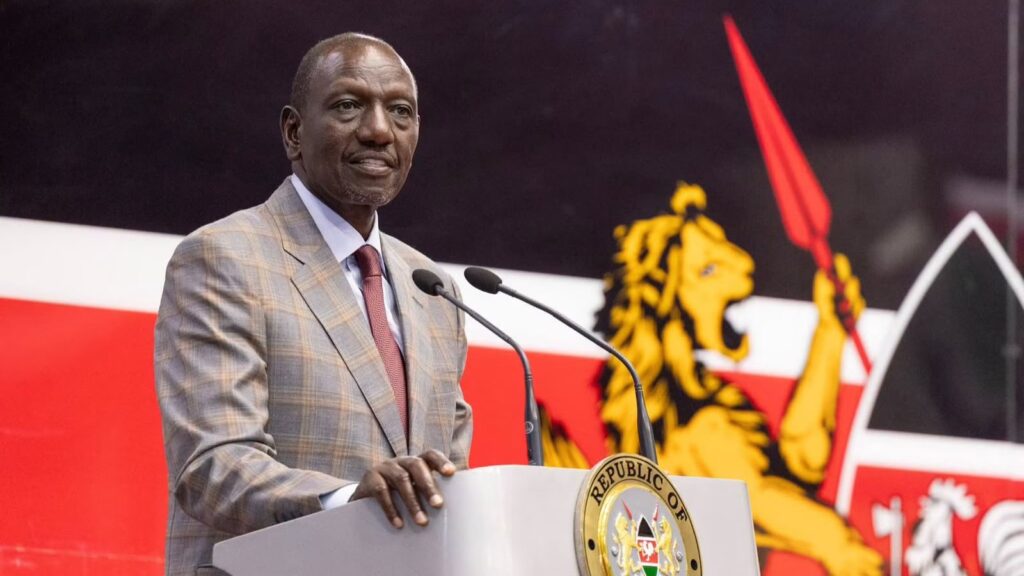
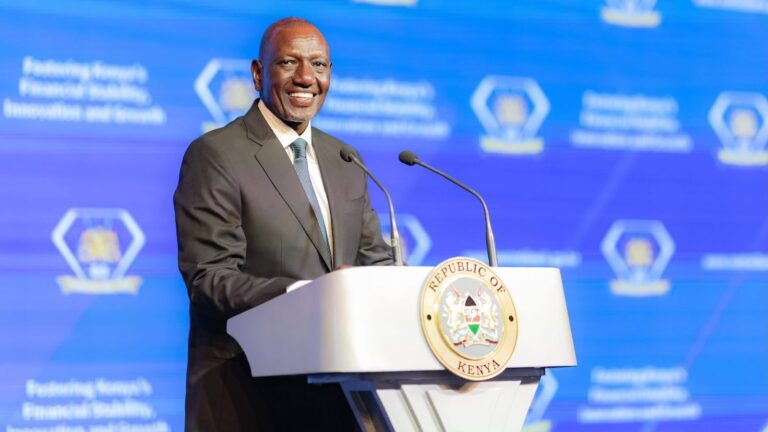
President William Ruto has reiterated plans to advance a Ksh26 billion Green Investment Fund to support sustainable investments in Kenya, as the government seeks to expand electricity generation, strengthen infrastructure and attract investment into emerging industries.
In his address on November 4, 2026, the President said the proposed fund would help mobilise long-term capital for green investments beyond what could be financed through the national budget. He also highlighted plans to establish a National Infrastructure Fund targeting key sectors, including energy, transport, logistics and water.
Ruto said the Green Investment Fund would complement broader government efforts to reduce the cost of doing business and accelerate the country’s industrialisation agenda.
“To mobilise the long-term capital required beyond the national budget, we are advancing the National Infrastructure Fund to support investments in energy, transport, logistics, water and other productive infrastructure. Our proposed US$200 million Green Investment Fund will support sustainable investments, alongside reforms to reduce regulatory costs,” the President said.
The proposed US$200 million fund translates to approximately Ksh25.99 billion based on an exchange rate of Ksh129.938 per dollar as of November 4, 2026.
The announcement came as the government pursued an ambitious plan to increase Kenya’s electricity generation capacity to 10,000 megawatts, with investments in renewable energy sources expected to play a central role.
Ruto said the government intended to harness the country’s geothermal, hydroelectric, wind and solar resources while expanding electricity transmission and distribution networks to support industrial growth.
“Central to this effort is our ambition to expand electricity generation capacity to 10,000 megawatts, drawing on geothermal, hydro, wind, solar and other resources, while strengthening transmission and distribution to provide reliable, affordable power for factories, mineral processing, industrial parks, digital infrastructure, and emerging industries,” he stated.
The President also identified renewable energy technologies, artificial intelligence, digital infrastructure and advanced manufacturing among the industries Kenya was positioning itself to develop.
He pointed to the development of digital infrastructure at Konza and geothermal-powered data centres as some of the emerging opportunities that could create jobs and strengthen the country’s industrial capacity.
“Beyond electric mobility, we are positioning Kenya for other emerging industries, including renewable energy technologies, digital infrastructure at Konza, geothermal-powered data centres, artificial intelligence, and advanced manufacturing. This requires closer partnerships between industry, universities, and technical training institutions to equip young Kenyans with the skills that modern production demands,” Ruto said.
The President further linked the proposed investments to the government’s wider infrastructure development programme, arguing that improved roads, railways, ports, electricity transmission, water and digital connectivity would help local industries access markets and reduce production costs.
He said infrastructure investments were essential to connecting agricultural producers with factories, linking businesses to national supply chains and helping Kenyan products reach international markets.
“Our investments in roads, railways, ports, electricity transmission, water, and digital connectivity are therefore central to industrialisation. They connect a farmer’s harvest to a factory, a workshop to a national supply chain, and a Kenyan product to an export market,” he said.
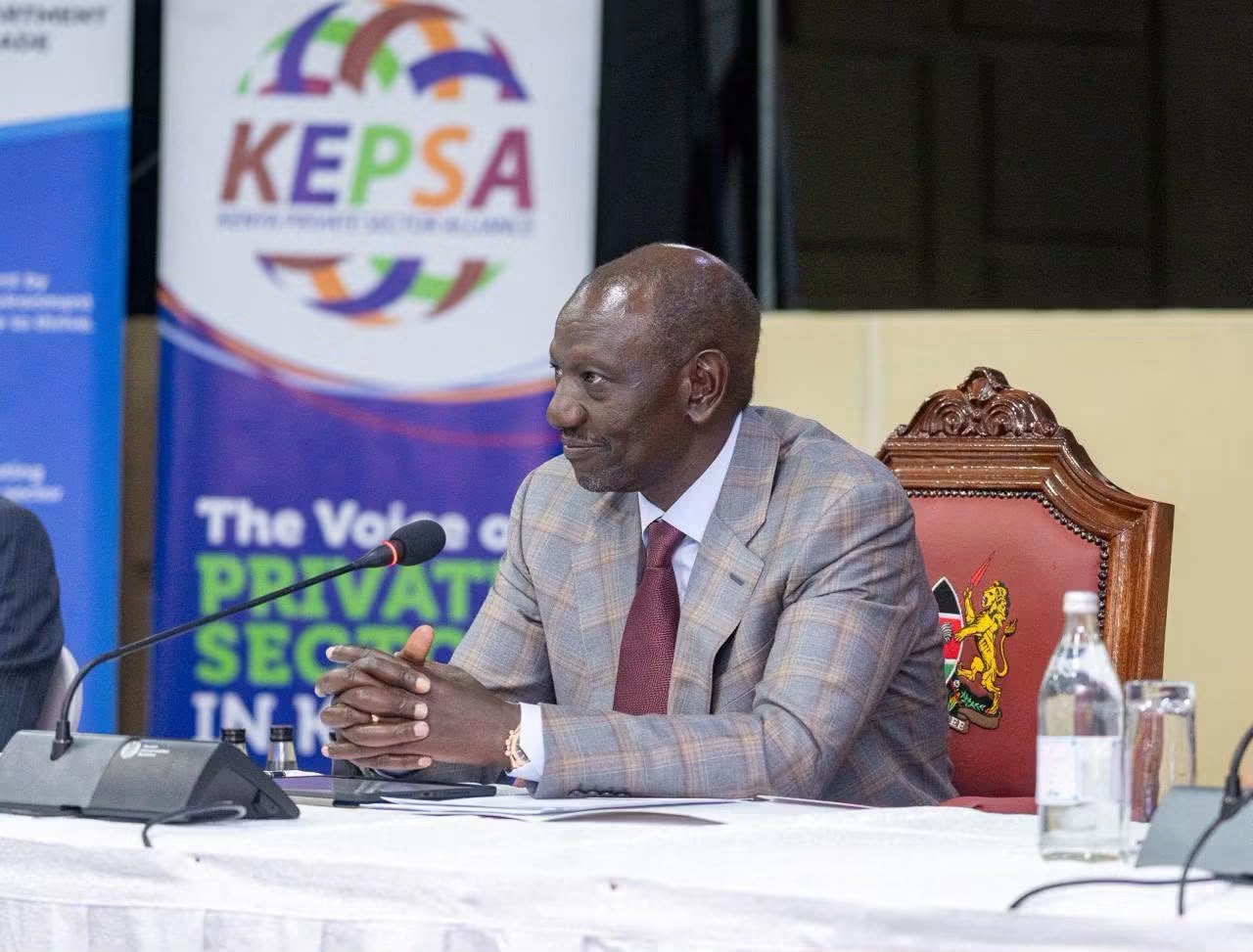
Ruto maintained that the success of infrastructure projects should be measured by their impact on production costs, industrial development and employment opportunities rather than the projects themselves.
“The measure of these investments will be the costs they reduce, the industries they enable and the jobs they create,” he added.
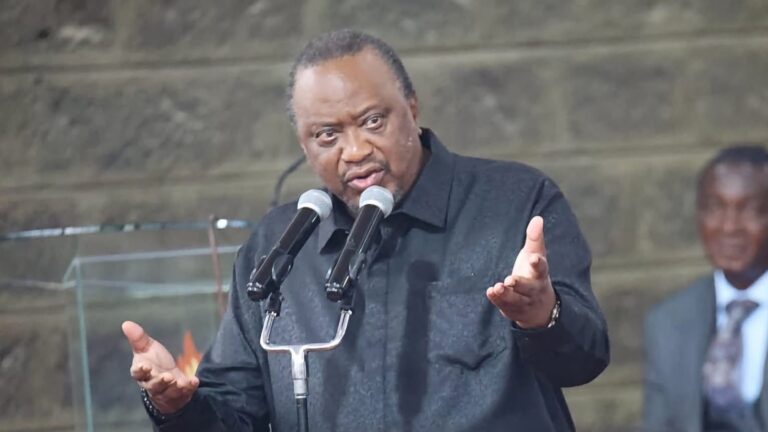

He also identified the high costs of electricity, financing, transport, logistics, taxation and regulation as some of the challenges that needed to be addressed to make Kenyan manufacturers more competitive.
The President’s remarks came as the government continued promoting electric mobility as part of its emerging industries strategy. He disclosed that incentives introduced in 2023 had attracted investment commitments worth Ksh24.6 billion in the sector.
According to Ruto, the investments had supported the local assembly of 38,201 electric bicycles, motorcycles and buses while creating 1,067 direct jobs.
The government also intended to accelerate investments in several other industrial projects, including the East Africa refinery in Lamu, electric vehicle assembly, clinker production in Kitui and Kwale, county industrial parks and major energy and infrastructure developments.
Ruto maintained that the government remained committed to increasing manufacturing’s contribution to Kenya’s Gross Domestic Product to 20 per cent and creating one million jobs by 2030.
“Our commitment to raise manufacturing’s contribution to 20 per cent of GDP and create one million jobs by 2030 remains firm. We must now accelerate investment in the East Africa refinery in Lamu, electric vehicle assembly, clinker production in Kitui and Kwale, county industrial parks, and major energy and infrastructure projects,” he said.
However, the proposed Ksh26 billion Green Investment Fund had previously featured in a government announcement made in January 2026, raising questions about whether the President was referring to an existing financing arrangement or outlining a fresh commitment.
On January 27, 2026, the State Department for Investment Promotion announced the launch of a US$200 million Green Investment Fund in Nairobi, with the government committing Ksh5.2 billion through the Kenya Development Corporation as its initial contribution.
Britam was contracted as the fund’s general partner and, working alongside Ghana’s Wangara Green Ventures, was expected to mobilise an additional Ksh20.8 billion towards the overall Ksh26 billion target.
The fund was intended to support climate-friendly businesses and sustainable investments in sectors such as renewable energy, sustainable transport, energy-efficient construction, regenerative and climate-smart agriculture, circular waste management and green technologies adopted by small and medium-sized enterprises.
It was not immediately clear whether Ruto’s latest remarks referred to the operationalisation of the previously announced fund, its existing financing arrangements or a separate government commitment.
The President said Kenya had the resources, skilled workforce, entrepreneurial capacity and access to the African market needed to turn investment opportunities into industries and employment.
“With our resources, talent, entrepreneurial spirit, and access to Africa’s vast market, we must now translate these opportunities into thriving industries and jobs for our people,” he said.
He added that the government’s broader industrialisation vision was to ensure farmers earned more through local processing, artisans supplied major industries, young people secured skilled employment and Kenyan products competed successfully in regional and international markets.
“We are building a Kenya where farmers earn more through local processing, artisans supply major industries, young people find skilled employment, and Kenyan products compete across Africa and the world,” the President said in his address.
