

Aliko Dangote’s industrial conglomerate has acquired a roughly 25% stake in Kenya Pipeline Company (KPC), the operator of East Africa’s most extensive petroleum products transport network, in a transaction valued at approximately 42.5 billion Kenyan shillings ($327 million).
The deal, confirmed by Dangote at the Financial Times Africa Summit in London on Wednesday, makes the Nigerian billionaire a significant shareholder in the state-privatized pipeline monopoly and provides a crucial distribution outlet for his planned $16 billion refinery at Kenya’s Lamu port.
“We bought 25% of their pipeline network for the distribution of petroleum products,” Dangote said during an on-stage interview, adding that the transaction had the support of Kenyan President William Ruto.
The precise stake acquired was 24.76%, comprising roughly 4.5 billion shares, according to Nairobi Securities Exchange block trade data.
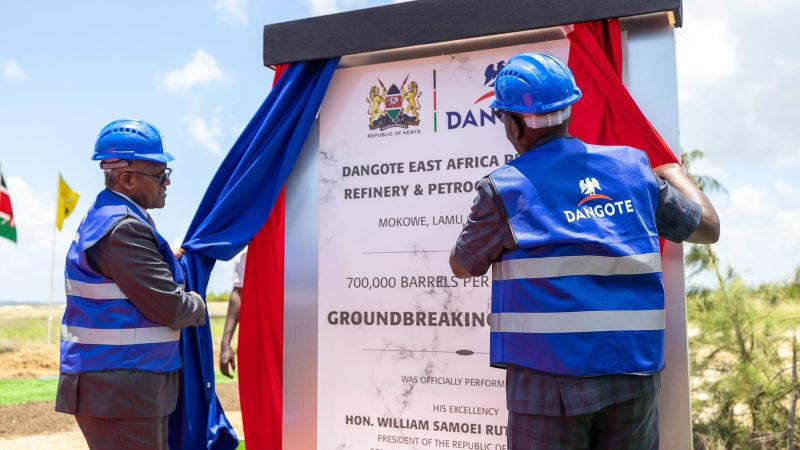
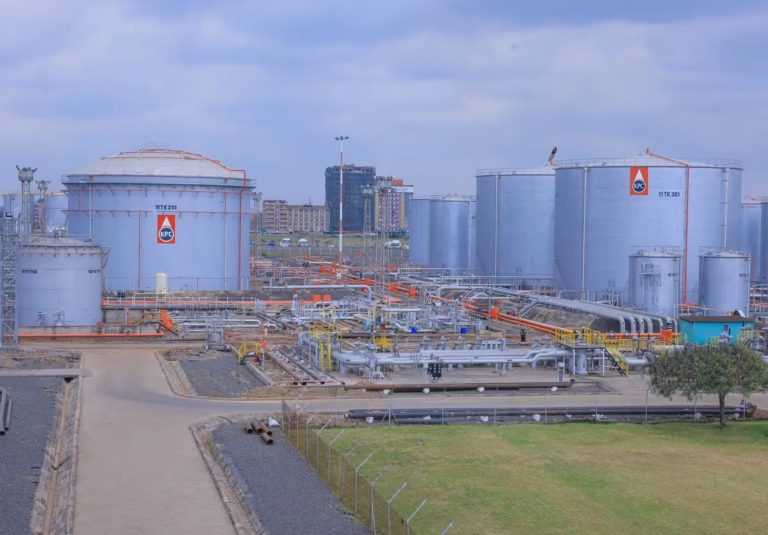
The acquisition comes barely a month after Dangote and President Ruto broke ground on a 700,000 barrel-per-day refinery in Lamu, scheduled for commissioning by 2030. The KPC stake gives Dangote’s group access to a 1,300-kilometer pipeline system that moves fuel from the port of Mombasa to inland Kenya and onwards to landlocked neighbors including Uganda, Rwanda, South Sudan, and parts of the Democratic Republic of Congo.
Dangote framed the investment as part of a broader continental distribution strategy. “When you look at the eastern part of Africa, they need more refining than the western part, because they are into a lot of mining, and it is difficult for them to get diesel,” he said in London.
He also disclosed plans to invest a further $1.5 billion in expanding Kenya’s pipeline infrastructure, bringing the total commitment associated with the East African energy push to nearly $1.84 billion.
President Ruto publicly endorsed the transaction a day before Dangote’s confirmation, describing it during Mashujaa Day celebrations in Eldoret as evidence of growing investor confidence in Kenya’s capital markets.
“Private investors acquired a 25% stake in Kenya Pipeline Company from public entities, marking another step towards mobilising private capital for strategic infrastructure,” Ruto said.
[image_caption_credit image=”http://thenational.co.ke/wp-content/uploads/2026/10/FB_IMG_1792666726256.jpg” alt=”” caption=”Aliko Dangote in a past meeting with President William Ruto” credit=”Facebook ” source_url=””]
The pipeline company was partially privatized earlier this year through an initial public offering that saw the Kenyan government sell 65% of its shares, retaining a 35% stake. The IPO raised approximately 106 billion shillings and was oversubscribed by over 100%, though state-backed pension funds were reportedly heavy buyers amid weaker private demand.





The shares that Dangote acquired were sold by state-linked institutions that had participated in the IPO, according to Business Daily.
Dangote already operates a 650,000 barrel-per-day refinery in Lekki, Nigeria, and has been aggressively expanding his energy footprint across Africa. The group has budgeted approximately $50 billion for investments between 2026 and 2030, spanning refining, fertilizer, cement, and distribution infrastructure.
Beyond Kenya, Dangote said the group is pursuing pipeline and storage projects linking Djibouti to Ethiopia, as well as investments in Cameroon, Namibia, Zimbabwe, and Zambia.
The Kenyan pipeline investment is not without controversy. Kiharu lawmaker Ndindi Nyoro has questioned the privatization process, alleging that public pension funds were pressured to buy KPC shares before reselling them to private investors, claims that have not been substantiated.
The stake was also deliberately structured at just below 25%, the threshold that would have triggered mandatory takeover approval requirements under Kenyan capital markets rules.
KPC reported a net profit of 11.58 billion shillings for the year ending June 2026, up 13%, and proposed a dividend of 5.81 billion shillings. Dangote’s stake would entitle his group to roughly 1.44 billion shillings in dividends based on that payout.
Analysts caution that the acquisition does not automatically connect Dangote’s Lamu refinery to the KPC network, which is currently centered on Mombasa. Any physical linkage would require new pipeline infrastructure and regulatory approvals.
Nor does pipeline ownership guarantee lower pump prices, as KPC’s tariffs remain subject to approval by Kenya’s Energy and Petroleum Regulatory Authority.
Still, the deal positions Dangote as a vertically integrated player in one of Africa’s fastest-growing fuel markets. Kenya currently consumes roughly 110,000 barrels per day, with demand projected to grow by more than a third over the next decade.
By owning both refining capacity and the infrastructure that moves product to market, Dangote’s group would sit astride a supply chain that serves not just Kenya but a swath of East and Central Africa. “The legacy we are trying to set up is how do we industrialise our continent?” Dangote said in London.
