

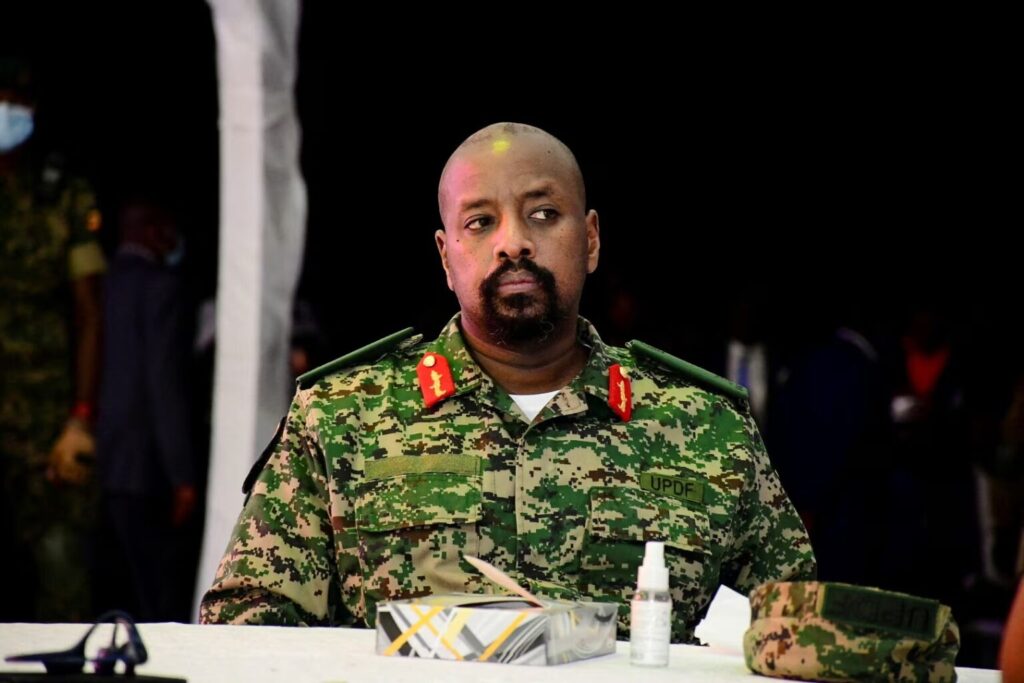
Uganda’s Chief of Defence Forces, General Muhoozi Kainerugaba, has announced that he intends to vacate the country’s top military post in the coming months, declaring that he has completed the tasks he believes were assigned to him by God and will subsequently devote his life to Christianity.
The announcement, made via a statement posted on his official X account on Friday, November 6, 2026, signalled a potential transition at the helm of the Uganda People’s Defence Forces (UPDF), while raising questions about the political future of President Yoweri Museveni’s son, who has previously declared his intention to run for the presidency in 2031.
In his statement, General Kainerugaba, who was appointed to the position in March 2024, indicated that his departure was approaching but sought to reassure his followers that he would not immediately disappear from public life.
“My time as CDF is coming to an end. I have accomplished all the tasks my God gave me. In a few months I will hand over this office to a qualified officer. I shall dedicate my life to Christ after that,” Kainerugaba stated.
He clarified, however, that his exit was not imminent, adding, “Don’t worry, I’m still around. At least for another year.” The general did not specify an exact date for the handover or identify the officer he expected to succeed him.
Beyond his spiritual plans, Kainerugaba used the announcement to advocate for the welfare of enlisted soldiers. Describing UPDF soldiers as his “heroes,” he called for a significant pay increase, demanding that every private receive a basic monthly salary of 2,000,000 Ugandan shillings starting in the next financial year.
He also offered a reflection on the nature of military leadership, suggesting that the office required strength rather than diplomacy.
“The office of CDF requires the bravest lion in UPDF. Not a lamb. Not a diplomat. That is what I have tried to be in my time,” he said.
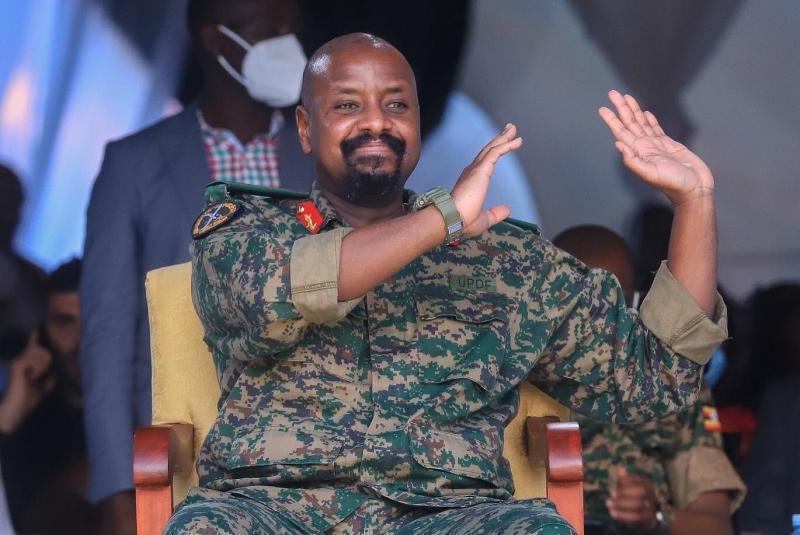
Kainerugaba’s planned departure from the military’s top position is expected to shift attention to his political ambitions.
The 52-year-old general has long been viewed as a potential successor to his father, President Museveni, who has ruled Uganda since 1986 and secured a seventh term in the January 2026 elections.
In August 2026, Kainerugaba explicitly declared his intention to contest the 2031 presidential election, expressing confidence that he would win with his father’s support.

“With my great father, Mzee’s, support I will get 90% in the elections in 2031,” he posted at the time.
His military tenure has been marked by controversy and an active social media presence, which has frequently blurred the lines between military command and political campaigning.
He has repeatedly used his platform on X to issue threats against opposition figures, including Bobi Wine, and comment on regional diplomacy, earning him the nickname of the “tweeting general.”
The announcement of his planned military exit also comes amid heightened discussions within the ruling National Resistance Movement (NRM) regarding the country’s succession politics.
In late October 2026, President Museveni reportedly presented a paper on leadership succession to the party’s Central Executive Committee, a move that intensified speculation about a possible father-to-son transfer of power.
Muhoozi Kainerugaba’s rise through the ranks of the UPDF has been swift and closely linked to his family background.
Born in 1974 in Dar es Salaam, Tanzania, while his father was in exile, he later trained at the Royal Military Academy Sandhurst in the United Kingdom and the U.S. Army Command and General Staff College.
He officially joined the UPDF in 1999 and spent much of his career commanding elite units, most notably the Special Forces Command (SFC), which was responsible for protecting the president and securing strategic installations. Before his appointment as CDF, he served as Commander of Land Forces.
His appointment as Chief of Defence Forces on March 21, 2024, replacing General Wilson Mbasu Mbadi, placed him at the top of Uganda’s military hierarchy.
While his supporters credited him with professionalising elite units and contributing to regional security missions in Somalia and the Democratic Republic of Congo, his critics argued that his political ambitions and controversial social media activity had undermined the military’s professional image.
