
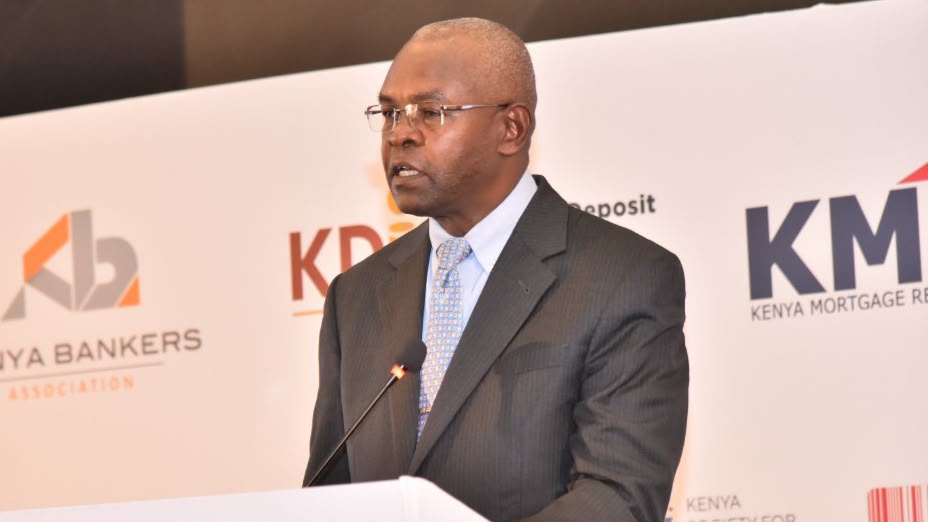
The Central Bank of Kenya (CBK) has summoned two commercial banks that failed to meet their capital-raising targets for 2026, demanding that they explain how they intend to strengthen their financial positions.
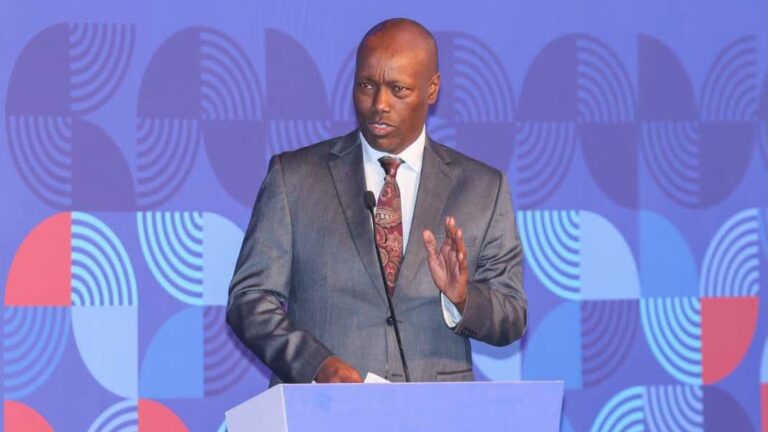
CBK Governor Kamau Thugge disclosed that the two lenders had fallen short of the expected targets, even as other institutions made progress towards complying with the regulator’s capital requirements.
Thugge said the banks would be required to appear before CBK and present plans outlining how they intended to mobilise additional funds. However, he did not reveal the identities of the affected institutions.
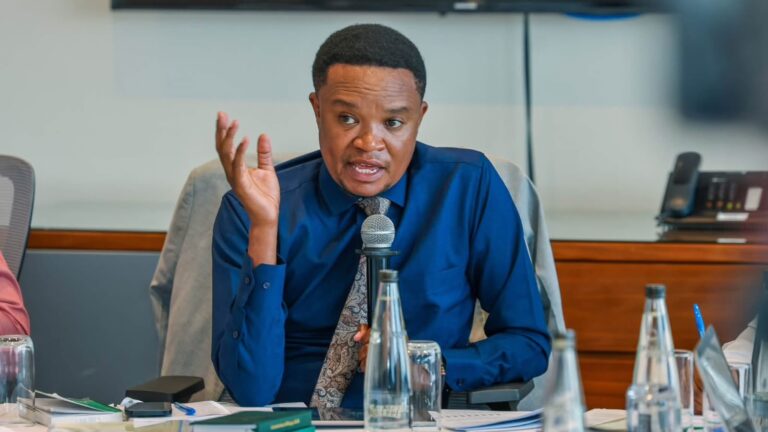
The governor made the disclosure on Friday, October 30, 2026, while appearing before the National Assembly Finance Committee chaired by Molo MP Kimani Kuria.
During the session, Thugge defended the ongoing banking sector recapitalisation exercise, arguing that stronger capital bases were necessary to help lenders withstand emerging economic challenges and protect their operations.
He identified climate change as one of the growing threats to financial stability, noting that increasingly frequent economic shocks required banks to have sufficient financial resources to absorb potential losses.
“You know there was a reason why we really felt that there was need to increase the capital base of the banks. And we feel that we have so many shocks that are coming now, whether it’s climate change is actually one. We’re getting more frequent shocks,” Thugge said.
The CBK governor also raised concerns over the growing threat of cyberattacks targeting financial institutions, explaining that banks needed adequate capital to invest in modern technology and strengthen their security systems.
“We have cyber, cyber security issues. You know, so many attacks on banks. So they need to have enough money to be able to buy the technology to protect themselves,” he added.
Thugge maintained that adequately capitalised banks would be better equipped to withstand financial disruptions without threatening the stability of other institutions or the wider banking sector.
The recapitalisation programme also sparked questions about the potential impact of higher capital requirements on locally owned banks, with Kuria seeking clarification on whether the regulator prioritised larger foreign-owned institutions over smaller Kenyan-owned lenders.
The committee chair questioned how CBK intended to balance the need for stronger financial institutions with the importance of maintaining local ownership and participation in the banking industry.
“What is better is to have stronger, more stronger banks that are foreign owned or banks that have maybe smaller capital, core capital but are locally owned, you know? Where is the balance?” Kuria asked.
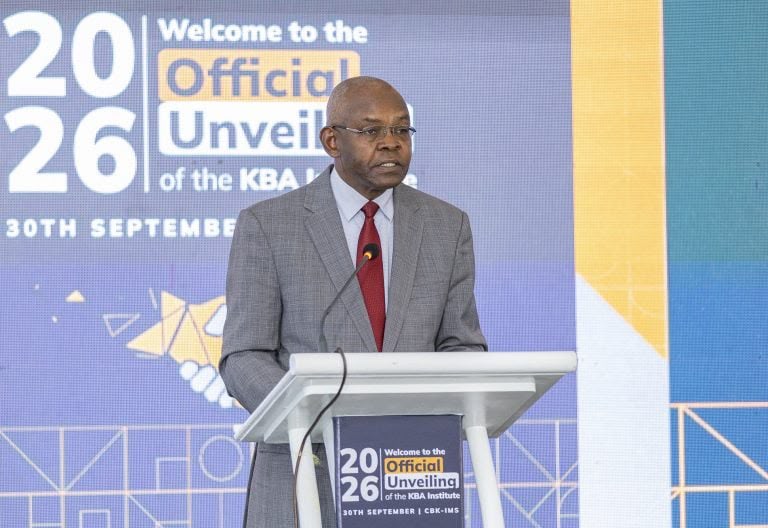
In response, Thugge said the regulator’s primary responsibility was to safeguard the financial system by ensuring that individual banks did not operate with capital levels that could expose other institutions to systemic risks.
He warned that allowing inadequately capitalised banks to continue operating could create vulnerabilities extending beyond the affected lenders.
“If you ask me to have a bank with a weak capital base that can have now a systemic impact on the rest of the banking sector, I think that is a risk that we should try to avoid as much as we can,” he responded.





Despite the challenges facing some lenders, Thugge expressed confidence that banks could eventually meet the long-term minimum core capital requirement of Ksh10 billion by bringing in additional investors, including local shareholders.
He said institutions still had time to mobilise resources and strengthen their capital positions before the final deadline. “And I think from where the banks are now to 10 billion in another four years, I think if they work hard and they can bring in local investors,” Thugge said.
The latest disclosure came barely a month after CBK reported that seven commercial banks had failed to maintain the minimum core capital requirement of Ksh3 billion in 2025.
In its Bank Supervision Annual Report 2025, the regulator disclosed that the seven institutions had breached Section 7(1) of the Banking Act by failing to maintain the statutory capital threshold as of December 31, 2025.
The report further established that five banks had failed to meet the minimum total capital-to-risk-weighted-assets ratio of 14.5 per cent, while four did not satisfy the core capital-to-risk-weighted-assets requirement of 10.5 per cent.
Additionally, three commercial banks fell below the minimum core capital-to-deposit ratio of eight per cent.
CBK also documented other regulatory breaches involving lending limits, foreign exchange exposure, liquidity management and corporate governance.
However, the seven institutions cited in the 2025 report should not be assumed to be the same two banks Thugge referred to during his appearance before the parliamentary committee.
Kenya introduced a phased increase in the minimum core capital requirement for commercial banks through the Business Laws (Amendment) Act 2024, raising the threshold from Ksh1 billion to Ksh10 billion.
Under the initial implementation schedule, banks were required to increase their core capital to Ksh3 billion by December 2025, Ksh5 billion by December 2026 and eventually Ksh10 billion by December 2029.
However, the Finance Act 2026 revised the implementation timeline, extending the final deadline to December 31, 2032, while removing the annual capital-raising milestones to give lenders additional time to mobilise funds.
The increase is separate from other capital adequacy requirements imposed on commercial banks.
Under the existing regulatory framework, lenders are required to maintain core capital equivalent to at least 10.5 per cent of their risk-weighted assets and eight per cent of their total deposit liabilities.
The requirements are designed to ensure that banks maintain sufficient financial buffers to absorb potential losses, protect depositors and prevent financial difficulties at individual institutions from destabilising the wider banking sector.
