

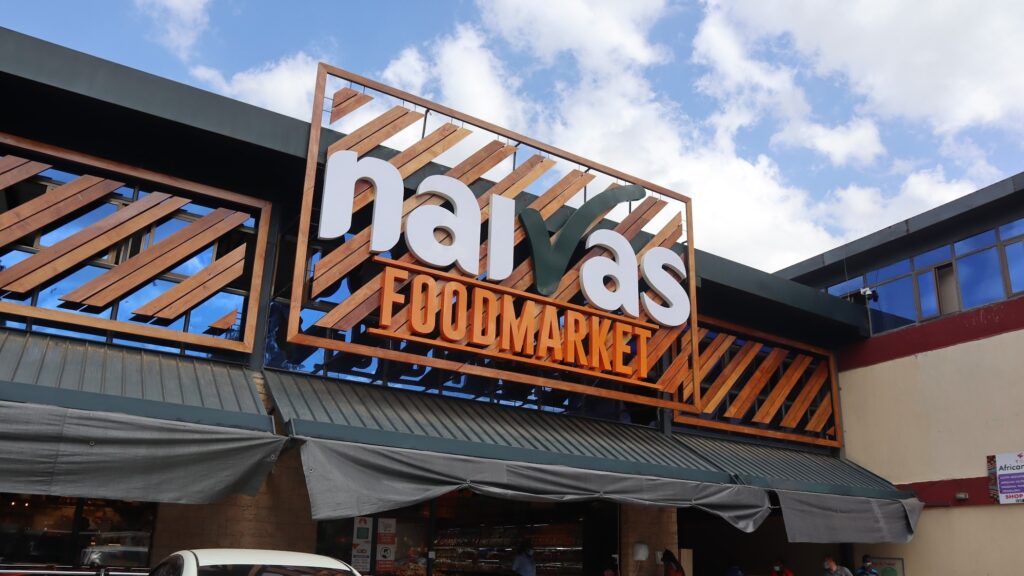
Naivas Supermarket has reported a 41.7 percent surge in net profit for the financial year ended June 2026, cementing its position as Kenya’s dominant retailer and defying a tough consumer environment that has claimed several of its former rivals.
The homegrown chain, majority-owned by Mauritius’s IBL Group, posted a net profit of Ksh3.37 billion (1.22 billion Mauritian rupees), up from Ksh2.38 billion the previous year. Sales grew 11 percent to Ksh123.66 billion, according to disclosures by its parent company.
The performance marks the second consecutive year of double-digit bottom-line growth for Naivas, following a 43.4 percent profit jump in the prior financial year. It also extends a remarkable turnaround for a business that began as a single corner shop in Rongai, Nakuru County, in 1990.
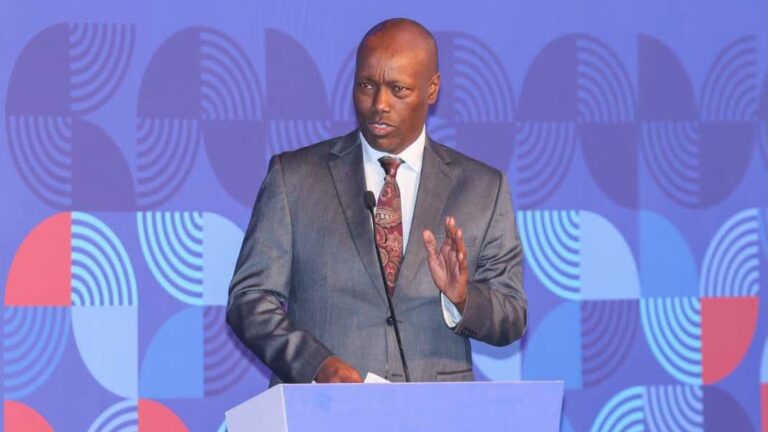
Chief Executive Officer Andreas von Paleske has attributed the chain’s growth trajectory to Kenya’s urbanisation and persistent gaps in retail coverage across the country.
“If you look at the rate of urbanization, especially in Nairobi, the density of residential areas and the need for basic services such as retail, I suspect that number may grow over time,” von Paleske said in an interview. “We still see a lot of opportunity to grow in the market. Many areas are either unserved or underserved by Naivas.”
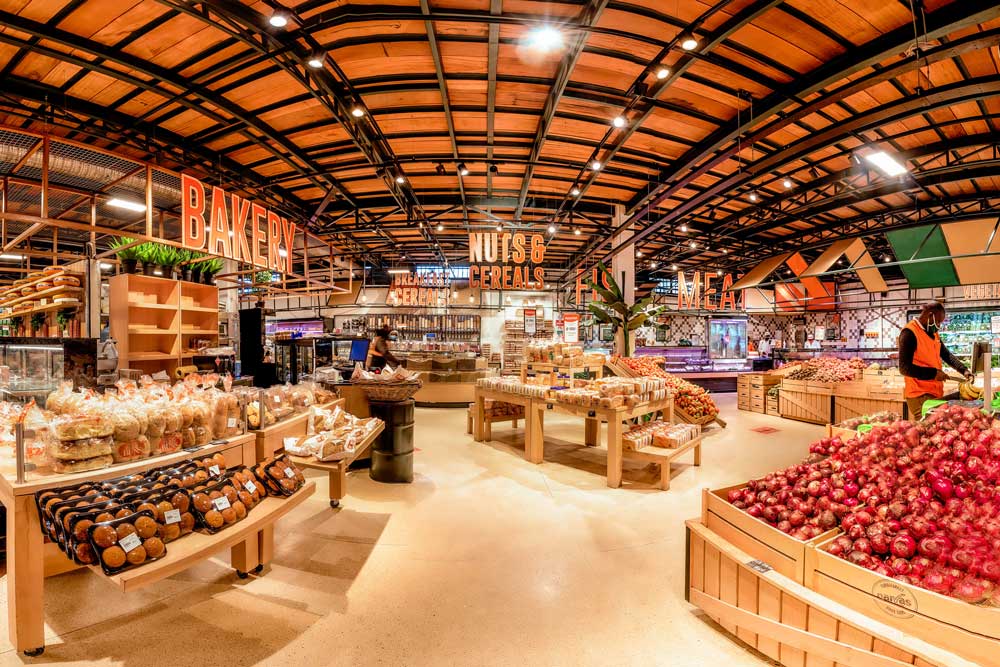
The CEO’s remarks underscore a strategy focused on physical expansion into underserved neighbourhoods rather than chasing premium segments. Naivas closed the financial year with 114 branches, up from 108 a year earlier, and has signalled plans to eventually reach 200 outlets by adding roughly ten stores annually.
The profit announcement is the latest chapter in Naivas’s three-decade evolution. Founded by the Mukuha family as Gitwe General Stores, the retailer expanded steadily through the 1990s and 2000s before accelerating its footprint after the collapse of former market leaders Nakumatt and Tuskys left a vacuum in Kenya’s formal retail sector.
The ownership structure shifted significantly in 2022 when an IBL-led consortium acquired a controlling stake, bringing professional management and capital for expansion.
IBL now holds an indirect 37.33 percent stake through Mambo Retail, alongside development finance partners Proparco and DEG. The founding family retains a minority position.
The strategy has paid off. Sales have more than doubled from Ksh54 billion in 2020, and the company’s revenue now ranks among the largest firms in Kenya, comparable to listed giants on the Nairobi Securities Exchange.


Beyond the headline profit, Naivas has strengthened its financial position. The company reduced non-current liabilities sharply from MUR3.16 billion to MUR132.3 million following debt restructuring, while net cash flow from operations climbed 44.5 percent.
A new 28,000-square-metre distribution hub is scheduled for completion in late 2027 to support the growing store network.
The retailer has also invested in technology, migrating to a cloud-based enterprise resource planning (ERP) platform to optimise costs and coordinate operations across its branches.
IBL Group CEO Arnaud Lagesse, the Mauritian tycoon whose conglomerate controls Naivas, framed the performance as validation of the group’s regional expansion strategy.
“The performance of our international operations, particularly Naivas, demonstrates that our Beyond Borders strategy is delivering,” Lagesse said in IBL’s integrated report.
Analysts note that Naivas has expanded more conservatively than Nakumatt did before its collapse, avoiding the debt-fuelled regional overreach that doomed its predecessor. For now, the focus remains firmly on Kenya, where milk and fresh produce are the top-selling categories and shoppers are increasingly price-conscious.
Von Paleske has emphasised that growth must be anchored in customer trust rather than scale alone. “Success is Kenyan families continuing to trust Naivas for value, for freshness, and for the quality of the customer experience,” he said in a separate interview.
With a record profit in hand and a clear expansion roadmap, Naivas appears well-positioned to defend its market leadership, provided Kenya’s consumer economy holds steady.
