

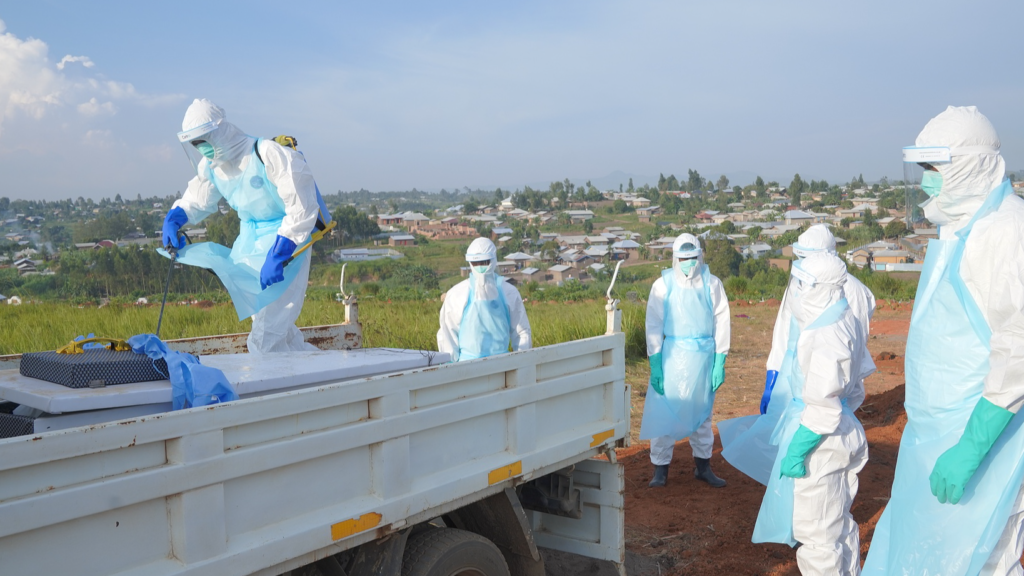
The Ebola outbreak in the Democratic Republic of the Congo (DRC) has killed more than 5,000 people, making it the deadliest epidemic in the country’s history and the second-deadliest worldwide.
Data published by the DRC’s National Institute of Public Health on October 30 recorded 5,026 deaths from 10,351 confirmed cases, representing a case fatality rate of nearly 49 per cent. The outbreak, which was declared on May 15, 2026, is caused by the Bundibugyo species of the Ebola virus, a strain for which no approved vaccines or therapeutics currently exist.
The epidemic has spread across eight of the country’s 26 provinces, affecting 67 health zones, with Ituri province remaining the epicentre. The World Health Organization (WHO) has classified the situation as presenting a “very high” risk at the national level and a “high” risk regionally, while maintaining that the global risk remains “low”.
Health officials have warned that the outbreak continues to overwhelm response efforts, with infections and deaths being reported in communities that have limited access to medical facilities.
Dr. Janet Diaz of WHO’s Health Emergencies Programme told reporters in September that although transmission was beginning to slow in some areas, many patients were still dying before receiving medical attention.
“Many people are still dying at home or in their communities because they are unable to reach health facilities on time,” she said.
Treatment capacity has expanded from a handful of beds at the beginning of the outbreak to more than 1,600 beds across 50 treatment centres, with authorities planning to increase the capacity to over 2,000 beds.
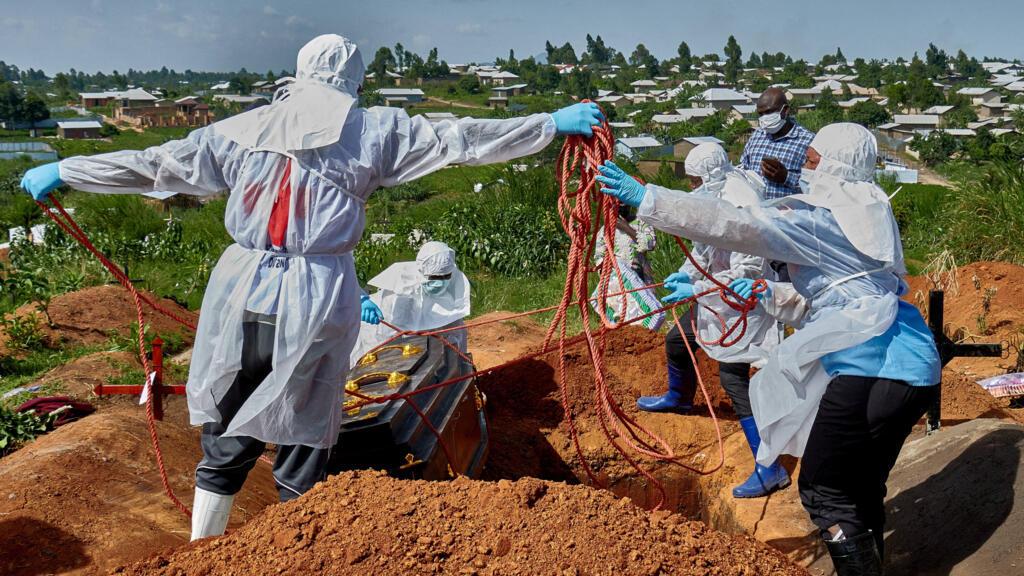
However, insecurity in eastern DRC, where armed conflict has displaced millions of people, has complicated efforts to reach affected communities. WHO Director-General Tedros Adhanom Ghebreyesus noted in July that more than 80 per cent of new cases were being detected outside known contact lists, suggesting that transmission chains were escaping surveillance.







The outbreak has also claimed the lives of healthcare workers involved in the response. Africa CDC confirmed the death of Dr. Marie-France Shogogo in Beni, North Kivu province, making her one of three doctors who died within 72 hours at an Ebola treatment centre.
The current epidemic differs from most previous Ebola outbreaks in the DRC, which were primarily caused by the Zaire species of the virus. The Bundibugyo strain responsible for the latest outbreak has no licensed vaccines or specific approved treatments.
Clinical trials involving two monoclonal antibodies and the antiviral drug remdesivir began in July. Oxford University also launched a vaccine safety trial shortly afterwards as researchers explored possible medical interventions.
The WHO and Africa CDC declared the outbreak a Public Health Emergency of International Concern and a Public Health Emergency of Continental Security in May, prompting a coordinated response across the continent.
Neighbouring Uganda, which recorded 20 cases and two deaths linked to the DRC outbreak, declared its own outbreak over in late July after completing 42 consecutive days without reporting new infections.
The current epidemic has surpassed the DRC’s previous deadliest outbreak, which occurred between 2018 and 2020 in North Kivu and Ituri provinces and claimed nearly 2,300 lives.
However, the 2014–2016 West African Ebola epidemic remains the deadliest on record globally, with more than 11,000 deaths.
