

Kenyans are paying some of the highest electricity prices among comparable economies, with opaque power purchase agreements, non-competitive procurement and conflicts of interest contributing to the high cost of electricity, a new World Bank report has revealed.
The report, Kenyan Economic Update, identifies governance weaknesses in the electricity sector, particularly in contracts between Kenya Power and independent power producers (IPPs), as a major factor behind expensive electricity.
According to the report’s comparison of electricity costs, Kenyan households pay an average of 22 US cents per kilowatt-hour, compared to 7.8 cents in Vietnam, 11.9 cents in Morocco, 19.8 cents in South Africa and 17.2 cents in Uganda.
Businesses in Kenya also face higher electricity costs, paying 17.5 US cents per kilowatt-hour against 7.8 cents in Vietnam, 10.9 cents in Morocco, 10 cents in South Africa and 11.8 cents in Uganda.
The World Bank says the cost of electricity in Kenya is more than double that of Vietnam and other Asian countries, while businesses pay nearly 50 per cent more than their counterparts in Uganda.
“However, high power costs have remained a persistent challenge. Kenya’s power is costly compared to structural and aspirational peers. Power costs are more than double those in Viet Nam and other Asian countries and close to 50 percent higher than those in Uganda for business users,” the report states.
The findings come despite Kenya making significant progress in expanding electricity access, with approximately 75 per cent of the population connected to power, compared to the Sub-Saharan African average of 53.3 per cent in 2023.
The World Bank identifies opaque and expensive Power Purchase Agreements (PPAs) between Kenya Power and private electricity producers as one of the major contributors to high electricity prices.
PPAs are contracts through which Kenya Power purchases electricity from independent producers, with the costs forming part of the expenses incurred in supplying power to consumers.
The report says weaknesses in the procurement of electricity from private providers have allowed some contracts to be negotiated without sufficient competition.
It states: “Opaque and rent-generating power purchase agreements (PPAs), stemming from governance weaknesses in the procurement of electricity from private providers, have contributed to high costs in the electricity sector. Early PPAs were issued in response to declining hydropower due to droughts in the late 1990s and again the late 2000s. While this involved unavoidable cost increases, emergencies are also often misused in various ways by rent-seeking interests, as demonstrated during the global COVID-19 pandemic.”
The lender further questions the failure to consistently use competitive procurement procedures despite Kenya having experience with such processes.
It cites a 2021 report prepared by Energy, Environment and Development Advisory and the Energy for Growth Hub, which found that only 24 per cent of 42 PPAs signed by Kenya Power were known to have undergone a competitive process.
The World Bank also points to international evidence showing that competitively procured solar projects are approximately 47 per cent cheaper than those awarded through direct negotiations.
A Renewable Energy Auction Policy was drafted in 2021 to introduce a more competitive framework for procuring electricity projects, but the World Bank says it has yet to be implemented.
The report raises concerns about conflicts of interest involving public officials who participated in approving electricity generation projects and were later employed by or owned companies involved in the same projects.
It says limited transparency surrounding the ownership of companies contracting with the government makes it difficult to establish who ultimately benefits from the agreements.
The report states: “For several IPPs, public officials involved in the approval of the projects were later employed by or owned relevant generation companies, raising concerns about conflicts of interest. Limited transparency about beneficial ownership (BO) of companies involved in contracting with the government increases the risk of conflicts of interest.”
It further explains that some companies presented foreign corporations as their shareholders, leaving the ultimate beneficial owners unknown despite legal requirements for disclosure.
The World Bank adds that some amendments to power purchase agreements appeared to favour electricity providers without public disclosure or clear explanations.
“Available evidence also suggests that amendments to PPA contracts were favorable to the providers without public disclosure or clear and transparent justifications,” the report states.
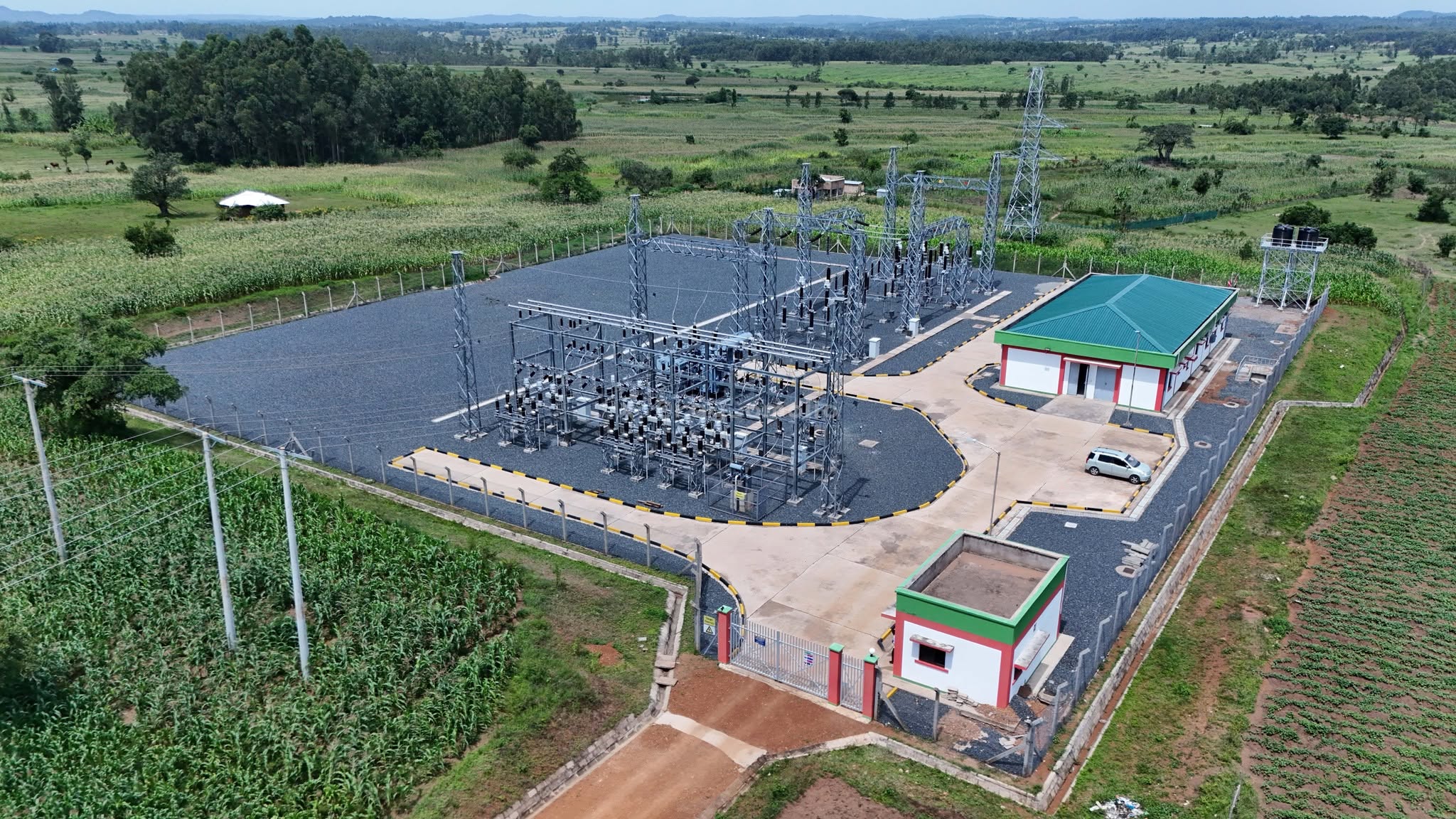
The lender also identifies concerns surrounding thermal power plants, which it describes as the most expensive form of electricity generation in Kenya.
Although the plants are contracted to provide flexible baseload power, the costs paid by KenGen vary across different facilities.
The report says some high-cost thermal power plants have raised conflict-of-interest concerns because of ownership links involving a former energy regulator and a former board member of KenGen and the Geothermal Development Company.
It notes that the contracts have prompted repeated calls for renegotiation, particularly where costs are considered excessively high.
 Kenya Power Reports Ksh24.99 Billion Profit as Balance Sheet Returns to Positive Territory
 Kenya Power Announces Ksh1.20 Final Dividend for Shareholders
 World Bank Issues Fresh Warning Over Kenya’s Economy Ahead of 2027 Elections
 World Bank Flags Ksh120M KRA Stamp Loss, Ksh6.6B Cooking Oil Scandal in Corruption Report



Renewable energy projects have also attracted scrutiny, with some having been contracted without competitive bidding and despite not featuring in Kenya’s Least Cost Power Development Plan.
The World Bank says the negotiated prices for some of these projects were high compared to similar projects awarded through competitive auctions in countries such as South Africa.
The findings build on investigations by the National Assembly and other government institutions into the cost of electricity and the contracts signed between Kenya Power and independent power producers.
In November 2025, Parliament’s Departmental Committee on Energy presented a report on reducing electricity costs, recommending reforms to improve transparency, procurement and oversight of power purchase agreements.
The committee raised concerns about the opacity of previous contracts and recommended that future amendments to PPAs undergo scrutiny by the Attorney-General.
It also recommended competitive auctions for new power generation projects, with the Ministry of Energy and the Energy and Petroleum Regulatory Authority expected to operationalise a renewable energy auction framework.
The committee further proposed establishing an independent IPP office to improve the management and transparency of private electricity contracts.
On electricity losses, the committee recommended measures to reduce system losses from approximately 23 per cent to 14.5 per cent. It estimated that achieving the target could save consumers approximately KSh6 billion annually, which would otherwise be recovered through customer bills.
The World Bank also identifies investigations by the Office of the Auditor-General and the Ethics and Anti-Corruption Commission into alleged corruption in the power sector.
In at least one case, the EACC recommended the prosecution of several officials over alleged conspiracy to commit an economic crime, abuse of office, conflict of interest and failure to comply with procurement laws.
The report says: “Collectively, the governance issues that have been identified point to collusive practices between the government and regulatory entities, energy SOEs, and IPPs that have contributed both to technical challenges (high transmission losses and slow completion of new transmission lines to connect new generation capacity) and directly to higher contract costs, with negative impacts on commercial and private consumers.”
Beyond the cost of purchasing electricity, the World Bank says high transmission and distribution losses are contributing to the expensive power supply.
The report notes that losses have remained above 23 per cent, compared to a target of 16.5 per cent set by the Energy and Petroleum Regulatory Authority (EPRA), and a longer-term target of 15 per cent by the 2029/30 financial year.
It attributes the losses to underinvestment in electricity networks, rapid expansion of rural connections, electricity theft and billing irregularities enabled by collusion.
The lender also raises concerns about integrity challenges within Kenya Power, including alleged bribery involving employees responsible for electricity connections and billing systems.
It states: “As identified by EACC audits and investigations focused on several managerial and technical staff since 2023, integrity challenges at KPLC include systemic issues with employees demanding substantial bribes for illegal reconnections or manipulating prepaid/postpaid systems to divert millions of Kenyan shillings.”
The report adds that corruption and conflicts of interest in the sector have affected overall planning and management, including electricity demand projections and efforts to reduce system losses.
It also links controversies surrounding PPAs and the resulting seven-year moratorium on new agreements to a renewed shortage in generation capacity, which contributed to load shedding when electricity demand exceeded available supply.
The World Bank warns that expensive electricity has wider consequences for Kenya’s economy, particularly for manufacturers who face higher production costs than competitors in other countries.
It says improving governance in the power sector and lowering electricity prices could generate lasting gains in economic output, private investment and household incomes.
To estimate the potential impact, the lender simulated a permanent 10 per cent reduction in electricity costs starting in 2026 using its Macro-Fiscal Model.
The report states: “Under conservative assumptions appropriate for lower middle-income economies, GDP could increase by about 0.27 percent relative to the baseline, private investment could rise by 0.33 percent, and the real wage bill could increase by 0.29 percent.”
The lender says the results remain positive under different assumptions, indicating that cheaper electricity could consistently support higher output, investment and incomes over the medium term.
It argues that reforms to improve procurement, strengthen transparency and address conflicts of interest could help reduce the cost of electricity for households and businesses.
