

The fake fertiliser scandal, the disappearance of millions of Kenya Revenue Authority (KRA) excise stamps and losses in public procurement are among major corruption cases highlighted in a new World Bank report examining how graft is affecting Kenya’s economy.
In its Kenya Economic Update report, the World Bank identifies fraud, bribery and collusion involving public officials and private businesses as significant sources of revenue losses and increased costs for the government and businesses.
The report reveals that KRA announced in early 2026 that approximately 24 million excise stamps had gone missing from its vaults, with investigations pointing to weaknesses in the management of the stamps between 2022 and 2024.
It also cites an Office of the Auditor-General report which found that KRA had fraudulently issued tax compliance certificates to businesses and individuals with substantial outstanding tax liabilities.
The World Bank further recalls that 75 KRA officers were arrested in 2019 over allegations of facilitating tax evasion and fraudulently clearing cargo.
In March 2026, KRA announced that it had recovered KSh120.28 million linked to an internal excise stamp theft scheme after reviewing its records.
The authority said the discrepancies were not caused by a single incident but resulted from accumulated weaknesses in the management of excise stamps over several years, particularly between 2022 and 2024.
KRA traced the origins of the scheme to around 2015, when the authority was transitioning from a manual system to the automated Excise Goods Management System.
Explaining how the irregularities occurred, KRA stated: “Faults in manual processes created opportunities for irregularities in the receipt, custody, and issuance of excise stamps. Findings pointed to systemic lapses in reconciliation and reporting mechanisms at the time.”
Following disciplinary proceedings, one staff member was dismissed, while seven others were interdicted to allow independent investigations.
The authority also announced measures to strengthen controls over the receipt, storage and issuance of excise stamps, including monthly stock reconciliations, audit checks and improved automated tracking.
“These measures are designed to close historical gaps and ensure that excise stamp management is fully secure, transparent, and aligned with global best practices,” KRA stated.
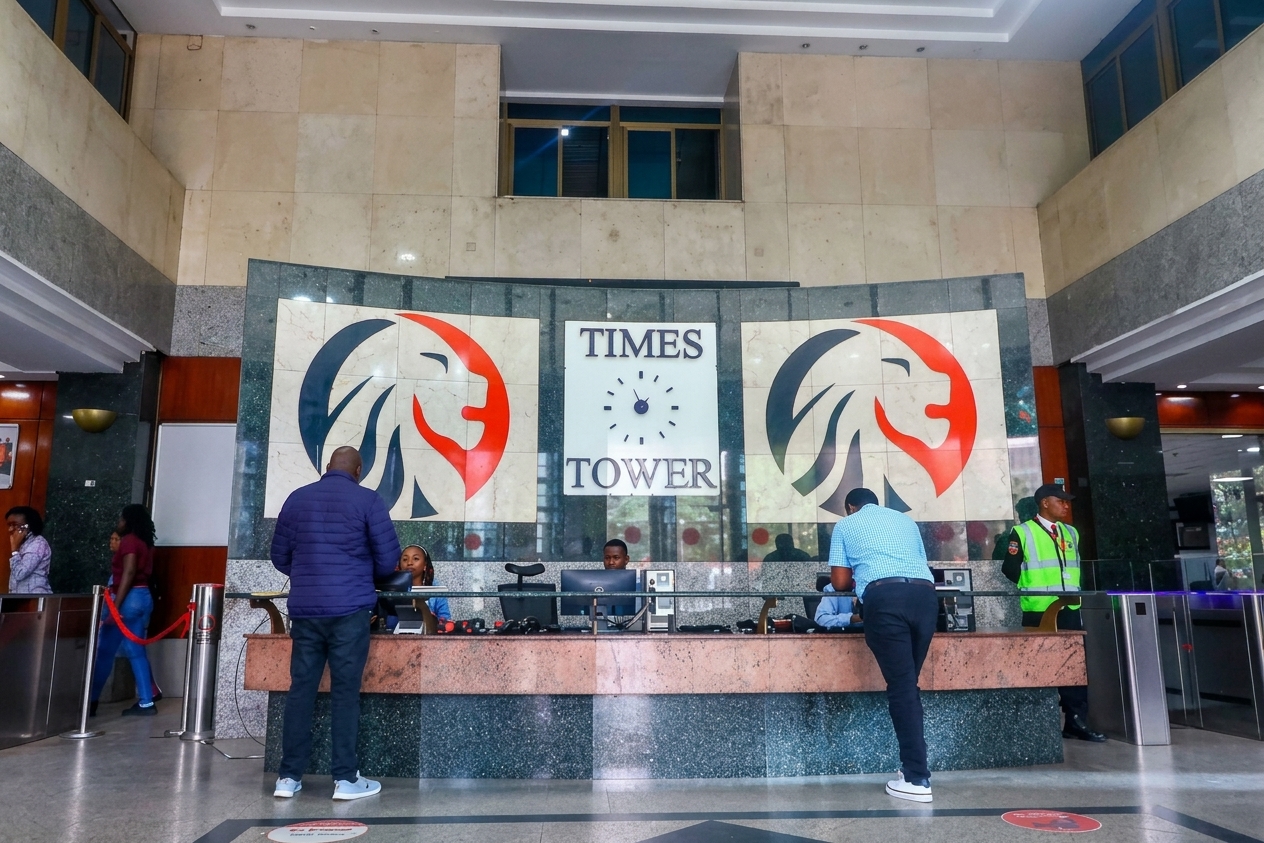
The Auditor-General’s report for the financial year ended June 2025 separately documented a cumulative loss of 23,724,042 excise stamps at the KRA vault in Times Tower.
The audit identified losses involving stamps for different products, including tobacco, alcoholic drinks, soft drinks and water, with a potential revenue loss of approximately Ksh120.28 million.
It further raised concerns that the losses had not been reported to investigative agencies and that there was no evidence of investigations into some of the missing stamps.
The Auditor-General attributed the problem to weak controls over the receipt and issuance of excise stamps.
The World Bank also cites the 2024 controversy surrounding the distribution of substandard fertiliser through the National Cereals and Produce Board (NCPB), which it identifies among major fraud cases involving public institutions.
The scandal involved soil amendments and conditioners allegedly passed off as genuine fertiliser under the government’s subsidy programme.
In September 2025, the Milimani Anti-Corruption Court ordered two former NCPB officials, a businessman and two companies to stand trial over allegations of defrauding the public through the sale of fertiliser valued at approximately Ksh209 million
The accused included former NCPB Corporate Secretary Joseph Kiplangat Ngetich, former Business Development and Advisory Committee chair John Mbaya Matiri, and businessman Josiah Kariuki Kimani.
They faced allegations of conspiring to pass off soil amendments and conditioners as fertiliser between March 2022 and March 2024.
The prosecution also accused Kimani of forging documents, using misleading labels and illegally applying a standardisation mark to commodities that did not meet the required standards.






Former NCPB Managing Director Joseph Muna Kimote was acquitted for lack of evidence. The charges against the other accused persons remain allegations unless determined by the court.
The scandal also resulted in a separate legal challenge over the government’s handling of the fertiliser subsidy programme.
In October 2026, the High Court faulted the Ministry of Agriculture for allowing the distribution of substandard fertiliser to farmers in 2024, finding that the product did not meet the declared specifications or applicable standards.
Justice Gregory Mutai said: “This court has found that the fertiliser was not of reasonable quality; it fell far short of the composition declared on the bag and of the specification the 4th Respondent had tendered for, and it was confirmed in writing that all of the Kelgreen NPK 10:26:10 it sold was unfit for distribution.”
The judge also found that the government had failed to constitute the Fertiliser and Animal Foodstuffs Board, which is legally mandated to regulate the industry, inspect products and oversee quality and safety standards.
“No reason was given to this Court. The only reason recorded before the Select Committee was that the matter had to go to Cabinet in view of plans to collapse some boards. A policy wish to restructure State corporations does not suspend a statutory duty,” Justice Mutai said.
The controversy emerged in March 2024, prompting the suspension of distribution and the Kenya Bureau of Standards’ suspension of the manufacturer’s standardisation mark permits.
The World Bank report also references losses of Ksh6.6 billion in the Kenya National Trading Corporation (KNTC) cooking oil import programme.
The programme was intended to cushion Kenyans against high commodity prices through the importation of edible oil under a government-backed arrangement.
However, a Senate Trade Committee investigation found that 797,564 twenty-litre jerrycans of imported cooking oil were diverted and sold to two companies for re-export.
The corporation sold the jerrycans at Ksh3,028 each, significantly below the prevailing local retail price of approximately Ksh5,000.
The Senate also questioned payments made to suppliers, with investigations revealing that KNTC had overpaid one supplier by approximately Ksh1.2 billion.
During the investigation, KNTC Finance and Accounts Manager Lucy Anangwe told senators: “In the process of issuing and procuring, I was not part of that, so I came to learn of the variations after investigations were opened on the matter.”
KNTC acknowledged that the programme had resulted in losses estimated at Ksh6.6 billion, although its chairman attributed part of the losses to currency fluctuations.
Beyond the individual scandals, the World Bank estimates that annual losses arising from bribes, fraudulent schemes involving public and private actors, and overcharging in public procurement range between 1.2 and 4 per cent of Kenya’s Gross Domestic Product.
The report identifies corruption-related investigations and convictions across several sectors, including education, tourism fund projects, healthcare, road construction, energy and imports by public companies.
It specifically mentions investigations involving officials at the Kenya Rural Roads Authority and Kenya National Highways Authority over allegations of collusion, overpricing and bribery in the awarding of tenders to connected companies.
The report also highlights integrity challenges within KRA, despite improvements in tax administration through digital systems such as iTax and the Electronic Tax Invoice Management System (eTIMS).
It says that while revenue collection has improved, integrity gaps persist through collusion between private businesses and public officials, suspected VAT fraud and the issuance of tax compliance certificates to taxpayers with outstanding liabilities.
The World Bank further warns that compliant businesses can also face pressure from tax officials seeking bribes to resolve audit issues or disputes over tax assessments.
It notes that threats to block a company’s PIN, withhold a tax compliance certificate or classify minor errors as fraud can be used to demand unofficial payments.
