


The Nairobi Securities Exchange (NSE) has announced changes to its Banking Index and Government Bond Index, including the addition of Family Bank Limited and the introduction of a new methodology for measuring bond investment returns.
In a notice dated November 2, 2026, the NSE said Family Bank had qualified for inclusion in the NSE Banking Index after completing the mandatory six-month post-listing period.
The bank was listed on the securities exchange in March 2026, bringing the total number of commercial banks represented in the index to 12.
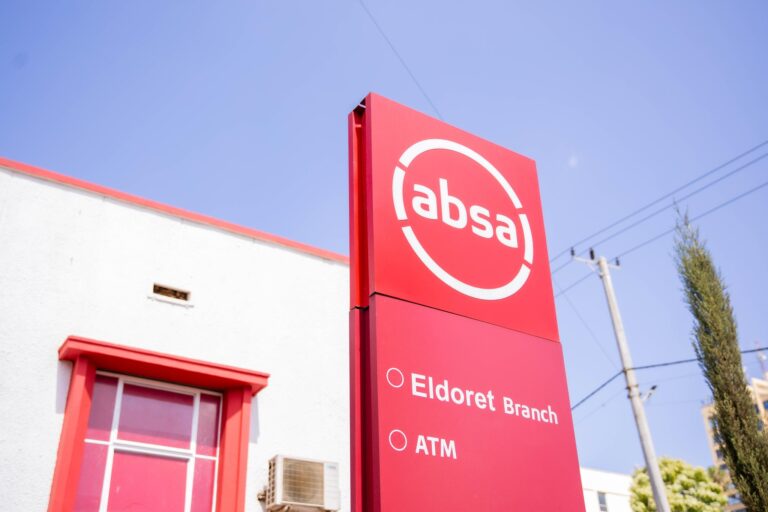
The updated index comprises Absa Bank Kenya, BK Group, Diamond Trust Bank Kenya, Equity Group Holdings, Family Bank, HF Group, I&M Group, KCB Group, NCBA Group, Stanbic Holdings, Standard Chartered Bank Kenya and Co-operative Bank of Kenya.
The NSE said the reconstitution would ensure that the index reflected eligible listed banks while strengthening its role as a benchmark for measuring the performance of the banking sector.
“It also enhances the index’s potential to support the development of index-linked investment products, including Exchange-Traded Funds and other structured products,” the exchange stated.
The changes also include the transition of the NSE Bond Index from a clean price index to a Total Return Index, a move expected to provide investors with a more comprehensive picture of the performance of government bonds.
The NSE Bond Index was launched in September 2023 to track benchmark government bonds listed on the exchange.
Under the revised methodology, the exchange will use the dirty price of each constituent bond, which combines its clean market price with accrued interest.
This means the index will capture both changes in bond prices and the interest income earned by investors holding the securities, rather than tracking price movements alone.
The index will continue covering government bonds across six maturity segments: two-year, five-year, 10-year, 15-year, 20-year and 25-year bonds.
The move is also expected to support the development of investment products that allow Kenyans to invest in several banking stocks through a single vehicle.










In August 2026, Business Daily reported that the Capital Markets Authority had approved the Wall Street Africa Banking Index Exchange Traded Fund (ETF), which was designed to give investors exposure to listed banking stocks through one investment product.
At the time, Family Bank was excluded from the proposed fund because it had not completed the six-month trading period required for inclusion. Its subsequent addition to the NSE Banking Index expands the number of banks represented in the benchmark. Business Daily +1
The NSE has previously identified exchange-traded funds and other investment products as part of its strategy to attract more individual investors.
In February 2026, Business Daily reported that the exchange’s 2025–2029 strategy targeted the listing of 50 diverse funds, including mutual funds, ETFs and other managed funds.
Irungu Waggema, the NSE’s Chief Officer for Strategy, Risk and Compliance, said: “People invest in funds and ETFs over individual stocks because a single stock limits your exposure to just one company while listed funds give one a diversified portfolio.” Business Daily
The NSE Banking Index is among the exchange’s benchmarks designed to help investors monitor the performance of specific market segments.
The NSE Bond Index, meanwhile, was introduced in 2023 to provide a benchmark for government securities traded on the exchange. At its launch, the NSE said the index would help investors monitor the performance of listed securities. african markets +1
Commenting on the latest developments, NSE Chief Executive Officer Frank Lloyd Mwiti said maintaining representative market indices was important in improving transparency and helping investors make informed decisions.
“Maintaining relevant and representative market indices is essential to strengthening transparency and supporting informed investment decisions. The inclusion of Family Bank Limited ensures that the NSE Banking Index remains an effective measure of performance in the listed banking sector. It also creates opportunities for the development of index-linked investment products, including exchange-traded funds, in line with our strategic ambition to list at least fifty diverse funds within the strategy period,” Mwiti said.
On the bond market reforms, he added: “Alongside these developments, we are undertaking key reforms to deepen our fixed income market. The transition of the NSE Bond Index to a total return methodology is an important first step in aligning our market benchmarks more closely with international standards. By capturing both price movements and income earned, the enhanced index will provide a more comprehensive performance measure and support our efforts to attract greater domestic and international investment flows into the fixed income market.”
The NSE said both changes took effect on November 2, 2026.
