


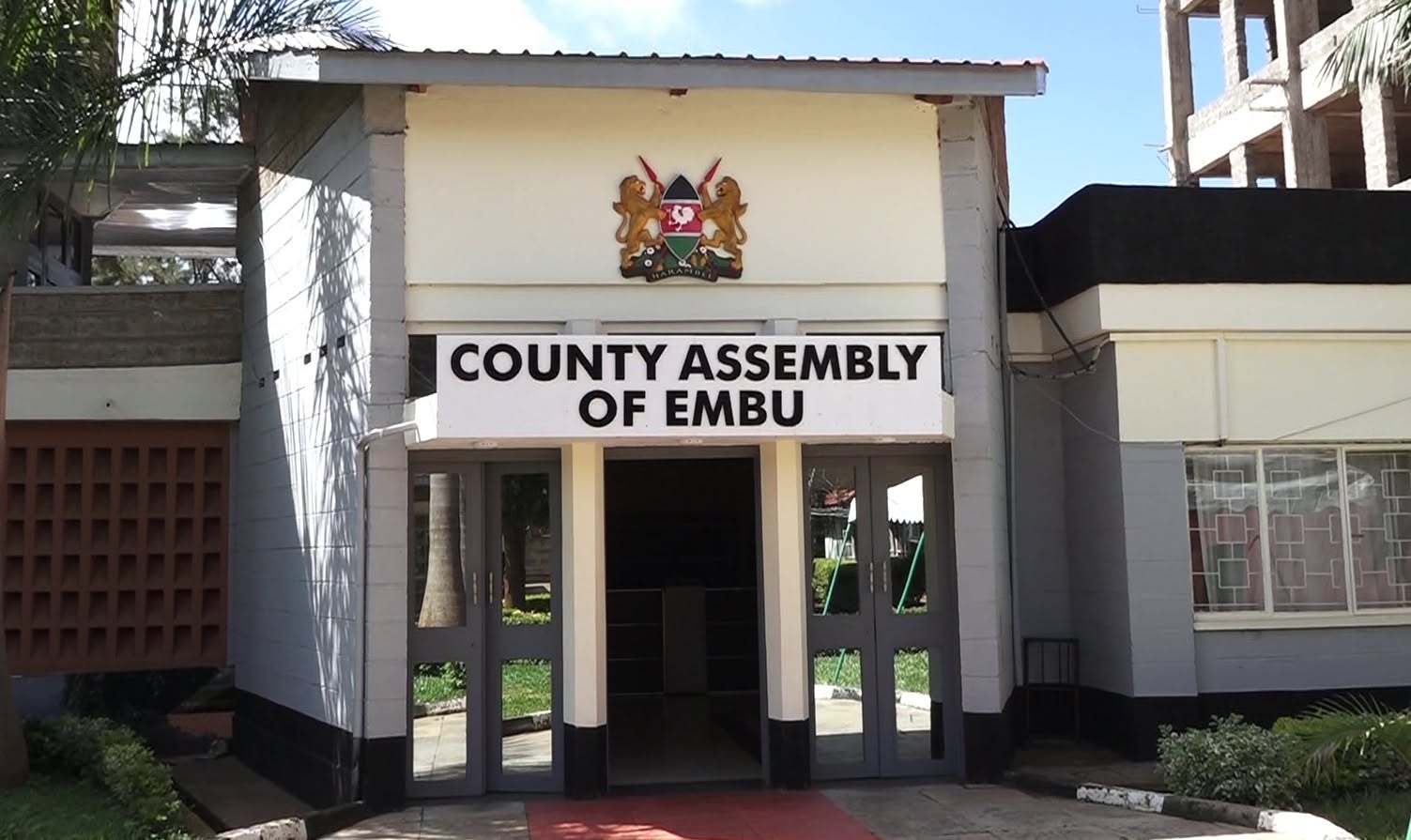
The Ethics and Anti-Corruption Commission (EACC) has secured court orders freezing a parcel of land and six motor vehicles linked to Peter Muriithi Nyaga, the Member of County Assembly (MCA) for Mbeti North Ward in Embu County, in a recovery suit targeting Ksh111.5 million allegedly acquired through irregular county contracts.
Justice Biomdo delivered the ruling on October 29, 2026, restraining the MCA and his co-defendants from selling, transferring, disposing of, or otherwise dealing with the properties pending the hearing and determination of the recovery suit.
The court further directed the Land Registrar and the National Transport and Safety Authority (NTSA) to place restrictions on the properties to prevent any transfer, leasing, or encumbrance.
The EACC filed the suit on August 28, 2026, against Nyaga and six companies associated with him: Truco Enterprises Ltd, Peanco Ltd, Njewaco Ltd, Hasoco Ltd, Hiwco Ltd, and Isaac & Timothy Company Ltd.
The Commission is seeking to recover Ksh111,577,188.75 that was irregularly acquired from the Embu County Government and paid to five of the companies through business transactions with the county.
Investigations by the Commission established that Nyaga traded with the Embu County Government in a direct conflict of interest through companies in which he held interests.
According to court filings, the EACC alleges that 20 road construction and maintenance contracts worth Ksh111,577,188.75 were awarded to five companies linked to the MCA and his family between the 2017/18 and 2023/24 financial years.
Nyaga, who is serving his second term as Mbeti North MCA and has previously served on influential sectoral committees including Infrastructure, Roads, Public Works, Housing, and Energy, is accused of failing to declare his interest in the contracts and concealing his relationship with the companies.
The EACC argues that the payments received pursuant to these contracts constituted proceeds of corruption.
The Commission further established that part of the funds was used to acquire land parcel number Mbeti/Kiamuringa/49, registered in the name of Isaac & Timothy Company Ltd, as well as six motor vehicles: KDD 932H, KDC 857D, KDL 451F, KCQ 172W, KHMA 624H, and ZF-9309.
While granting the preservation orders, the court partly accommodated the defendants’ concerns that completely grounding the vehicles could interfere with ongoing civil engineering projects and expose them to financial penalties.
 Nairobi Water Employee Ordered to Pay Ksh7.5 Million Over Forged KCSE Certificate
 EACC Recovers Ksh40 Million Government Land in Kakamega, Cites Another Public Land Victory
 Huduma Kenya Outlines Special ID Registration Process for Street Persons
 IEBC Receives Nomination Rules from 105 Political Parties






The judge consequently varied the initial orders to allow supervised operational use of the assets under strict conditions.
Nyaga and the other defendants were ordered to maintain comprehensive insurance policies for all six vehicles, install functional GPS tracking devices, and provide the EACC with real-time access to monitor their location and deployment.
The court also directed physical verification exercises every two months and quarterly reports under oath detailing the assets’ operational status.
The judge warned that any breach of the conditions or unauthorised attempt to move the vehicles outside the court’s jurisdiction would trigger their immediate and total grounding by the EACC.
In his ruling, Justice Biomdo observed that if the defendants were to dispose of the properties, the EACC would have no assets to recover should the main suit succeed.
“If the Defendants were to dispose of said properties, the Plaintiff (EACC) will have no assets to recover in furtherance of its statutory mandate should the main suit succeed.”
The case is part of a broader wave of scrutiny facing the Embu County Government. Earlier in 2026, EACC detectives raided county headquarters over a separate probe involving three MCAs and approximately Ksh95 million in allegedly irregular tenders. The County Assembly has also sought investigations into irregular payments made to a revenue collection firm after its contract had expired.
Nyaga and his co-defendants have opposed the suit, arguing that the MCA neither awarded nor influenced procurement contracts, which they maintain fall under the county executive.
They further argued that the companies are separate legal entities and that the properties were lawfully acquired through competitively awarded contracts and bank financing.
