

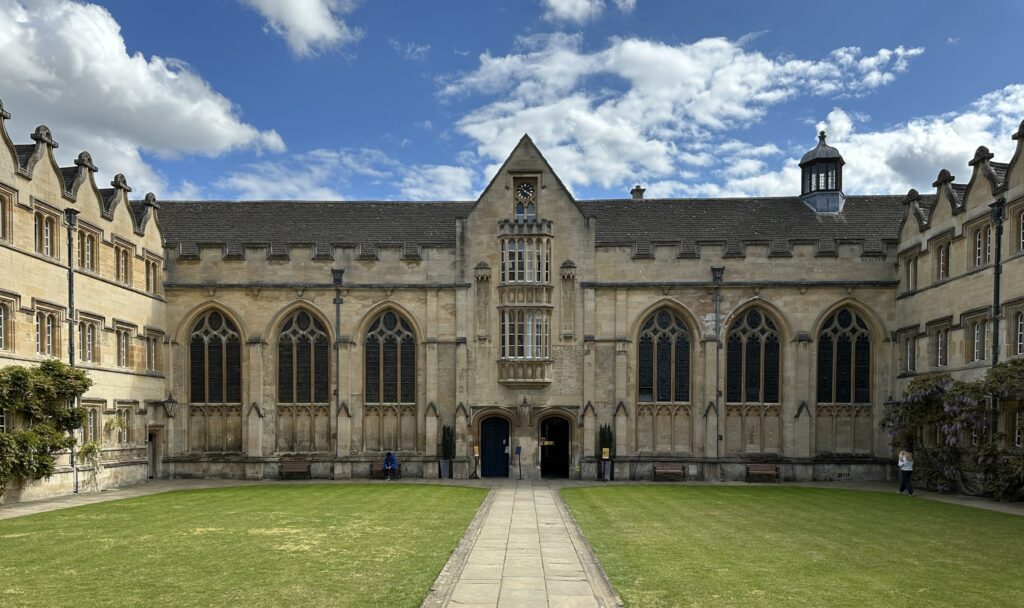
Universities across the United Kingdom have withdrawn admission offers and suspended recruitment from Nigeria, Pakistan and Bangladesh amid fears that soaring student visa refusal rates could cost them their licences to sponsor international students.
The moves follow the Home Office’s decision in June 2026 to halve the maximum student visa refusal rate under its Basic Compliance Assessment from 10 per cent to below 5 per cent.
Universities must also now ensure at least 95 per cent of sponsored students enrol and maintain an 85 per cent course completion rate. Repeated breaches can result in a “red” rating and, ultimately, the suspension or revocation of an institution’s student sponsor licence.
According to an analysis of Home Office data by the Financial Times, 10.5 per cent of UK study visa applications were withdrawn in the first half of 2026, compared with 2.3 per cent in the same period of 2025 and just 0.4 per cent in 2023.
Pakistan recorded the highest withdrawal rate among the nationalities listed, at 40.9 per cent, followed by Bangladesh at 23.5 per cent and Nigeria at 22.7 per cent. For Nigerian applicants, the rate rose from 4.5 per cent a year earlier, while Pakistan’s jumped from 3 per cent.
The figures refer to visa applications withdrawn – largely because universities themselves revoked confirmation of acceptance for studies (CAS) before a refusal decision could be recorded against their compliance rating.
Withdrawn applications are excluded from the refusal rate calculation, whereas refused applications count against the institution.
Universities taking pre-emptive action include Sunderland, Chester, Wolverhampton, East London, Coventry, Hertfordshire, Oxford Brookes, Glasgow Caledonian and BPP University.
Oxford Brookes University paused sponsorships for applicants from Bangladesh and Pakistan while introducing additional compliance screening for students from Nigeria and India.
About 15 universities are believed to have suspended recruitment from Pakistan entirely this year, according to sector data.
University leaders have sharply criticised the quality of Home Office decision-making, describing some refusals as arbitrary, inconsistent and ill-informed.
Sir David Bell, Vice-Chancellor of the University of Sunderland, said: “The recent and unexpected spike in visa refusals has prompted pre-emptive action in several universities. This has involved pulling back from international markets where a tougher approach is being taken to visa applications.”
Jamie Arrowsmith, Director of Universities UK International, said visa processing had become “markedly less predictable.”
“Many refusals appear to rest on flawed, inconsistent and highly subjective reasoning, forcing universities to withdraw offers at scale to avoid breaching compliance thresholds,” he added.







Professor Steven McGuire, Deputy Vice-Chancellor of the University of East Anglia, revealed his institution began withdrawing offers from certain countries late last year following a sharp rise in refusals.
“We were getting some very arbitrary and ill-informed refusals,” he said. “We had one where the interviewer did not seem to understand that UEA was in Norwich (and so rejected the applicant for not knowing where they were going to study).”
Professor James Miller, Vice-Chancellor of the University of the West of Scotland, said some refusals were “extremely spurious” and that the Home Office had offered “no real explanation for the increase other than concern about the number of students claiming asylum.”
He added that some universities had “stopped recruiting from certain geographical areas to keep refusal rates below five per cent.”
The restrictions come as UK universities face mounting financial pressures and remain heavily reliant on income from overseas students.
International students generated £12.4 billion in tuition revenue in the 2024/25 academic year, accounting for 23 per cent of total income across UK higher education, according to sector figures. In the same academic year, 48 publicly funded universities in England – 40 per cent of the total – were operating at a deficit.
Vanessa Wilson, Chief Executive of University Alliance, warned: “This is going to result in restructures, which inevitably results in job losses, course closures, campus closures.”
Professor Miller predicted many institutions could record a decline of more than 20 per cent in overseas student numbers this year, making job cuts “inevitable” without a policy change.
“It’s harming the UK’s reputation, it’s contrary to other government policies and at an individual level it’s denying opportunity to people who want to advance their careers and their lives,” he said.
The Home Office said international students “make a positive contribution” to Britain, but added that “this must not be at the expense of recruiting responsibly, in turn protecting the integrity of our immigration system.” It said it was offering universities “support where needed to improve recruitment practices”.
Migration and Citizenship Minister Mike Tapp said the policy was intended to prevent the student visa route from being used as a “backdoor to asylum and illegal working”.
Under the new Red-Amber-Green rating system, universities receiving an “amber” rating for a refusal rate between 4 and 5 per cent face formal engagement meetings with UK Visas and Immigration and restrictions on increasing their CAS allocation. A “red” rating triggers an action plan, reduced CAS allocation, and a final warning that remains active for the next five compliance assessments.
