

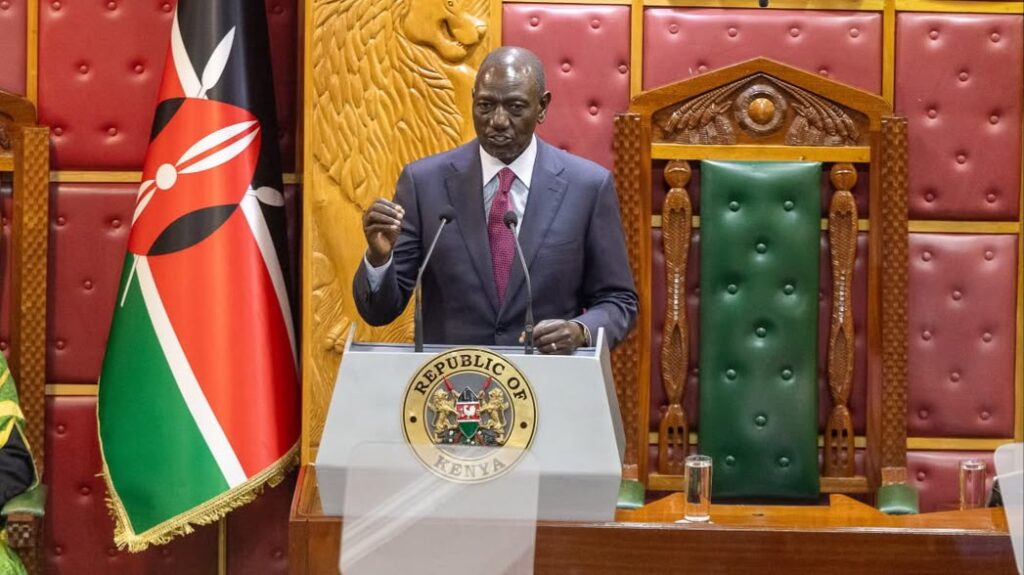
Mr Speaker of the National Assembly,
Mr Speaker of the Senate,
Honourable Members of Parliament,
Fellow Citizens,
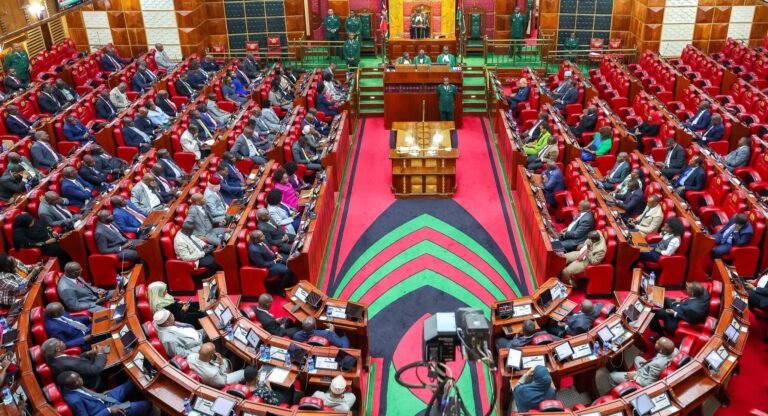
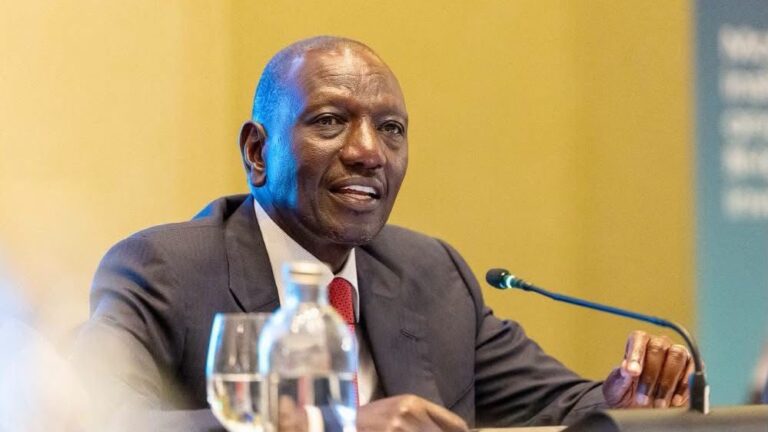
1. For the fourth time, I stand before this House to discharge my constitutional duty to report on the state of our nation and to take stock of what we have collectively accomplished as Kenyans.
2. And let me say, I have never been prouder to be Kenyan. I have never been prouder of the privilege of serving as President of the Republic of Kenya.
3. Our nation is making a powerful comeback. Our economy is recovering its strength, our infrastructure is expanding, our education system is being revitalised, healthcare is reaching more citizens, and new opportunities are opening for our young people to work, earn, and prosper.
4. Above all, my greatest ambition, the dream of building a Kenya where every citizen counts, every community belongs and no Kenyan is left behind, is steadily taking shape. That Kenya, where opportunity is not determined by where you were born, who you know or how much you have, is coming to be.
5. At the heart of this vision is a simple belief, a principle that should unite us regardless of our differences: Usawa.
6. This progress has not happened by chance. It is the result of deliberate choices, difficult decisions, sustained reforms and the extraordinary resilience and enterprise of the Kenyan people. It is the product of the Bottom-Up Economic Transformation Agenda.
7. Bottom-Up tells us where to begin: With the work, enterprise, and aspirations of ordinary Kenyans. Our First World ambition sets the standard we must attain: A productive economy, dependable services, and a dignified life. Usawa affirms who must share in that achievement: Every county, every community, and every citizen.
8. Together, these commitments define our national undertaking: Building prosperity from the household upwards, expanding our economy and extending opportunity across every corner of our Republic.
Mr Speaker, Honourable Members,
9. At independence in 1963, our founding generation declared war on ignorance, disease, and poverty. They understood that political freedom would only find its fullest meaning when every Kenyan could access education, healthcare, and the opportunity to build a better life.
10. Two years later, Sessional Paper No. 10 on African Socialism and its Application to Planning in Kenya confronted the difficult question of how to allocate scarce resources against immense development needs. It prioritised investment in areas where immediate economic returns were expected to be greatest.
11. Fertile land attracted agricultural investment. Existing roads attracted factories. Established production centres strengthened the case for electricity and further infrastructure. But communities without those advantages were caught in a vicious circle: They needed investment to unlock their potential, yet lacked the means to attract it.
12. Over time, this approach contributed to reinforcing existing inequalities. A child born near a tarmac road was more likely to find a school, a clinic and opportunity within reach. Another, born beyond its end, faced longer journeys and fewer prospects.
13. The difference was never one of human worth, ability, or ambition. Talent existed everywhere. Enterprise existed all over. Ambition was abundant across Kenya. But opportunity was not.
14. The loss occasioned was borne by the whole country. A child denied education was potential lost to Kenya. A road not built was trade not undertaken. When one part of our Republic was held back, our entire nation lost.
15. Successive generations sought to change this reality. Under President Mwai Kibaki, Vision 2030 established the ambition of a newly industrialising, middle-income country offering a high quality of life to all its citizens. In 2010, Kenyans adopted a Constitution that made equity, inclusion and social justice binding principles of governance, and devolved power and resources to 47 counties.
16. Yet deep inequalities remained. A smallholder farmer struggled to afford fertiliser. A Jua Kali artisan lacked equipment. Mama Mboga could not obtain affordable credit. An educated young Kenyan searched, sometimes for years, for the first opportunity to earn a living.
17. Kenyans sustained our economy through their labour, ingenuity, and enterprise. What each one needed was the means to make that effort count. In 2022, they entrusted this administration with the responsibility to remove the barriers that constrained them and expand their participation in the creation of national wealth.
18. Through the Bottom-Up Economic Transformation Agenda, we set out to stabilise the economy, raise agricultural productivity, expand affordable healthcare and housing, reform education, support small enterprises, create employment, and build the infrastructure necessary for a more productive economy.
19. Our economic proposition was simple: Reduce the cost for families and increase the income from what they do. More affordable food, healthcare, housing, education, and transport would ease pressure on household expenditure. More productive farms, growing businesses and new employment opportunities would expand household earnings. Both were necessary then, and both remain necessary today.
20. This undertaking is firmly grounded in our Constitution. Article 10 establishes equity, inclusion, and social justice as national values. Article 43 guarantees economic and social rights, including healthcare, housing, food, water, education, and social security. And Article 201 requires fairness in the sharing of public resources and the benefits of development.
21. Today, I will account for the foundation we have laid in the lives of our people, how we are extending the benefits of development to every corner of our Republic, the greater prosperity we are preparing to build, and the responsibilities we must discharge to secure our collective future.
Honourable Members, Fellow Citizens,
22. I begin with the question that matters most in the daily lives of millions of Kenyans: The cost of living.
23. For a Kenyan balancing the cost of food, rent, transport, school expenses and medical bills, economic progress must mean something practical. It must mean that money goes further, that work earns more, that essential services become affordable and that the future offers greater certainty.
24. We have never regarded the cost of living as a problem that can be solved by one intervention, one subsidy or one announcement. Its causes are interconnected, and its solution must be comprehensive.
25. Food becomes expensive when production costs are high, and supply is inadequate. Healthcare becomes a burden when illness forces families to borrow or sell their property. Education becomes elusive when parents must pay for teachers and classrooms that should be publicly provided. Transport costs rise when roads are poor or non-existent. And even where prices fall, life remains difficult for a citizen who has no income.
26. That is why our interventions have addressed both sides of the household economy: What Kenyans spend and what Kenyans earn. We have worked to lower the cost of essential goods and services while increasing productivity, creating employment and expanding opportunities for enterprise.
27. To sustain these gains, our first responsibility was to restore economic stability. In 2022, our economy faced serious pressures, including elevated inflation, a weakening currency, rising borrowing costs and concerns over our capacity to meet external debt obligations.
28. We confronted those challenges through extensive but necessary reforms. Despite global uncertainty and disruptions to international trade, our economy has been expanding.
29. The Kenyan shilling has remained broadly stable around KSh129 to the United States dollar, having recovered from nearly KSh162. Average commercial bank lending rates declined from 17.2 per cent in November 2024 to approximately 14.4 per cent in September this year.
30. Inflation, which reached 9.6 per cent in 2022, averaged 4.1 per cent in 2025. Although renewed food and energy pressures pushed inflation higher in October, the stability we have restored provides a stronger basis for confronting these challenges.
31. Our foreign exchange reserves increased from US$7.37 billion in 2022 to a peak of US$15.3 billion this year. We also honoured the US$2 billion Eurobond obligation that fell due in June 2024, protecting our country’s financial standing and restoring confidence in our economy.
32. These achievements matter not because they make impressive financial statistics, but because a stable currency, manageable inflation and more affordable credit help businesses plan, farmers produce, investors create jobs and families protect their purchasing power.
Mr Speaker,
33. Nowhere is the connection between production costs, household expenditure, and income more direct than in agriculture. Agriculture supports the livelihoods of millions of citizens, directly and indirectly. Food accounts for a substantial share of household expenditure. We therefore approached agricultural transformation from three directions: Reducing the cost of production for farmers, increasing the supply of food for consumers, and ensuring that farmers receive better returns from their work.
34. We reduced the price of a 50-kilogram bag of fertiliser from KSh7,500 in 2022 to KSh2,000 this year. We have distributed 38.5 million bags of subsidised fertiliser, registered nearly nine million farmers, and expanded access to improved seeds, soil testing, and extension services.
35. Consider Laban Cheptarus, a maize farmer in Rongai, Nakuru County. Through access to affordable fertiliser, improved seeds and better extension services, his harvest on five acres increased from 75 bags in 2022 to 125 bags last year. He nearly doubled his production without acquiring another acre.
36. The benefit begins before planting, when the farmer spends less on inputs. It continues at harvest, when greater productivity increases the earnings per acre of produce and increases the volume available for consumers, thereby reducing prices of commodities.
37. National maize production increased from 44.3 million bags in 2022 to 71 million bags last year, while imports declined from 9.9 million to 3.3 million bags.
38. The national average price of two kilogrammes of sifted unga declined from a high of KSh 230 in September 2022 to an average of KSh 152 in September this year. Our determination is to sustain increased production so that food becomes more affordable and farmers continue earning better returns.
39. But agricultural transformation is not only about maize. It is also about putting more money into the pockets of the millions of Kenyans who depend on tea, coffee, milk, sugarcane, livestock, fisheries, and other agricultural enterprises.
40. In Bungoma, Rosemary Wepukhulu’s coffee earnings rose from KSh62,642 to KSh226,836; more than three times what she previously earned from her crop. For a smallholder farmer, this is the difference between coffee being a modest source of income and it becoming a meaningful foundation for household prosperity. Across the coffee sector, average cherry prices have risen from KSh69 up to KSh130 per kilogramme, while national coffee export earnings have doubled from KSh26 billion to KSh52.1 billion.
41. Through reforms in governance, marketing, and payment systems, we are ensuring that more of the value created by coffee reaches the farmer. The Cherry Advance Revolving Fund has disbursed KSh15.07 billion to 684,000 farmers, helping them meet immediate financial needs as they await payment.
42. In tea, export earnings increased from KSh163 billion in 2022 to KSh187 billion in 2025. Improved factory governance, greater auction transparency, and reforms to deductions translated to stronger sector performance and better returns for smallholder farmers.
43. In dairy, national milk production increased from 4.5 billion to 5.52 billion litres, while export earnings more than doubled to KSh 11.2 billion. Average earnings increased from KShs 32 per litre to a high of KShs 60 per litre last month. Subsidised fertiliser contributed significantly to increased silage production for livestock.
44. The recovery of our sugar industry is well underway. Between January and October this year, cane crushed increased by 57%, while sugar production rose by 60%. The industry is now projected to produce more than 900,000 tonnes by the end of the year, the highest annual production in Kenya’s history.
45. But the true measure of this recovery is what it delivers to the farmer. To fulfil our commitment that sugarcane farmers should share in the industry’s improving fortunes, a bonus package of KSh1.2 billion will be paid to farmers this year, and disbursement will begin next week.
46. These payments will give practical meaning to our promise: that reviving factories must restore livelihoods, put money in the pockets of our farmers, reward hard work, and bring prosperity back to our sugar-growing communities.
 Parliament Confirms Date for Ruto’s 2026 State of the Nation Address
 Ruto Defends Job Creation Record as 1.05 Million Kenyans Secure Employment
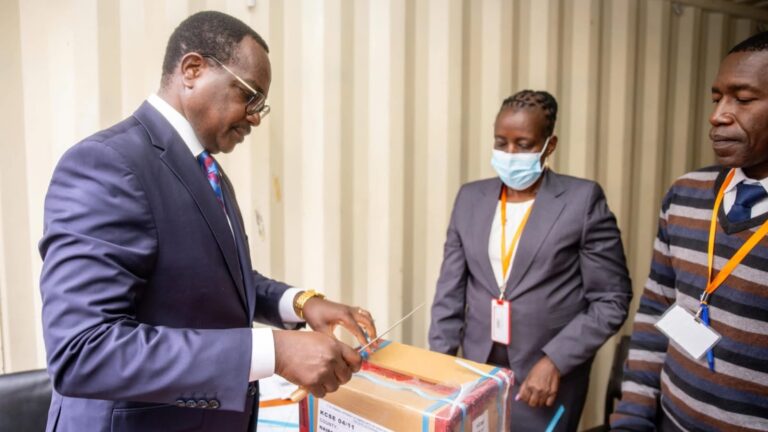 Kenya Ends 65-Year Reliance on Foreign Exam Printers in Ksh1.5 Billion Shift
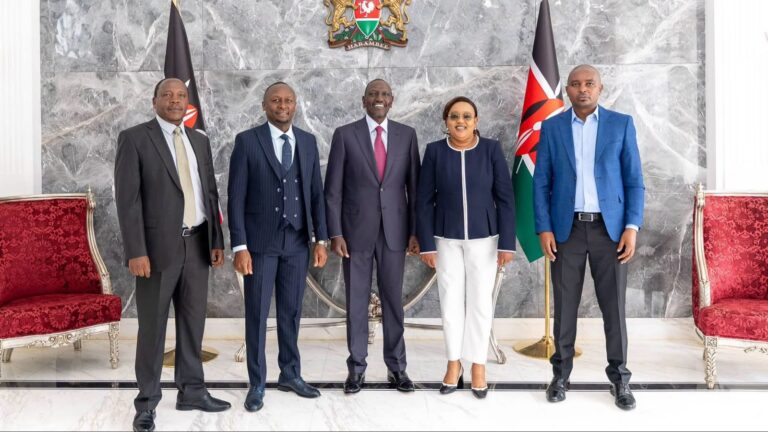 Ruto Holds Talks with Nyandarua Leaders Over Roads, Stadium and University Projects


47. For pastoral communities, livestock insurance is protecting household assets against drought. More than 245,000 pastoralists have accessed insurance and savings incentives under the DRIVE programme, protecting over 3.3 million animals.
48. In our blue economy, investments in landing sites, cold storage, markets, and fishing equipment are helping communities preserve more of their catch and obtain better prices. In Lamu, improved preservation equipment enabled members of the Shanga Ishakani Fishers Women Group to double their average octopus selling price.
49. We are also bringing markets and processing closer to producers through modern market infrastructure and County Aggregation and Industrial Parks. The National Government has invested KSh8.5 billion in 34 counties, with 15 parks complete, and allocated additional resources for common-user manufacturing equipment. We are developing 600 modern markets across the nation at a cost of Kshs 57 billion to provide trading space, storage, and cold room facilities.
50. These investments will enable farmers to sell processed products rather than raw produce, reduce post-harvest losses, support local manufacturing, and create employment within their counties.
51. From the maize farmer to the coffee grower, from the dairy cooperative to the fishing community, our approach has been consistent: Lower production costs, increase productivity, improve market access, and enable producers to retain more of the value they create.
52. The result we seek is equally clear: More affordable food for consumers and higher incomes for producers. These are two sides of the same national undertaking: Managing the cost of living.
Honourable Members,
53. Just as high food prices strain a household, a serious illness can wipe out years of savings and productive effort.
54. For too many Kenyan families, falling ill has meant borrowing, selling livestock, disposing of land, or abandoning treatment altogether. A medical emergency could turn a family that was getting ahead into one struggling to survive.
55. That is the burden we set out to lift through our healthcare reforms: To ensure that the cost of treatment is increasingly met through a system of shared health financing, rather than falling entirely on individuals and their family.
56. Today, 33.7 million Kenyans are registered with the Social Health Authority, compared with approximately eight million registered under NHIF in 2022. But the significance of this reform goes beyond registration. It lies in the treatment families can access and the medical bills they no longer have to bear alone.
57. Across the country, 53,465 patients are receiving cancer treatment, 24,468 are receiving dialysis and 89 have undergone kidney transplants, all under SHA. These are among the most expensive forms of medical care, often beyond the financial reach of ordinary households.
58. Through SHA, covered treatment costs are being financed on behalf of patients, reducing the amounts that families would otherwise have to raise from their savings, seek or borrow from relatives, or obtain through the sale of their assets.
59. The transition to SHA had initial challenges, and we recognised the legitimate concerns of Kenyans. We have consistently addressed those concerns because health protection must be experienced by citizens in practice, as promised in policy.
60. Our undertaking is to progressively and eventually remove the crushing burden of medical expenses from Kenyan households, protect family savings and ensure that illness does not become a sentence to poverty. This is how we are contributing significantly to reduction in the cost of healthcare and cost of living together.
Mr Speaker,
61. Education is another major household expense, and another area in which public investment must relieve the burden on Kenyans. When we assumed office, Kenya faced a teacher shortage estimated at 116,000. Parents in many schools were paying for teachers employed through Boards of Management, while also meeting additional demands for classrooms and learning facilities.
62. In four years, we have employed 100,000 teachers and are preparing to recruit another 20,000. This investment improves the quality of education while progressively reducing the need for Kenyans to finance teaching.
63. We have built 23,000 classrooms and are constructing and equipping 1,600 laboratories. These facilities expand access to learning and reduce pressure on communities to finance essential school infrastructure.
64. Our annual education allocation has increased from KSh521 billion in 2022/23 to KSh784 billion this financial year. These resources must reach schools promptly and be managed responsibly. Parents should not be required to carry public obligations through unauthorised charges. The purpose is to make education accessible and affordable today while preparing our children to earn better incomes tomorrow. Every child who remains in school to learn; trains to acquire useful skills and enters productive employment, strengthens both the household and the nation. Our investment in education has lifted a heavy burden on our parents and helped reduce financial obligations, thereby reducing the cost of delivery.
65. And by the way, this week, we are concluding national examinations for the largest cohort in our history: 3.6 million learners sitting KPSEA, KJSEA and KCSE. For the first time in 65 years, examination papers were printed here in Kenya. The examinations have been conducted in a calm and orderly atmosphere, free from the anxiety, tension and intimidating security deployments of the past. This is how it should be. Examinations are a normal part of learning, not a security operation or a matter of life and death. They should assess our children’s progress, not instil fear about their future.
Honourable Members,
66. Housing presents a similar opportunity to reduce household burdens while creating employment income on a national scale.
67. For millions of Kenyans, rent consumes a substantial share of monthly earnings while only conferring temporary shelter. The Affordable Housing Programme is opening a new pathway through which families can obtain decent homes and progressively build an asset for their ownership.
68. Under social housing arrangements, households can begin the journey towards homeownership for as little as KSh4,000 a month. A payment that previously secured only temporary occupation can, under this programme, contribute towards lasting ownership.
69. Across all 47 counties, more than 313,000 homes are at various stages of construction, with some already completed. Over 1.37 million Kenyans have registered on Boma Yangu, and more than 18,000 have been allocated homes.
70. In Mukuru, Rossina Mbithe has moved from unsafe and inadequate housing into a more secure home. In Machakos, Faith Mueni Kioko, a young woman living with a disability, has obtained a home she once doubted she could own.
71. Yet housing is not only about the family that receives the keys. It is also about the thousands of Kenyans who earn an income building that home. The programme has generated more than 1.1 million employment opportunities. Engineers, architects, masons, plumbers, electricians, painters, welders, carpenters, and transporters are earning from construction activity across the country.
72. In Bungoma, Moses Wasike, who once struggled to find regular work, now supervises more than 150 workers. In Mukuru, Diana Mwange has moved from irregular domestic employment into predictable earning as a painter.
73. We have also reserved more than KSh61 billion in orders for Jua Kali artisans. These orders create business for workshops, support apprenticeships and expand local manufacturing.
74. In Eldoret, Fanuel Anyanga Temba secured subcontracts worth KSh30 million, expanded his workshop from three machines to 20 and increased his workforce to more than 25 young Kenyans.
75. The housing programme therefore serves two purposes simultaneously: It creates more affordable and dignified homes while expanding the number of Kenyans earning an income.
76. The employment opportunities created through affordable housing are part of our wider effort to enable more Kenyans to earn an income and improve their livelihoods.
Hon Members,
77. A family without income cannot overcome the cost of living through lower prices alone. The young person who has completed education but cannot find work, the artisan whose skills remain idle and the entrepreneur without capital all need an opportunity to earn.
78. That is why job creation and enterprise development has been central to our economic transformation. We are creating opportunities through housing and infrastructure, agriculture and manufacturing, small enterprise, the digital economy and international labour mobility.
79. Through our digital economy programme, we are expanding connectivity, digital skills and access to online work. Already, 350,000 Kenyans have secured work in the digital economy, earning incomes through opportunities that extend beyond their immediate communities and our national borders.
80. Through international labour mobility, 707,000 Kenyans have secured jobs abroad, acquiring valuable experience, supporting their families and contributing to our economy through remittances.
81. At home, the Hustler Fund is expanding access to credit for Kenyans previously excluded by collateral requirements and limited borrowing histories. More than 7 million Kenyans have established credit records, and are regular borrowers with cumulative borrowing of KSh94 billion. 700,000 are now established borrowers with a limit as high as Kshs 150,000 without any collateral.
82. For young Kenyans with skills and ideas but insufficient capital, NYOTA provides an opportunity to begin. More than 133,000 young entrepreneurs have received training, mentorship and KSh50,000 each in start-up capital.
83. Javan Simiyu from Bungoma county used his grant to acquire welding equipment and now earns more than KSh30,000 a month. His story demonstrates the difference between possessing a skill and having the means to turn that skill into an income. To expand opportunity for more entrepreneurs in Nyota business support, we are working with partners to support another 200,000 beneficiaries with Kshs 50,000 each.
84. But our ambition cannot end with start-up grants. We must enable these young enterprises to grow, secure markets, employ others and become sustainable businesses.
85. That is why we are now linking NYOTA beneficiaries to government procurement opportunities through the NYOTA-AGPO Digital Training Programme, a free 10-week initiative that equips young entrepreneurs, women and persons with disabilities with digital and business skills, awards proficiency certificates, and facilitates business registration and AGPO certification. This will enable 600,000 Kenyans to qualify for government contracts, grow their enterprises and have an income.
Honourable Members,
86. These are not isolated interventions, but parts of one comprehensive undertaking. Affordable fertiliser and increased production lower farming costs and improve food supply, while better returns from coffee, tea, milk and sugarcane raise farmers’ incomes. SHA relieves families of medical expenses, while more teachers and classrooms ease the burden on parents.
87. Housing, digital jobs, overseas employment and support for small enterprises create opportunities to earn, while better roads and digital services reduce the cost of doing business. This is how we are addressing the cost of living: Lowering household expenses, increasing incomes and enabling more Kenyans to earn a living.
88. Our task is far from complete, but our purpose remains clear: To make everyday life more affordable and productive effort more rewarding.
89. That is why we have also announced further measures to ease the burden on households, support businesses and put more money in the pockets of Kenyans.
90. These include proposals to exempt workers earning KSh32,333 a month or less from PAYE, remove stamp duty on land transactions valued at KSh1 million or less, and eliminate the 25 per cent import duty on mobile phones.
91. We have also approved the settlement of 28,726 verified pending bills amounting to KSh27.8 billion, dating back to 2005 and covering claims of KSh50 million and below. We have also approved the payment of Kshs 18 billion owed to our public universities and another Kshs 16 billion owed to both public and private hospitals under the former NHIF. These payments are undergoing due process in the national treasury for payment in the coming weeks.
92. Together, these measures will increase incomes, make property ownership and digital access more affordable, restore cash flow to businesses, protect jobs and sustain livelihoods.
