

Kenyan businesses have recorded their first increase in overall business activity in eight months, following a sharp rise in customer orders that has also lifted confidence about the country’s economic outlook.
The latest Stanbic Bank Kenya Purchasing Managers’ Index (PMI), released on Wednesday, November 4, shows that private-sector business conditions improved further in October, with the headline index rising to 52.5 from 51.3 in September.
The October reading was the strongest recorded so far in 2026 and marked the second consecutive month that the index remained above the 50-point threshold, which separates expansion from contraction.
The improvement was largely driven by stronger customer demand, with businesses reporting increased foot traffic, referrals and new contracts.
According to the survey, new order growth accelerated to its fastest pace in almost a year, while sales volumes increased for the fifth consecutive month. The rise in demand also helped businesses increase their purchases of raw materials and other inputs as they prepared to handle additional orders.
The October survey showed that Kenyan firms finally managed to translate stronger sales into increased business activity after struggling with capacity constraints, cash-flow difficulties and inflationary pressures.
Output rose for the first time since February 2026, with manufacturing recording the fastest increases in both production and new orders among the five sectors monitored.
The expansion in industrial activity was accompanied by increased purchasing and stockpiling of inputs. Businesses raised their input purchases at the fastest rate since January, while inventories recorded their sharpest increase in four years.
Suppliers also delivered goods more quickly, with delivery times shortening at the fastest pace since September 2021.
However, the increase in orders continued to stretch business capacity, resulting in a further accumulation of unfinished work.
Outstanding business increased at the fastest pace in seven years, suggesting that some companies were struggling to complete orders as quickly as they came in.
Employment increased for the fifth consecutive month, although the pace of hiring was modest and the slowest recorded during the current period of job creation.
Beyond the improvement in current business activity, the survey revealed a significant rise in optimism among Kenyan firms. The proportion of businesses expecting their activity to increase over the next 12 months jumped to 51 per cent in October, compared with 31 per cent in September.
This marked the strongest level of business confidence since March 2020, with companies pointing to planned expansions, new products and services, marketing campaigns and investment as reasons for their positive outlook.
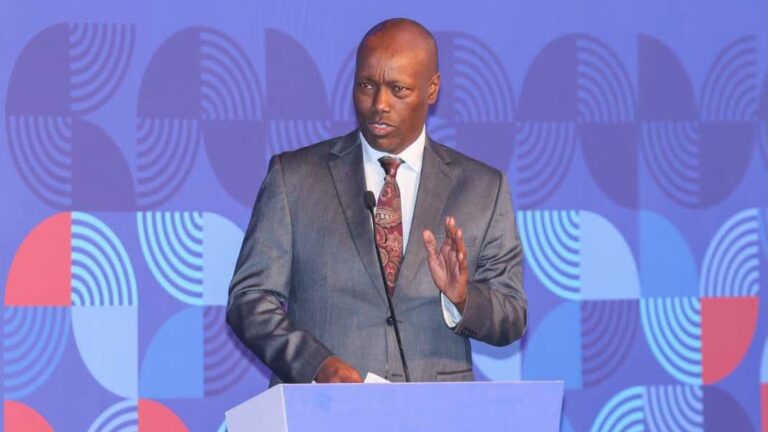
Christopher Legilisho, an economist at Standard Bank, said the improvement reflected stronger demand across most sectors of the economy.
“Kenya’s Stanbic PMI improved markedly in October due to stronger output and sustained new orders activity, implying that demand conditions for the private sector aided the improvement. Improvements were broad-based across most sectors, with construction sector the only laggard,” he said.
“Business confidence among firms improved notably; the future output index surged to its highest in six years. Further, businesses reported increases in employment.”






Legilisho also noted that increased orders had encouraged firms to purchase more inputs and build up their inventories, although the growing workload was putting pressure on their operations.
“Additionally, firms increased input purchases at the fastest pace since January and built inventories at the quickest rate in four years, aided by shorter supplier delivery times. However, backlogs accumulated at the fastest pace in seven years, while employment growth slowed to the weakest rate in the current five-month expansion, which implies that stronger demand is stretching operating capacity,” he added.
Despite the improvement in sales and production, the survey highlighted rising operating costs as a major challenge facing Kenyan businesses.
Approximately 36 per cent of the firms surveyed reported an increase in total input costs in October, compared with only two per cent that recorded a decline.
The resulting rate of input cost inflation was the highest since November 2023, with businesses frequently identifying higher fuel and transport expenses as major contributors.
The rising costs prompted companies to increase the prices of their products and services to protect profit margins and recover some of the additional expenses.
The pace of selling price inflation was the second-fastest in three years, having been exceeded only by the rate recorded in June 2026.
The development raises concerns that stronger business demand could coincide with continued pressure on the cost of goods and services, potentially affecting consumers and household spending.
Legilisho warned that the rising expenses could limit the recovery despite the improvement in business conditions.
“Rising costs remain a key constraint for the recovery. Input cost inflation reached its highest level since November 2023 due to fuel and transport costs, while selling price inflation was the second-fastest in three years as firms sought to protect margins. October’s survey therefore points to firmer demand and improved confidence, but the recovery remains constrained by price pressures, cash-flow difficulties and a modest hiring response,” he further said.
The October results extend the improvement recorded in September, when the headline PMI rose to 51.3 from 49.7 in August, signalling a return to growth in overall private-sector business conditions.
However, the September survey had revealed that actual output was still declining for the seventh consecutive month, despite stronger customer demand and an increase in new orders.
The October results therefore mark an important change, with production finally returning to expansion as businesses responded to sustained sales growth.
The PMI is compiled by S&P Global from monthly questionnaires sent to purchasing managers at approximately 400 private-sector companies in Kenya.
The survey covers agriculture, mining, manufacturing, construction, wholesale, retail and services, with responses measuring changes in business conditions compared with the previous month.
A reading above 50 indicates an improvement in business conditions, while a figure below 50 signals deterioration. The index is closely monitored by businesses, investors and policymakers because it provides an early indication of economic trends before official quarterly GDP figures are released.
