


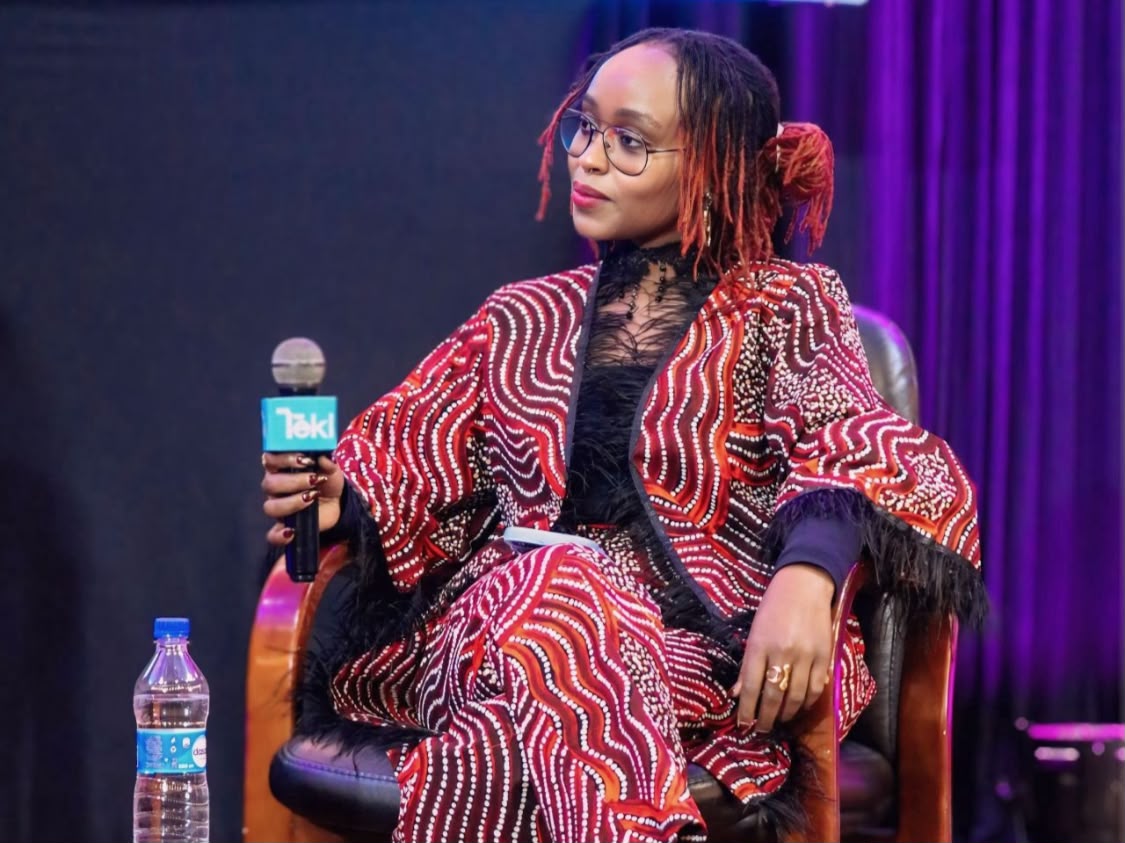
Nyandia Gachago occupies a rare professional intersection: she is a Chartered Marketer with a decade of corporate hospitality experience, a software engineering graduate, and one of Kenya’s most visible practical AI trainers for African professionals and small businesses.
As the founder of MintyLime, an AI-powered creative agency, and Minty Academy, an AI business school, she has built a career on a simple but consequential premise – that African entrepreneurs should not merely consume AI tools built elsewhere, but should shape how those tools serve local realities.
Her personal journey, marked by early financial struggle, chronic illness, and the responsibilities of single motherhood, informs a professional philosophy that treats technology as a lever for human judgment rather than a replacement for it.
From software engineering to the C-suite
Gachago’s path into marketing was not linear. She studied software engineering before transitioning into communication and marketing, a pivot that initially appeared to abandon her technical training.
“AI brought those two parts of my life together,” she explained in an interview with TikTok’s African All-Stars series. “When generative AI tools became more accessible, I noticed a gap. Most of the conversation focused either on the technology itself or on the fear that it would replace people. Very few people were showing African professionals, creators and business owners how to apply it to the work already sitting on their desks”.
That gap became her professional calling card. Before founding MintyLime, Gachago built a conventional corporate career, most notably as Cluster Head of Marketing, Communications, and PR at Ole Sereni and Emara Ole-Sereni Hotels in Nairobi.
I that role, she was credited with spearheading strategies that elevated brand visibility, revenue, and customer sentiment – work that earned her recognition as a Chartered Marketer and a speaker at the 7th African Marketers Conference & Awards.
Her corporate credentials are substantial: Top 25 Women in Digital (2025), Top 50 Most Influential Women in Kenya, and active membership in professional marketing bodies. Yet it is her transition from hospitality marketing into AI training and entrepreneurship that defines her current chapter.
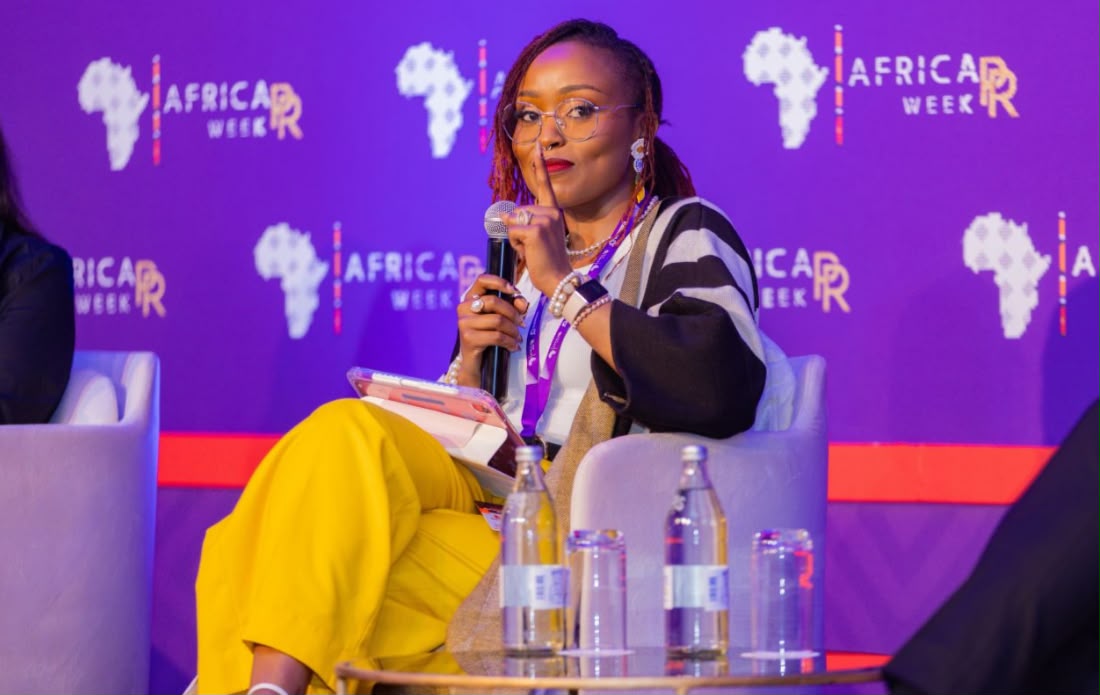
Building MintyLime and Minty Academy
Gachago now serves as founder of MintyLime, which she describes as an AI-powered creative agency, and Minty Academy, an AI business school for creatives and brands. She also operates as a Fractional CMO for growth-stage businesses.
The philosophy behind these ventures is deliberately practical. Rather than offering abstract seminars on AI’s potential, Gachago’s training sessions produce tangible outputs.
“In our Minty Academy classes, participants have built social media and brand campaign dashboards, personal CRM systems and websites during practical sessions,” she told TikTok. “That matters because they leave with something they can use, not just information about what AI might do”.
Her teaching methodology emphasizes a “tool-master” mindset: select one AI tool, learn it deeply, and apply it to a specific business problem. She advises professionals to give tools context – explaining who they are, what they are working on, and what a good outcome looks like – and then to question the output rather than accepting it uncritically.
“Confidence comes from repeated use,” she says. “You do not need to master every AI tool. You need to learn how to define a problem, give clear direction and judge the quality of the result”.
This approach has attracted institutional attention. Gachago has delivered AI and digital marketing training at Safaricom, Strathmore University, and ISA Africa, and has spoken on platforms including Citizen Digital’s *She Means Business* programme.
Her perspective is notably Africa-centric: she has argued that AI innovations from the East are often more practical and adaptable to local contexts than their Western counterparts.
The human behind the brand
Gachago’s professional confidence sits atop a personal history that has been anything but frictionless. In a candid appearance on the Financially Incorrect podcast, she described growing up in a “plot household,” hustling from the age of 17, and facing the “crushing costs of chronic illness”.









She has spoken publicly about living with an invisible illness and the financial and emotional toll it exacts – a topic rarely addressed in Kenya’s corporate marketing circles.
Her entrepreneurial record includes experiments beyond marketing. She once scaled a butchery business to KES 70,000 in daily revenue, an experience she discusses as part of her “money story” rather than a footnote. She also keeps goats on her father’s farm, a practice she describes with characteristic humour as an antidote to brand strategy meetings.
In a LinkedIn post, she wrote: “It started small. A few animals, a patch of land, and a whole lot of curiosity… Growth doesn’t always look like graphs and Google Slides”. The post attracted engagement from other agribusiness-curious professionals, suggesting her willingness to share unpolished ventures resonates with an audience accustomed to curated corporate narratives.
As a mother and partner, Gachago has framed her civic engagement through a familial lens. During Kenya’s anti-government protests, she was profiled among the “Iron Ladies of Maandamano” for her participation despite her corporate commitments. “As a mother, my children’s future is at stake,” she told The Standard. “I demand a Kenya where my children have access to quality education, healthcare, and opportunities”.
She also linked her protest stance to her professional identity: “Corruption and mismanagement of funds threaten the business environment, stifling economic growth and is also unethical”.
A philosophy of authenticity in the age of AI
Gachago’s public commentary consistently returns to a tension: how to adopt AI without surrendering the distinctiveness that makes African brands and creators valuable.
She warns against using AI to manufacture identity. “AI should support your voice, not manufacture an identity for you,” she told TikTok. “A brand or creator must still decide what they believe, what they want to say and why it matters to their audience… It should not replace lived experience, cultural understanding or accountability”.
She extends this to responsible use: fact-checking outputs, protecting personal data, watching for bias, labelling AI-generated content, and securing consent before recreating someone’s image or voice. Her position is unambiguous: “‘The AI created it’ cannot become an excuse for misleading claims, cultural mistakes or poor judgement”.
On the question of whether AI will displace workers, her framing is characteristically pragmatic rather than alarmist. She argues that Africa’s density of entrepreneurs and creators – people already accustomed to achieving much with limited resources – positions the continent to benefit disproportionately from AI if adoption is intentional.
“We should not only consume AI tools. We should shape the datasets, products, safeguards and stories that determine how those tools serve our communities”.
What comes next
Gachago’s trajectory suggests a continued expansion of MintyLime and Minty Academy, alongside her fractional CMO work with growth-stage businesses. She has signalled interest in scaling her agribusiness experiment and in deepening her focus on AI governance and localisation for African markets.
For a professional whose early career involved hustling at 17 and navigating the costs of chronic illness, her current position – advising corporations, training marketers, and speaking on continental platforms – might appear a straightforward success story.
But Gachago’s own framing resists that simplification. In a LinkedIn reflection, she wrote: “Constantly trying to meet others’ expectations can be draining if it takes you off your path. The Key? Stay true to what drives you”.
That principle – authenticity as strategy, not sentiment – may be the most transferable lesson she offers.
In a market flooded with AI hype and fear, Gachago has built a business by insisting that the technology matters less than the judgment of the person directing it. For African professionals navigating the same transition, that is neither a promise nor a warning. It is a working method.
