

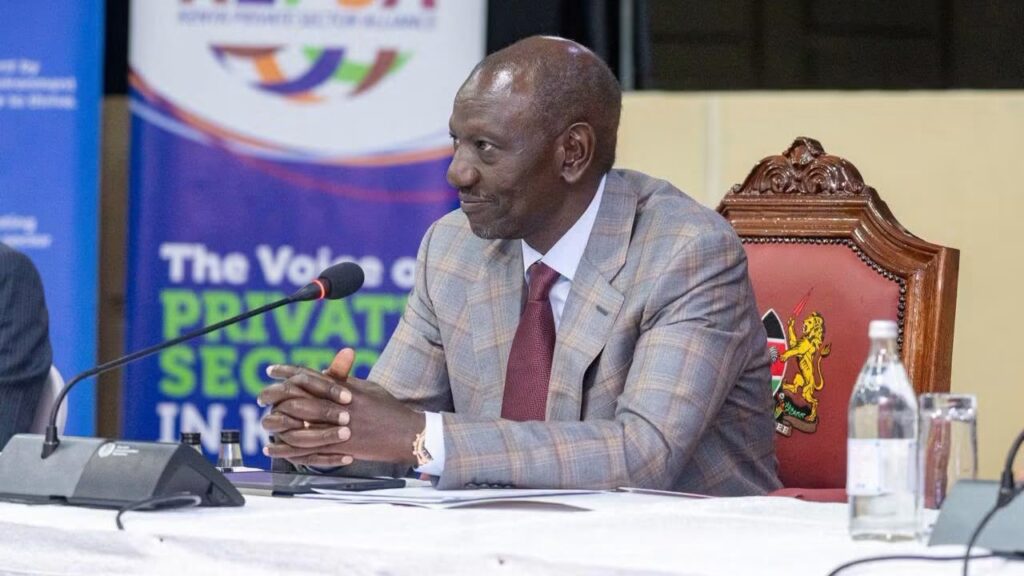
President William Ruto has reaffirmed his administration’s plan to create one million manufacturing jobs by 2030, outlining investments in industrial parks, local production, tax incentives and export markets.
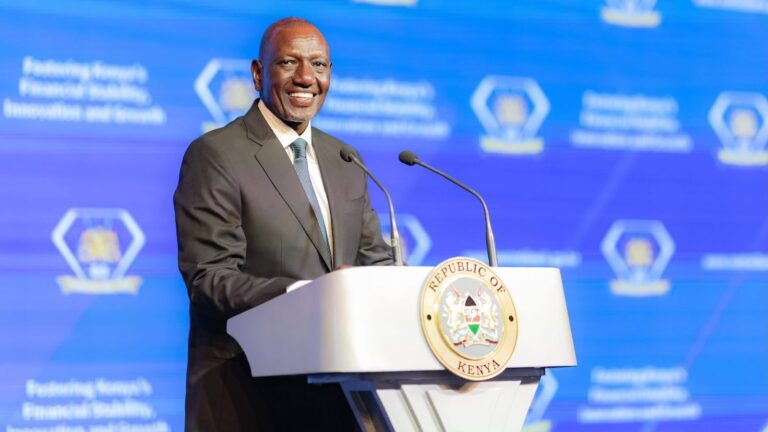
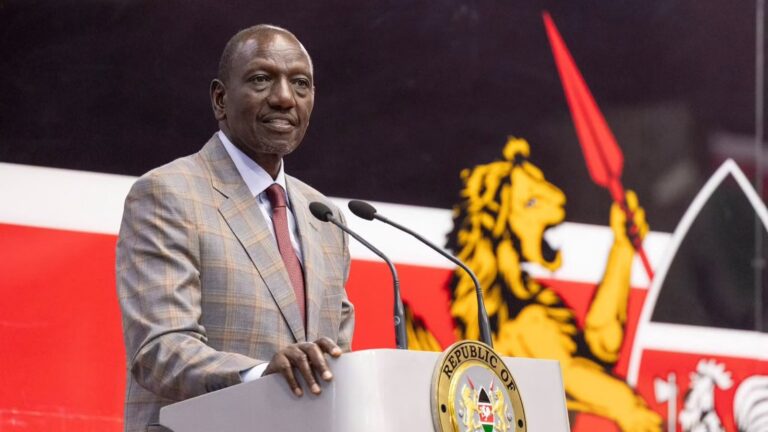
Speaking on Wednesday, November 4, 2026, Ruto said the government intended to increase manufacturing’s contribution to Gross Domestic Product (GDP) to 20 per cent by 2030, arguing that expanding local industries would create employment and reduce reliance on imports.
“That is the conviction that brought us together in October 2022, shortly after I assumed office, when we agreed on an ambitious industrial roadmap to raise manufacturing’s contribution to 20 per cent of GDP and create one million jobs by 2030,” Ruto said.
He maintained that the target remained achievable through increased domestic production, value addition and expanded markets for locally manufactured products.
“Four years later, our commitment remains firm. We want a Kenya that produces more of what it consumes, adds value to what it grows, and sells more of what it manufactures,” he stated.
The President acknowledged that manufacturing contributed 7.1 per cent of GDP in 2025, with the sector growing by 2 per cent against overall economic growth of 4.6 per cent.
However, formal manufacturing employment increased by 5.2 per cent to 388,564 jobs in 2025. The sector’s growth also improved to 4.4 per cent in the first quarter of 2026 and 2.2 per cent in the second quarter.
Ruto said the government had introduced incentives to encourage local production in industries where Kenya had the raw materials and capacity to manufacture goods previously imported.
In the cement industry, he cited a 17.5 per cent levy on imported clinker introduced in 2023, which reduced imports from 148,000 tonnes to 10,000 tonnes the following year.
He said the intervention had attracted investments from Bamburi Cement, Rai Cement and Devki, with projects worth nearly Ksh180 billion expected to create approximately 12,000 jobs.
Cement production increased by 18 per cent to 10.44 million tonnes in 2025, according to the President.
The steel industry had also benefited from a similar 17.5 per cent import levy, with investments by Manga Steel, Apex Steel and Abyssinia expected to generate approximately 9,000 jobs. Two previously closed factories, Athi River Steel and Edmor Steel, had also resumed production.
The government had further increased import duty on furniture from 35 per cent to 45 per cent and introduced a 30 per cent excise duty on imported furniture. Ruto said the measures contributed to furniture manufacturing growth of 5.4 per cent in 2025.
He also identified the Affordable Housing Programme as a major market for local manufacturers, noting that 303,910 housing units across the 47 counties were at different stages of completion.
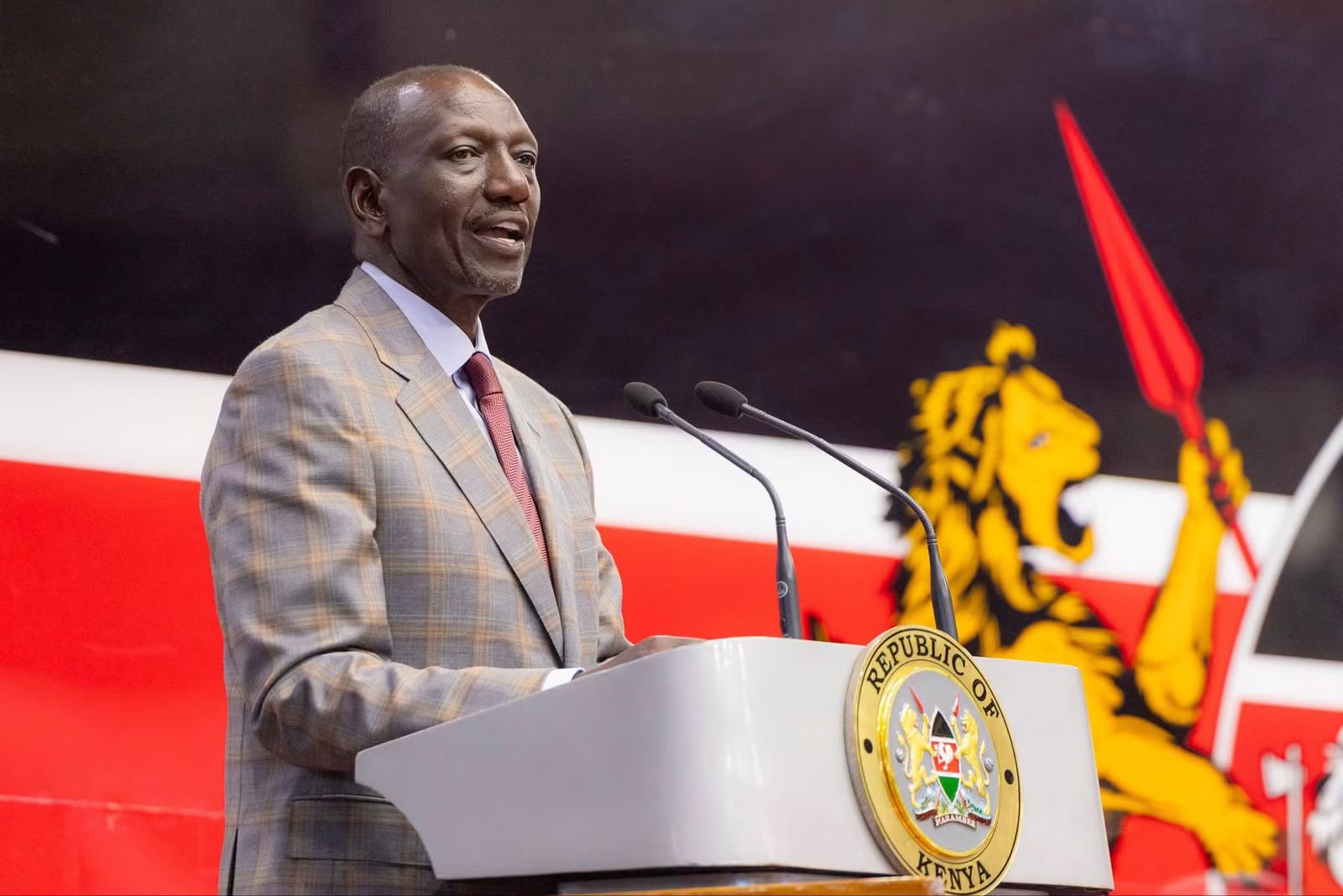
According to the President, 97 per cent of materials used in the programme were sourced locally, benefiting manufacturers and Jua Kali artisans.
Agricultural processing was another priority, with the government seeking to increase farmers’ earnings by encouraging local processing instead of exporting raw produce.
In the sugar industry, Ruto cited the writing off of Ksh117 billion in debts owed by State-owned sugar mills, the Sugar Act and the leasing of four factories to private operators.
He said the reforms had enabled Kenya to exit the COMESA sugar safeguard after 24 years. Sugarcane deliveries increased by 36 per cent to 4.93 million tonnes in the first six months of 2026, while production reached a record 437,852 tonnes.
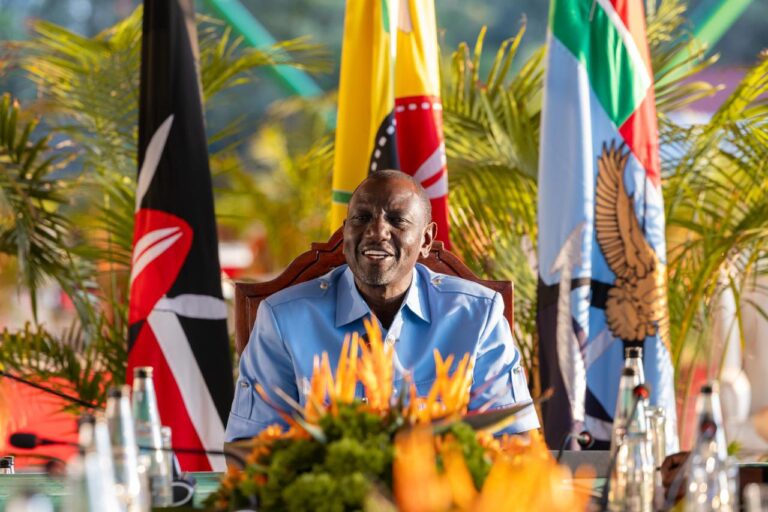
In coffee, the Coffee Cherry Advance Revolving Fund had advanced Ksh15.07 billion to nearly 684,000 farmers. However, Ruto challenged the industry to invest more in local roasting, grinding, packaging and branding to increase export earnings.
He also highlighted the development of County Aggregation and Industrial Parks in 34 counties, with 15 already completed, to bring processing facilities closer to farmers.
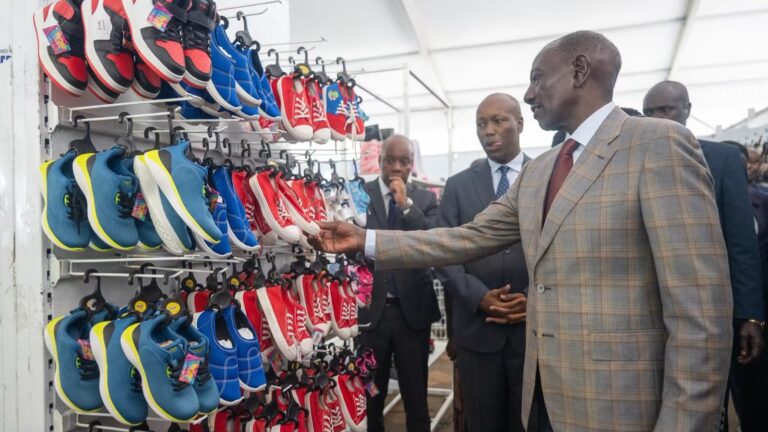
In the leather industry, the government was investing Ksh5.8 billion in the Kenya Leather Industrial Park in Kenanie, Machakos County. Ruto also disclosed plans involving a Korean investor to establish a modern factory targeting production of one million pairs of shoes.
The President further identified electric mobility as an emerging source of employment, revealing that investments worth Ksh24.6 billion had supported the local assembly of 38,201 electric bicycles, motorcycles and buses, creating 1,067 direct jobs.
To support small businesses and young entrepreneurs, the government was also expanding access to financing through the Hustler Fund and other enterprise financing programmes.
Ruto announced a training programme targeting between 600,000 and one million young people to help them access government procurement opportunities under the Access to Government Procurement Opportunities (AGPO) programme.
AGPO reserves 30 per cent of government procurement, estimated at approximately Ksh230 billion annually, for youth, women and persons with disabilities. Participants would also receive certificates and be able to register business names free of charge.
On international trade, Ruto said expanding export markets would be critical to increasing manufacturing investment and employment.
He disclosed that exports to the East African Community had increased by 55 per cent, from Ksh226 billion to Ksh351 billion, while exports to COMESA reached Ksh339 billion and those to the African Continental Free Trade Area stood at Ksh453 billion.
He also highlighted trade arrangements with the European Union, United Arab Emirates, China and the United States, alongside efforts to extend the African Growth and Opportunity Act (AGOA) to December 2028.
The President said Export Processing Zones employed 104,692 Kenyans in 2025, representing a 16.4 per cent increase, while exports from the zones rose to Ksh136.8 billion from Ksh106 billion in 2022.
Kenya currently had 36 Special Economic Zones, with investors also expressing interest in nearly 7,000 acres at Dongo Kundu.
Ruto said infrastructure investment, particularly in roads, railways, ports, electricity and digital connectivity, would be necessary to lower production costs and attract manufacturers.
He reiterated plans to increase electricity generation capacity to 10,000 megawatts using geothermal, hydro, wind and solar energy. He also pointed to the proposed National Infrastructure Fund and US$200 million Green Investment Fund as sources of financing for major projects.
The President said the government would prioritise industrial investments in the East Africa refinery in Lamu, electric vehicle assembly, clinker production in Kitui and Kwale, county industrial parks and energy projects.
“Our commitment to raise manufacturing’s contribution to 20 per cent of GDP and create one million jobs by 2030 remains firm. We must now accelerate investment in the East Africa refinery in Lamu, electric vehicle assembly, clinker production in Kitui and Kwale, county industrial parks, and major energy and infrastructure projects,” he stated.
