

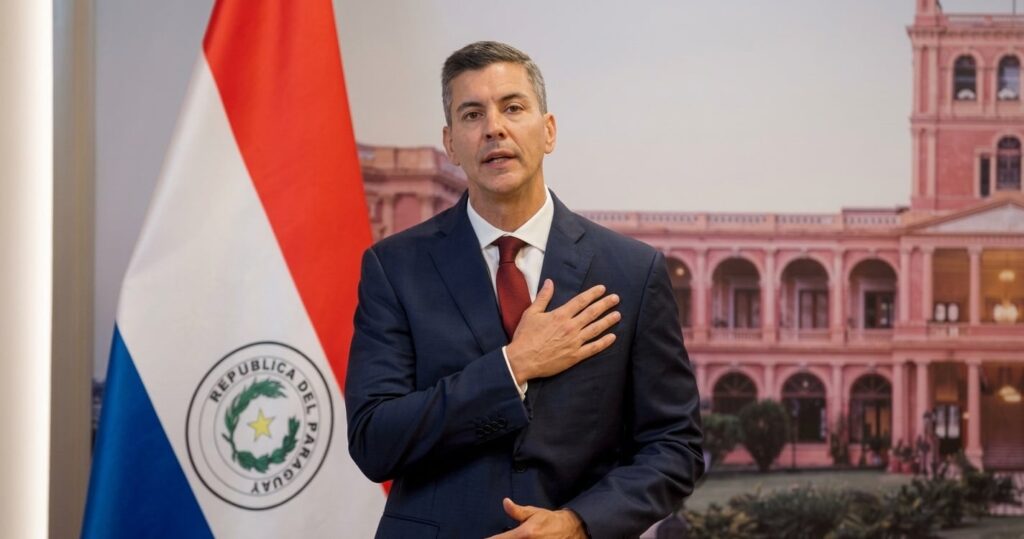
Paraguayan President Santiago Peña resigned on Thursday, November 5, amid a devastating banking crisis that froze the accounts of nearly three million depositors and triggered an imminent impeachment vote in Congress.
In a video message posted to his social media accounts, Peña announced his decision to step down just over three years into his five-year term, framing the move as necessary to protect the nation’s democratic stability.
His resignation came as the Chamber of Deputies was preparing to debate and vote on an impeachment trial against him, with support for his removal mounting even within his own Colorado Party.
“I have made the decision to resign from the presidency of the Republic,” Peña said in his address. “I am doing so with our country’s stability, social peace, and the need to preserve our democratic institutions in mind.”
He also offered a direct apology to the public, saying: “I want to apologise to the people if I have failed them at any point. It was never my intention to betray the trust they placed in me.”
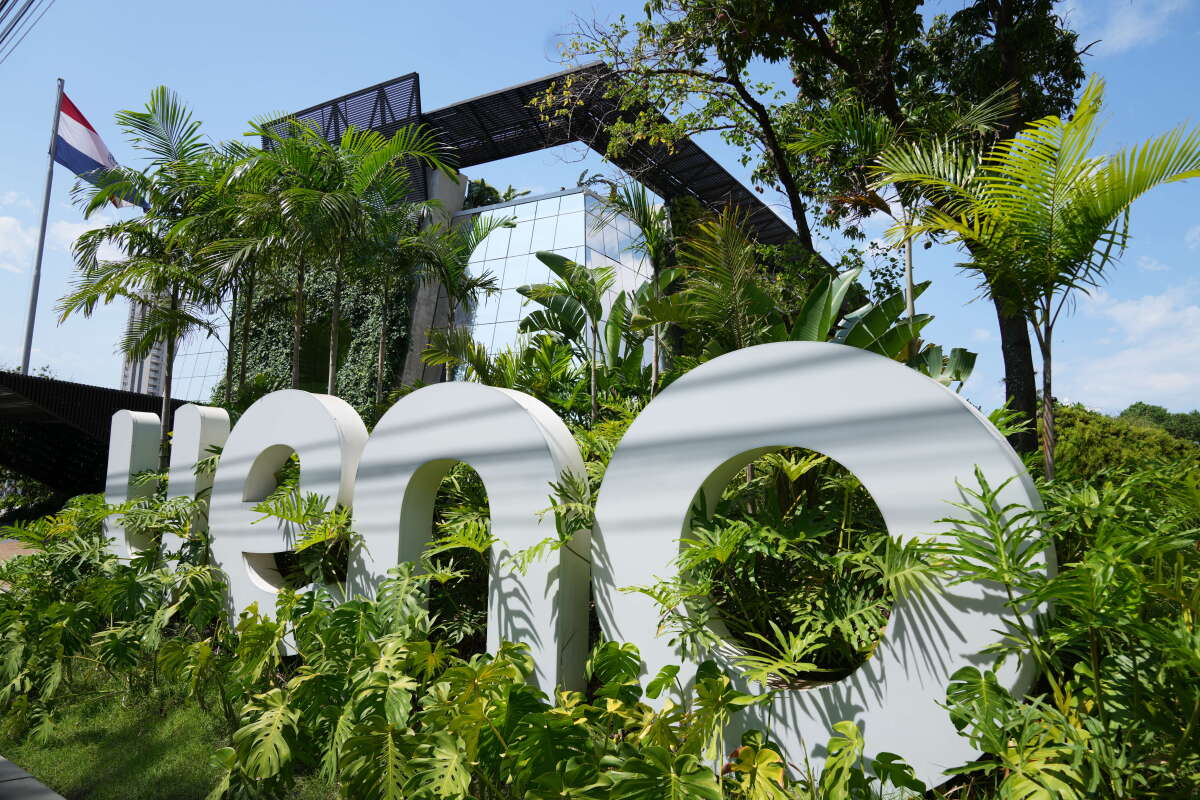
The political earthquake was set off by the Paraguayan Central Bank’s intervention of Ueno Bank, a digital financial institution that had grown explosively to serve roughly 2.9 million customers, approximately 60% of the country’s adult population.
On Tuesday, regulators seized the bank after discovering that its capital had fallen to less than half the legal minimum, following revelations of risky insider lending and accounting irregularities.
The seizure froze all operations. Branches shuttered, mobile apps went dark, and customers across the country found themselves unable to access their savings.
The panic was compounded by the fact that Ueno held approximately $850 million in public funds, including some $380 million belonging to the state pension and health institute (IPS), putting the retirement payments of tens of thousands of Paraguayans at risk.
The crisis quickly ensnared Peña personally. The president had been a shareholder in Grupo Vázquez, the conglomerate that owned Ueno Bank, until March 2025.
Opposition lawmakers accused him of a profound conflict of interest, pointing specifically to his 2023 appointment of Carlos Carvallo, former president of Financiera Ueno, to head the Central Bank, the very agency tasked with supervising the institution. Carvallo resigned as Central Bank chief as the scandal broke.
As news of the frozen accounts spread, protests erupted in Asunción. Retirees, students and workers flooded the streets, with crowds chanting “We want your head, Peña!” and carrying signs that read “Give us back our money.” Riot police deployed pepper spray and rubber pellets to push back demonstrators.
Hundreds of Ueno Bank and Grupo Vázquez employees also protested outside the Labor Ministry, demanding unpaid wages and severance as their jobs hung in the balance.
The political ground shifted decisively on Thursday morning when the Colorado Party, the conservative force that had dominated Paraguayan politics for seven decades, withdrew its support for the president.
Former President Horacio Cartes, the party’s influential leader and Peña’s political mentor, announced that the Colorado Party would support the impeachment effort.
 Who is Alice Huang? The Woman at the Centre of Nvidia CEO Jensen Huang Intelligence Allegations
 Six Dead, 15 Injured After Gunman Opens Fire in Poland’s Krakow
 JD Vance Blames Israel War for Election Losses, Warns Party Against Ignoring Voters
 Democrats Make Historic Gains Across US as Trump Concedes Election Defeat







“The National Republican Association (ANR) will not support the theft of public, private, and pension funds,” Cartes declared, referring to the party by its formal name.
With both major factions of the ruling party in the lower house pledging to support impeachment, Peña’s position became untenable. The Chamber of Deputies proceeded to approve the impeachment accusation by a unanimous vote of those present, sending the matter to the Senate even as Peña’s resignation was announced.
The Senate must now decide whether to accept the resignation or proceed with the trial, a distinction that carries consequences. Under Paraguayan law, a president who resigns retains the right to a lifetime Senate seat, while one removed from office loses that privilege and faces prosecution.
Per Article 234 of the Paraguayan Constitution, Vice President Pedro Alliana is poised to assume the presidency and complete the term through August 2028, pending congressional acceptance of Peña’s resignation. Alliana, a 52-year-old Colorado Party veteran and close Cartes ally, previously served as governor of Ñeembucú and as president of the Chamber of Deputies.
However, his succession is not entirely clear of uncertainty; the opposition had also filed an impeachment request against Alliana, which the Chamber of Deputies rejected on Thursday by a vote of 48 to 30.
Peña, a 47-year-old economist who previously worked at the International Monetary Fund, won the 2023 election promising economic reform and investment. His abrupt departure left Paraguay grappling with the immediate fallout of a financial crisis that had shattered public confidence in the banking system and exposed the deep entanglement between political power and private finance.
In his resignation letter to Congress, Peña acknowledged the gravity of the moment, writing: “No position is more important than the stability of the Republic, and no individual is above Paraguay.”
Ueno Bank’s rise was meteoric and, according to regulators, fundamentally flawed. After obtaining its banking licence in 2023, the digital lender blanketed Paraguay with aggressive cash-back offers, expanded to over 70 locations, sponsored the national soccer team and secured its name on the country’s main stadium.
Government deposits flowed in under Peña’s administration, and the bank became a ubiquitous presence in Paraguayan daily life.
However, internal warnings at the Central Bank had been mounting. In June 2026, inspectors identified a pattern of risky lending to insiders, with large sums extended to companies tied to the bank’s owners, exceeding legal limits and lacking sufficient collateral.
On a single day in September 2025, nearly $39 million flowed to three such companies, according to reporting by ABC Color cited by the Associated Press. Peña publicly dismissed the concerns as a smear campaign.
The end came swiftly. When regulators corrected Ueno’s books to account for poorly documented loans and improperly classified expenses, the bank’s capital cushion evaporated.
The Central Bank seized the institution on Tuesday, announcing plans to transfer customer accounts and remaining assets to other banks before liquidating what was left.
Eight executives and senior officials, including Ueno President Juan Manuel Gustale and CEO Federico Miguel Vázquez, a former business partner of Peña’s, have been detained, while prosecutors have sought charges against 27 individuals associated with the bank.
