
Kenya continues to struggle to create enough formal jobs, with 83.8 per cent of employed people working in the informal sector despite an expansion in overall employment in 2025, a new World Bank report has revealed.
The report, Kenya Economic Update, says employment grew by 4 per cent in 2025, but the dominance of informal work continues to limit productivity gains, earnings growth and poverty reduction.
“Employment expanded by 4.0 percent in 2025, but 83.8 percent of jobs remained informal, limiting productivity gains, earnings growth, and poverty reduction,” the report states.
Formal employment accounted for only 16.2 per cent of total employment, highlighting the difficulty of translating economic growth into stable and productive jobs for Kenyans.
The report notes that formal wage employment grew by 3.1 per cent in 2025, up from 1.8 per cent in 2024, supported by gains in industry and services, particularly manufacturing, financial services and electricity.
Real wage earnings also recovered, rising by approximately 2 per cent, reflecting improvements in household incomes from the performance of the industry and services sectors.
However, the World Bank warns that the gains have not been sufficient to address the country’s employment challenges.
“While employment growth remained positive, the continued dominance of informal employment highlights persistent challenges in generating sufficient formal, productive jobs to absorb Kenya’s growing labor force. This underscores the importance of reforms that support private investment, firm growth, productivity improvements, and structural transformation,” the report states.
The lender also links the slow creation of formal jobs to the cost of doing business, noting that manufacturing continues to face high financing, energy, logistics and regulatory costs.
It observes that although industrial growth has strengthened, most new jobs remain concentrated in low-productivity informal activities, slowing productivity growth and poverty reduction.
Beyond the employment figures, the report identifies corruption and the demands placed on businesses by public officials as significant obstacles to the expansion of formal enterprises.
It singles out medium-sized businesses employing between 20 and 99 people as particularly exposed to demands for gifts by public officials.
According to the report, 48.2 per cent of medium-sized Kenyan firms said they were expected to give gifts to public officials to get things done. This compared to 35.7 per cent of small businesses employing between five and 19 people, and 30.7 per cent of large firms with at least 100 employees.
The situation is significantly different across Sub-Saharan Africa, where the corresponding figures stood at 19 per cent for medium-sized firms, 17.8 per cent for small businesses and 19.5 per cent for large enterprises.
The report explains that medium-sized enterprises face particular pressure because their growth increases their interactions with public institutions.
 World Bank Exposes ‘Sweetheart Deals’ Behind Kenya’s High Electricity Bills
 World Bank Issues Fresh Warning Over Kenya’s Economy Ahead of 2027 Elections
 World Bank Flags Ksh120M KRA Stamp Loss, Ksh6.6B Cooking Oil Scandal in Corruption Report
 Mama Mboga Traders Forced to Borrow to Pay Bribes – World Bank Report



As businesses expand, they require more permits, licences and access to land, creating additional points of contact with government offices.
The report states: “One particularly problematic feature of direct impacts of corruption on firms is that medium-size enterprises are targeted especially strongly. For medium-size firms, the ratio of those reporting that they are expected to give gifts to public officials is over twice as high as in SSA on average, and four times as high as in all economies. This puts such firms at a significant competitive disadvantage.
“This stifles, in particular, an important transition path to greater formalization in the economy and to the generation of new formal jobs that are most likely to be created by expanding medium-size firms. Key reasons for heavily targeting medium-size firms appear to be that as companies grow, interactions with public institutions increase. Growing firms will need more permits, licenses, and access to land compared to smaller firms. Furthermore, they can become attractive targets for public officials who identify them as having more resources to pay bribes, but less protection and direct access to higher-level decision-makers compared to large firms.”
The findings suggest that corruption-related demands can discourage businesses from expanding, limiting their ability to employ more workers formally.
The World Bank further warns that governance constraints affect the earnings and livelihoods of workers operating outside the formal economy.
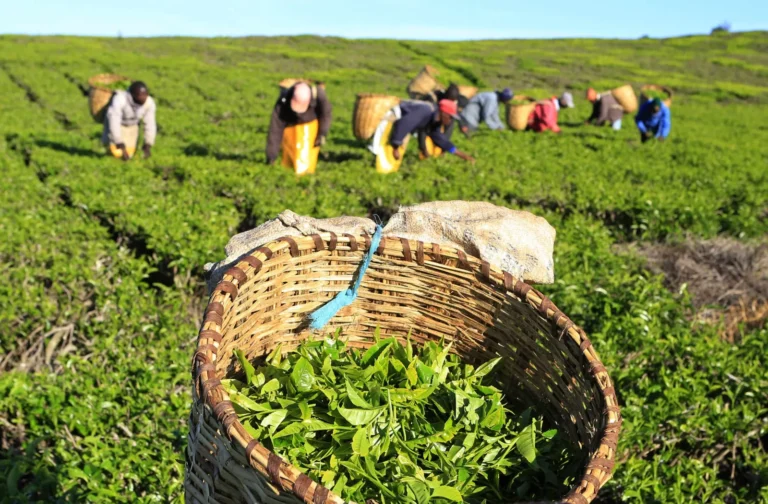
It notes that informal employment covers a wide range of activities in both rural and urban areas, including agriculture, transport, services, domestic work, informal markets and shops.
The report states: “A fourth impact channel concerns how frontline governance constraints affect the earnings and livelihoods of informal workers. Informal workers account for 83.8 percent of Kenya’s workforce. Informal work takes a variety of forms across rural and urban areas and across sectors, including agriculture, transport, services, domestic help, informal markets and shops, and others.”
It also observes that despite Kenya becoming a lower-middle-income economy in 2014, the country has yet to achieve a faster transition to upper-middle-income status.
The report says the vast majority of Kenyans continue to work in the informal sector, while growth in wage employment has largely been driven by an expanding public service.
The latest findings come as the World Bank continues to warn that corruption is holding back Kenya’s economic growth and the creation of opportunities for households.
In a separate report released on Wednesday, November 4, 2026, the lender estimated that corruption and collusion cost Kenya approximately 2 per cent of its Gross Domestic Product annually through higher fiscal deficits.
The World Bank said the losses translate into additional borrowing needs and contribute to higher borrowing costs through what it described as a governance premium.
The lender also revised its 2026 economic growth forecast for Kenya upwards to 4.6 per cent from an earlier projection of 4.3 per cent, while warning that corruption and governance challenges continue to constrain faster and more broadly shared growth.
