


The Kenya Revenue Authority (KRA) has introduced new declaration requirements for traders importing goods through consolidated cargo, requiring them to provide personal and consignment details to facilitate customs clearance and tax compliance.
Under the new requirements, individual importers must provide their full names, KRA Personal Identification Numbers (PINs), national identification numbers, telephone contacts, descriptions of imported goods and the value of their consignments.
The requirements apply even when several traders combine their goods in one shipping container to reduce transportation costs.
In a public notice, KRA said it was working with cargo consolidators to facilitate the issuance of electronic tax invoices to individual traders through the Electronic Tax Invoice Management System (eTIMS).
The initiative is intended to enable eligible VAT-registered importers to claim input VAT on their imported goods, subject to the applicable tax laws and regulations.
“All consolidators, customs agents and importers are required to comply with this directive and ensure that complete and accurate importer details are declared for all consolidated cargo imports,” KRA stated.
The requirement for declaring individual importers’ details took effect on September 13, 2026.
KRA said the measures were intended to promote fair competition, enhance transparency and accountability, and strengthen compliance with customs and tax laws.
The new declaration requirements come amid changes to the customs clearance framework for consolidated cargo, an arrangement commonly used by small-scale traders who cannot afford to import goods in entire shipping containers.
Under the arrangement, several importers combine consignments of different goods, including clothes, electronics and household items, into one container and share transportation costs.
However, the customs benchmark governing the simplified clearance of general consolidated cargo has been a subject of disagreement between traders and the government.
In August 2026, KRA raised the minimum customs benchmark for general consolidated cargo from KSh 2.5 million to KSh 3.2 million, citing the need to address undervaluation and protect government revenue.
The authority maintained that the revised figure was a risk-management reference point and not a fixed tax imposed on every container.
The decision triggered protests by small-scale traders, who argued that the increased benchmark would raise the cost of importing goods and threaten their businesses.
The dispute prompted President William Ruto to intervene, leading to an agreement between the government and traders on September 2, 2026, to reduce the benchmark to KSh 2 million for general consolidated cargo.

Under the agreement, existing rates for ready-made garments, footwear and fabrics were to remain unchanged, while negotiated rates for air cargo would also continue to apply.
The government further agreed to establish a list of goods that would not qualify for clearance under the general consolidated cargo framework, taking into account their value, nature and applicable tax rates.

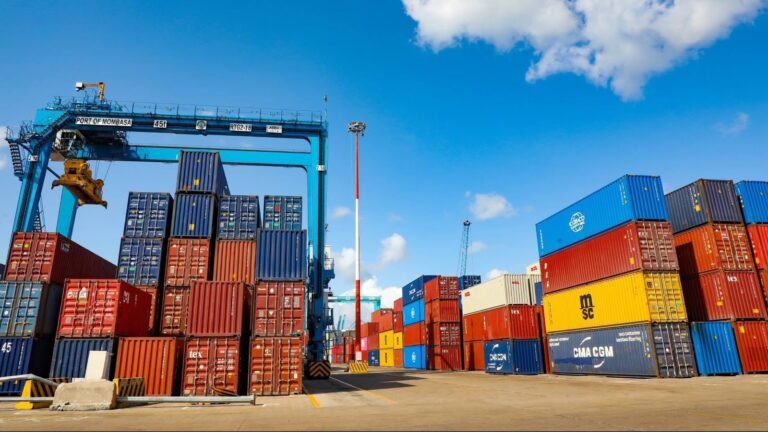









The declaration requirements are intended to ensure that every consignment can be traced to its rightful owner, even when several traders use the same shipping container.
They also seek to address loopholes that could allow some importers to conceal goods, understate their value or misrepresent the nature of their consignments to evade taxes.
In an October 28 report, Business Daily reported that KRA was enforcing mandatory issuance of electronic tax invoices to individual traders importing goods through consolidated cargo.
The publication quoted a KRA source explaining that the new measures were part of the agreement reached between President Ruto and small-scale traders in September.
“During the meeting between the small traders and the President in September, the compromise deal was that the benchmark customs rate be lowered to Sh2 million and all importers and traders file taxes on their consolidated cargo,” the source told Business Daily.
The source added that the authority was now enforcing the agreement, warning that some traders who had failed to declare their imports could face difficulties.
KRA has also raised concerns about the concealment and under-declaration of goods in consolidated shipments.
The introduction of electronic tax invoices is expected to improve documentation for traders while making it easier for eligible VAT-registered businesses to account for their imports.
Under the arrangement, cargo consolidators will work with KRA to facilitate the issuance of electronic tax invoices to individual importers through eTIMS.
This is particularly important for VAT-registered businesses because input VAT incurred on eligible purchases and imports can be deducted when calculating VAT payable on taxable supplies.
However, receiving an electronic tax invoice does not automatically qualify a trader for an input VAT deduction. The importer must satisfy the relevant legal requirements governing VAT claims.
Under the new arrangement, individual importers are responsible for providing accurate information about their consignments, including supporting documentation and the actual value of their goods.
Cargo consolidators must ensure that individual consignment details are available and accurately captured during customs declaration. Customs agents, meanwhile, are required to facilitate declarations and clearance in accordance with the applicable customs regulations.
KRA has maintained that traders who are dissatisfied with the simplified clearance arrangement can request customs verification or opt for deconsolidation, allowing their goods to be separated and assessed as individual consignments.
The authority has also retained the requirement that imported goods be correctly described, classified and valued for purposes of determining the applicable taxes.
For small-scale traders, consolidated cargo remains an important way of reducing shipping expenses. However, the new requirements mean that sharing a container will not exempt individual importers from declaring their goods and meeting their respective tax obligations.
